A green light is a comforting thing to see on a dashboard. It becomes less comforting when the person beneath it is waiting for a computer to respond. Mike Schumacher has spent much of his working life in that awkward gap: between a system’s account of itself and the experience of the human trying to get something done.
In August 2026, he was still worrying at it. His article, Is Your IT Dashboard Lying To You?, urged businesses to connect technology performance with the outcomes that matter to their work. The question has a little mischief in it. Dashboards are designed to reassure. Schumacher would like them to earn the privilege.
He has had time to develop the argument. He founded Lakeside Software in 1997, invented its SysTrack product and returned as chief executive in April 2025. Across those years, the machines have changed, the software vocabulary has multiplied and artificial intelligence has acquired an enormous speaking part. The employee waiting for an application remains easy to recognize.
The lake was real
The name Lakeside began with an actual view. Working alone in a den overlooking a local lake, Schumacher set about finding something useful to build for the systems integrators he knew. He had left his job in August 1997 without a fully settled product plan. Familiar customers and a practical computing problem gave the venture its direction.
His earlier career had included engineering at Telebit and software development leadership at Cubix. He had also worked with standards bodies, including ISO and ANSI. He holds a master’s degree in information engineering from the University of Michigan. Product development attracted him more than standards work; at Cubix, he had assembled a software skunkworks within a hardware business.
The first SysTrack addressed a question about sharing: how many users could a Citrix server accommodate, and how should its resources be balanced? From there came a growing business, trade-show recognition and a source-licensing arrangement with Citrix. The proposition had the useful quality of being explainable without asking anyone to admire the technology first.
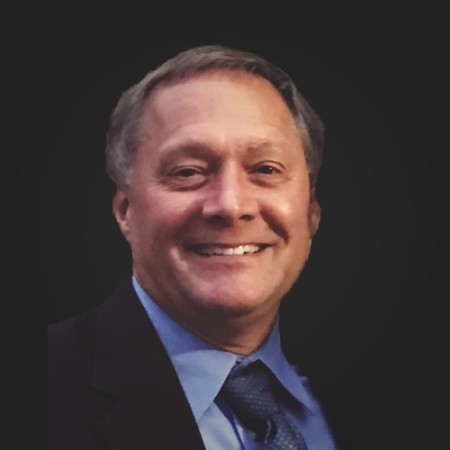
A founder’s origin story can acquire a suspicious amount of inevitability in the retelling. This one retains an appealing uncertainty. He knew the people he wanted to help before he knew exactly what he would sell them. The lake provided scenery; the systems integrators provided a much more useful kind of inspiration.
The complaints that never arrive
SysTrack expanded into desktops, notebooks and user analytics. In his account of that development, Schumacher describes a consistent objective: give customers a better computing experience at an effective cost. Digital employee experience, usually shortened to DEX, is the industry’s name for a territory that ordinary workers encounter as slow applications, interruptions and waiting.
When he spoke with Shane Hastie in 2021, Schumacher described a visibility problem. People often tolerate faults or work around them instead of telling IT. The support queue therefore offers an incomplete account of the working day. A quiet help desk can coexist with a great deal of quiet irritation.
That observation puts the employee in an unusual position. The person closest to a problem may be busy compensating for it. Meanwhile, the engineers who could investigate lack the information that would send them looking. Schumacher’s argument is that understanding what happens on the device can help break that stalemate.
There is a humane idea inside the engineering language. Time spent waiting for a computer belongs to someone. A workaround may be ingenious, but it also asks its inventor to keep paying for a fault. Once a nuisance becomes routine, familiarity can begin to masquerade as acceptable performance.
“They don’t let me build any software anymore.”Mike Schumacher, in his 2021 conversation with Shane Hastie
Schumacher delivered that complaint with the affection of an engineer whose responsibilities had expanded beyond writing code. He remained involved in architecture and forward-looking product thinking. The joke makes the executive title easier to place: it sits on top of a continuing interest in how the thing is built.
A founder changes chairs
For years, Lakeside financed itself. In 2020, it took investment from Insight Partners. The plans discussed at the time included doubling the engineering team by the end of that year and adding business leadership. Schumacher’s explanation was practical: the roadmap contained more ideas than the existing team could get to quickly enough.
That is a recognizable constraint for a product-minded founder. Every improvement competes for the same engineering time. Investment changes the resources available, while adding a different set of responsibilities around the product. The proposed expansion tells us something about where he wanted the additional capacity to go.
In 2021, Michael Grossi became CEO and Schumacher moved to chief strategy officer. The announcement described his continuing responsibility for strategy and technology solutions. By late 2024, he was speaking publicly as founder and board member. In April 2025, he resumed the chief executive role, thanking Dave Keil for his leadership over the preceding three years.
His return came with a specific working plan. He intended to spend substantial time with the engineering team in Ann Arbor, improve the SysTrack user experience and accelerate AI capabilities. He also planned to hear from employees, partners and customers. He had stayed involved through the board and strategy; the return increased his direct responsibility for what came next.
The distinction matters to the story. There was no need to rediscover the company through a grand entrance. His announced agenda involved the less theatrical work of listening, spending time with engineers and deciding which improvements deserved attention. In enterprise software, a better interface can be a substantial ambition all by itself.
A small decision with a long memory
In July 2024, a widespread IT outage gave Schumacher a reason to revisit an early architectural choice. He had designed SysTrack’s agent to run in user mode, without kernel-mode components. His explanation focused on the consequences of software failure and on keeping the monitoring agent within the operating system’s more restricted environment.
He acknowledged that bugs happen despite testing. The design question was how much damage a fault could do. His article presented user mode as a deliberate constraint that reduced the risk of an agent failure taking down the operating system. It is a more concrete account of engineering judgment than a general promise of reliability.
Lakeside also built a dashboard with two affected customers to help assess the outage, prioritize repairs and monitor recovery. Schumacher said the engineers produced it within about 12 hours. The work addressed the coordination problem around recovery: knowing what was affected, where it was and which systems needed attention first.
There is a pleasing lack of glamour to this part of the career. An old architectural decision becomes interesting because of the trouble it helps contain. Software receives plenty of attention for what it can do. The boundaries its designers choose can tell an equally revealing story.
Yesterday’s map, today’s traffic
Schumacher’s more recent writing carries that concern with specific conditions into AI. In March 2026, he used an Ann Arbor memory to explain the limitations of static knowledge bases. Printed maps helped him navigate when he first moved there. They could not account for traffic changing from one stretch of US-23 to the next.
His comparison is straightforward: an instruction may be useful and still fail to describe the situation in front of you. A support article assumes certain conditions. A device has its own configuration, recent changes and performance history. Before applying the instruction, he argues, a system should establish whether those assumptions hold.
- ObserveRead the current conditions.
- ReasonPut the facts in context.
- VerifyCheck the assumptions.
- ActKeep a clear audit trail.
In February 2026, he made a related case for IT teams themselves. AI could take on diagnosis and routine workflows, freeing people to work on more valuable changes. His advice centered on proactive decisions, contextual information and automation that fits the existing environment. He asked buyers to demand precise accounts of what a tool would actually do.
A Lenovo podcast conversation supplied a memorable illustration. Walking through Times Square on his way to dinner, he had noticed a blue-screen error on a large advertising display. He wondered about a device that had failed in such an expensive location without anyone there to speak for it. The screen had an audience; the fault needed an advocate.
His stated ambitions for SysTrack AI begin with information gathered directly from endpoints and continue through diagnosis, action and verification. He has described Lakeside’s AI work as dating to 2016. The longer history of collecting device data gives his current argument continuity: better reasoning still needs something dependable to reason about.
What deserves to come back to the team
For all the discussion of machines, Schumacher’s recollections also return to people. One involves an award plaque left in a Las Vegas taxi. He tracked the cab down among roughly 400 taxis at the airport and recovered it. Bringing recognition home to the team apparently warranted a rather substantial search operation.
His public writing about hiring makes adaptability a priority. Tools change; people who can learn and work through unfamiliar problems give a company a way to keep building. That is a sensible concern for someone whose product has crossed several generations of workplace computing.
Back in the CEO chair, Schumacher is asking the machines to account more accurately for the work around them. The question is modest enough to survive another change in software fashion. When the light turns green, does the person at the computer get to move?