Mike Olsen once received a rejection email so short that he could remember its dimensions years later: three lines. An accelerator had passed on Proctorio. There were three employees, working from a spare room at his father's house, and each new client helped keep the business going. The sort of message that takes seconds to send can occupy rather more space in the recipient's head.
He returned to that episode in 2021, with a much larger business behind him. He left the accelerator unnamed. What interested him was the decision that followed: keep building, while keeping control. Olsen had decided early against venture capital because he disliked the prospect of surrendering the reasons he had started a company. Rejection gave that preference a practical examination.
Today, the Scottsdale founder and CEO works in a business that administers examinations for other people. Proctorio helps institutions supervise remote assessments. Its promise is convenience with accountability: take the test away from a testing center, while giving the institution a way to review what happened. The business has also made Olsen a participant in a much larger argument about who gets to watch whom.
Before the exam, build the desk
Olsen studied aerospace engineering at Arizona State University and worked on its online education program. Software became his professional territory. His older developer profile describes a former lead research software engineer at ASU; its archive is full of the small, exact problems that consume an engineer's afternoon.
There are posts about C#, JSON, cloud caching, font icons and testing JavaScript. His public handle, artfulhacker, belongs to this chapter of his life. It sounds mischievous; the actual subjects are often pleasingly mundane. A pixelated icon rarely makes a founder's origin story, although somebody still has to fix it.
Proctorio dates its launch to 2013. In Olsen's account of the early office, the founders made desks from pallets in the parking lot. There is a useful distinction between announcing that a business is being built from scratch and having to assemble the furniture.
By its tenth anniversary, the company occupied an Old Town Scottsdale office with a zen garden and a deliberately playful atmosphere. Olsen described the change in terms of both individual expression and shared work. The contrast with the pallet desks is vivid, but the continuity matters too: he wanted the company to have a character its founders could recognize.
Proctorio's first office desks were a construction project of their own.
The appointment he wanted to remove
His commercial proposition began with a scheduling problem. Online learning offered flexibility, while remote exam supervision could introduce appointments, separate registrations and additional logins. Students might study on their own timetable, then have to negotiate somebody else's calendar to prove what they knew.
In 2017, explaining Proctorio's partnership with the University of Minnesota, Olsen emphasized exams accessed directly through course pages, without advance proctor appointments. The integration with the learning management system was central. For a student, fewer steps meant fewer opportunities for an administrative obstacle to become an academic one.
He also described a division of responsibility. Software would present recordings and indicators of potentially suspicious behavior; instructors would determine whether academic rules had been broken. A flag was a prompt for review. That distinction became increasingly important as the company acquired a much larger audience.
The period brought other experiments in convenience. Proctorio discussed a network of local testing centers for students who preferred them, and tools such as an on-screen calculator and digital whiteboard. The engineering instinct was recognizable: remove a separate device, a separate sheet, a separate arrangement. Each feature made the exam environment more self-contained.
When the numbers got bigger than the room
Proctorio's early growth can be followed through exam counts. Its company history records more than 425,000 exams in 2016 and more than 1.85 million in 2018, the year it opened European offices. Those are company-reported activity measures, rather than a count of students whose learning improved. They show adoption, with all the obligations adoption brings.
By November 2021, Olsen said the business had passed its 50 millionth exam and employed 120 people across three offices. The scale made that remembered accelerator email look small. It also meant the product's decisions could reach far beyond the room in which they were made.
Annual exam counts, not unique students. Same scale for both years.
The human side of expansion is visible in a smaller incident. In 2020, Olsen and colleagues Amy Sloan and Jerusha Abarca attended an online town hall at Southern Utah University after students raised questions about Proctorio. The business could distribute a browser extension at scale. Answering people still required showing up.
That meeting concerned privacy, exam results and the experience of using unfamiliar software. It illustrates the work beyond writing code: explaining what settings do, who controls them, and what happens after a system raises a concern. A product installed for an institution still has to be understood by the person sitting the exam.
The privacy argument came home
Olsen's reason for entering proctoring complicates the familiar portrait of a surveillance entrepreneur. He has said that human-supervised remote testing struck him as invasive. He wanted an alternative. In 2020, he put the origin plainly: “I was an early critic of the proctoring industry, and it’s why I created Proctorio.”
His defense depended partly on restraint. Institutions could adjust what they recorded or reviewed. He objected to demanding a desk scan for a syllabus quiz and urged instructors to experience such requirements themselves. Those arguments placed considerable responsibility on the people choosing the settings.
Critics challenged that allocation of responsibility. If a company supplied intrusive capabilities, how much responsibility did it retain for their use? The question could not be settled by explaining one feature. It concerned the relationship between an institution, a vendor and a student whose course might leave little room to negotiate.
“I was an early critic of the proctoring industry, and it’s why I created Proctorio.”
Mike Olsen, 2020
Olsen also gave critics a concrete incident to examine. In June 2020, responding to a student's complaint on Reddit, he published portions of a customer-support conversation. He later removed the transcript and apologized. Proctorio said the material had been anonymized; university community members still questioned the decision to make it public.
The distinction between support logs and encrypted exam recordings mattered technically. To a student deciding whether to trust a company, the CEO's behavior mattered too. The incident exposed the difficulty of defending a privacy promise while arguing with a user in public. A founder's impulse to correct the record could create another record altogether.
A separate conflict involved educator Ian Linkletter, who shared links to company training videos. Proctorio sued in 2020. The dispute lasted five years, ending with a consent dismissal in November 2025; an injunction restricting his access to company training resources remained. It was a long and consequential disagreement over material intended to explain how the system worked.
A search result he declined to buy
In 2022, a marketing consultant offered Olsen an apparently simpler approach to reputation. Search results for Proctorio contained articles about litigation. Would he pay to have those results fixed? Olsen wrote that he considered the offer and refused.
He used the episode to defend the company's willingness to contest allegations and described dismissals of cases brought against it. Those were his arguments about those cases, rather than a resolution of every criticism of remote proctoring. The distinction matters. A court dispute and a student's confidence in a product ask different questions.
Still, the episode fits his stated preference for control. He wanted to decide how Proctorio answered a challenge, just as he had wanted to decide how it financed its beginning. That independence gives a founder room to persist. It also leaves him answerable for the manner of the persistence.
The test now includes the machinery
By October 2025, Olsen was writing about another kind of trust: whether an exam platform stays available. He described Proctorio's infrastructure as spanning 26 locations and multiple cloud providers, including Azure, Cloudflare and AWS. He also discussed redundant domain services and security certificates. These were his account of the company's architecture.
The subject connected neatly with his earlier developer work. Cloud systems and caching had occupied him long before public arguments about proctoring. Reliability offered a version of the problem with a concrete practical goal: a student should be able to finish an assessment even when part of the underlying infrastructure fails.
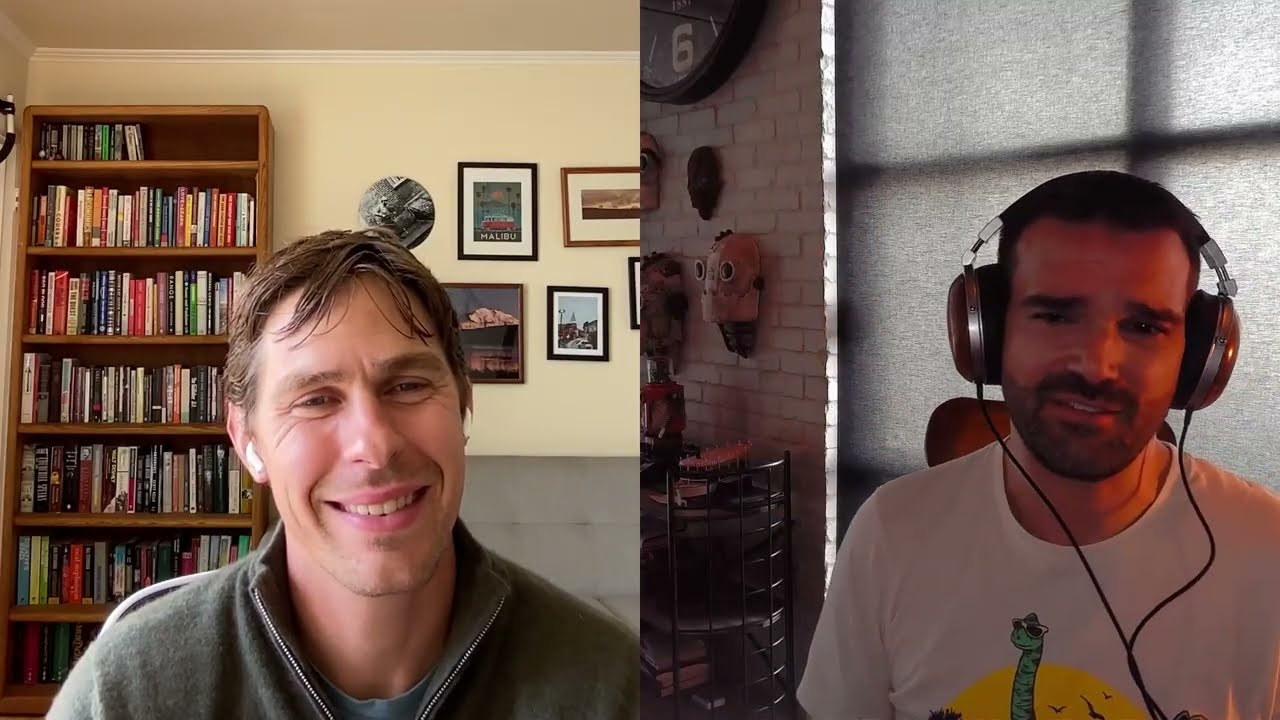
His more recent public conversations address artificial intelligence and the authenticity of assessed work. In a 2026 interview with Matt Tower, the discussion returned to the company's origins and the pace of change in academic integrity. The surrounding technology keeps moving; the basic institutional question remains who completed the work receiving credit.
Olsen has spent years trying to make that question easier to answer. His career also demonstrates how many additional questions arrive with the answer: what to record, what to flag, who should decide, and how to earn the cooperation of the person being examined. The pallet desks could be finished in a parking lot. Trust requires more maintenance.
Keep the conversation going
Proctorio · Olsen on LinkedIn · Twitter / X · GitHub
The accelerator rejection
The pallet desks and ten years of Proctorio
Olsen on cloud reliability
The 2020 support-log dispute
The conclusion of the Linkletter lawsuit
Video: a conversation with Matt Tower
Podcast: Assessment Luminary, episode 33