Dinner in the Gitlin household came with an obligation: have something to say. His father, a lawyer, expected conversation, even from a child arriving hungry from the soccer field. Sometimes the family moved on to mock trials by the fireplace. Someone had to prosecute. Someone had to defend. Television faced unusually well-prepared competition.
Decades later, Mike Gitlin remembers those evenings as practice in thinking, listening and making a case. His father wanted free thinkers, he has said. Being able to speak was only part of the exercise; he also had to hear what everyone else was saying.
Gitlin became Capital Group’s president and chief executive officer in October 2023. He arrived at that position through trading desks, overseas assignments and the work of building bond businesses. The route contains several changes of subject. Following it requires a passport as well as an organizational chart.
A passport before a master plan
After graduating from Colgate University in 1992, Gitlin worked at George Weiss and Associates, trading Japanese equities and bonds. The job put a young graduate in contact with markets operating on the other side of the clock. In a later interview, he recalled trying to locate the phone numbers he needed to execute trades in Asia. The learning curve included directory assistance.
He subsequently worked at Credit Suisse Asset Management, including a Singapore posting in 1996 and 1997. At Citi, he worked in Hong Kong from 1999 to 2003, first leading Asia-Pacific sales trading and then Asia-Pacific cash equities. His responsibilities eventually included international cash equities and U.S. equity sales.
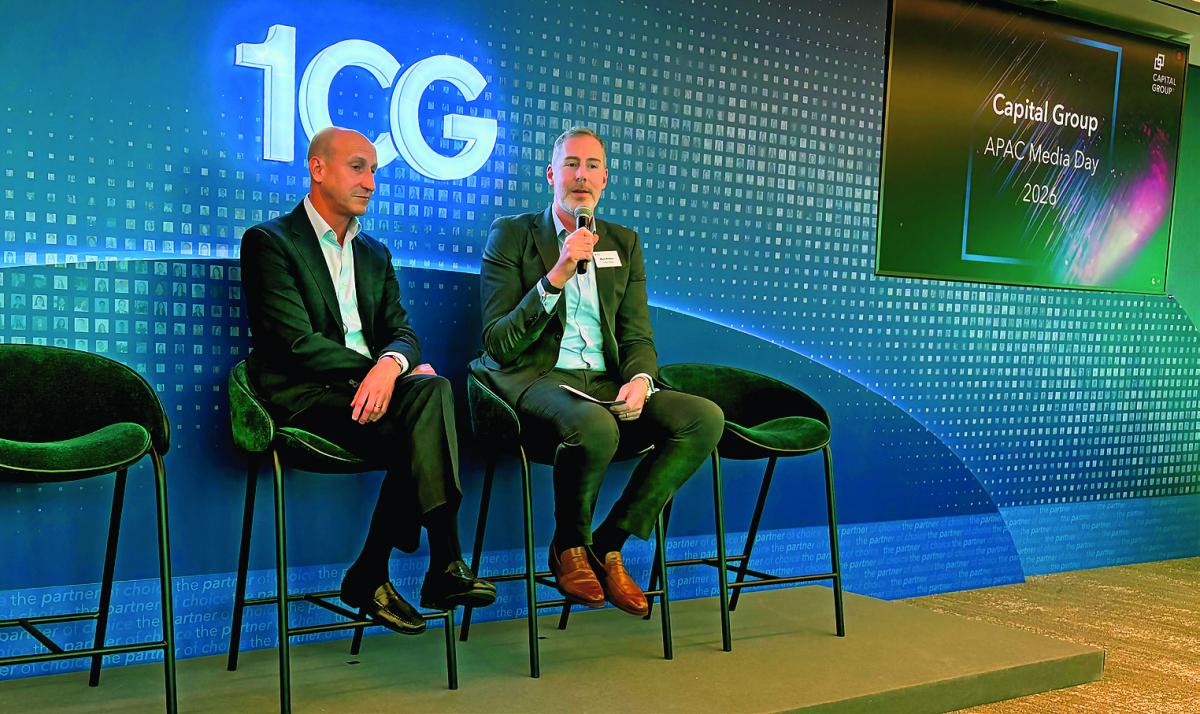
Returning to Singapore for a media event in April 2026, he marked three decades since his move there. He described living abroad as a way to acquire another culture and a broader perspective. That is a practical observation from someone whose working life crossed borders long before he was responsible for a global firm.
The geography matters because his later job would involve bringing people with different specialties into the same business. A trading desk supplies immediate feedback. An overseas assignment supplies a different sort: familiar assumptions become less useful, and asking a question can be more productive than confidently exporting an answer.
The trader gets a bond department
Gitlin joined T. Rowe Price in 2007 as global head of trading. Two years later came a consequential change of brief. Mary Miller, the firm’s fixed-income director, had been nominated for a Treasury Department position. In December 2009, T. Rowe Price announced that Gitlin would succeed her, taking responsibility for a division managing nearly $100 billion.
He was moving from running trading to leading the larger investment business. His appointment drew on global capital-markets experience, including years in Singapore and Hong Kong. A trading career had become a preparation for managing specialists whose work extended beyond the trading desk.
The distinction is worth keeping. Running an investment organization involves research resources, careers, succession and the ability to get decisions made. Portfolio management is its own discipline. Gitlin’s record became increasingly associated with the organization around investment decisions.
During his tenure, T. Rowe’s fixed-income team expanded from 33 people in 2007 to 76 in 2014. The additions included quantitative resources and an emerging-markets corporate-debt team. New funds followed, including emerging-markets corporate bonds and credit opportunities. He also worked on career paths for analysts and succession planning.
Those details are less photogenic than a successful trade. They are also harder to reduce to an individual moment of brilliance. A new team needs a purpose. An analyst needs somewhere to go next. A business expected to endure needs a plan for the day its current leaders leave.
2007
2014
T. Rowe Price’s fixed-income team during the period spanning Gitlin’s trading and divisional leadership roles.
Eight years is a short apprenticeship here
In 2015, Gitlin left T. Rowe Price for Capital Group. At a firm accustomed to developing its own leaders, he entered from outside. His assignment was fixed income, inside an organization closely associated with the American Funds equity franchise.
By December 2022, Capital managed more than $450 billion in fixed-income assets. Across the preceding five calendar years, it had attracted roughly one-third of active fixed-income flows. Those were business-level results, produced by an investment organization. They also made the case for the executive who had helped build it.
When his succession was announced in early 2023, he had spent eight years at Capital. Tim Armour, the outgoing chairman and CEO, had spent four decades there. The difference makes Gitlin’s appointment distinctive: a company with a long internal memory had chosen someone whose experience included several other institutions.
Capital’s leadership arrangements also resisted the tidiness of a single successor taking every title. Gitlin became president and CEO and chair of the management committee. Martin Romo became chairman and chief investment officer. Jody Jonsson became vice chair. Different responsibilities went to different people.
That distribution fits a firm whose investment process has long made room for separate judgments. The Capital System divides portfolios among managers who share research while retaining responsibility for their own portions. Its history reaches back to 1958. Gitlin inherited an organization already designed to give more than one person a consequential opinion.
- 2007Global head of trading
T. Rowe Price - 2009Chosen to lead fixed income
T. Rowe Price - 2015Joins the bond business
Capital Group - 2023President and CEO
Capital Group
Staying private, opening another door
Gitlin’s tenure comes with commercial pressure. Investors have been moving money toward ETFs and passive strategies, challenging the mutual-fund businesses that made established managers successful. Capital has expanded its ETF lineup and become more visible. Familiarity earned over decades does not automatically win the next allocation.
His answer includes a partnership with KKR, announced in 2024. Capital brought public-market investing; KKR brought private-market capabilities. In April 2025, the firms launched two credit interval funds, Core Plus+ and Multi-Sector+. They sought, over time and subject to market conditions, a mix of approximately 60% public fixed income and 40% private credit.
The construction deserves a pause. The two numbers describe where the credit investments sit. This particular 60/40 is a public/private split within credit. Readers may recognize the same numbers from a stock-and-bond portfolio, but the underlying assets and purpose differ.
The public/private credit recipe
Capital Group
Public fixed income
KKR
Private credit
The launch included a $1,000 minimum and quarterly repurchase offers of up to 10% of outstanding shares. That repurchase structure matters: access to private assets does not make the investment equivalent to a daily-traded fund. The product’s design is part of the argument Gitlin has to make to advisors and their clients.
In December 2025, Capital and KKR announced plans for further retirement and wealth offerings, including a target-date fund solution and public/private model portfolios. On March 3, 2026, Capital announced the launch of U.S. Equity+, extending the approach into a portfolio combining public and private equity.
Gitlin has simultaneously defended Capital’s private ownership. Speaking in Singapore in 2026, he described acquisitions as distracting for employees and said the firm intended to remain private. His ambition allows for new partners and products while retaining an ownership arrangement he considers useful. Corporate stability, in this account, has work to do.
The CEO who keeps asking questions
Another part of Gitlin’s work takes place across a microphone. On Capital’s podcast, he interviews investment colleagues about their decisions and experiences. The format gives the people behind the portfolios a chance to explain themselves at greater length than a performance table permits.
With Hong Kong-based portfolio manager Winnie Kwan, the conversation covered lessons from the Asian financial crisis and their later application during the global financial crisis. His own overseas career makes the setting familiar, while her experience supplies the substance. The host’s job is to draw it out.
With Martin Jacobs, he explored concentrated portfolios and the scrutiny of company management. There was also Jacobs’s account of playing pickup basketball with Michael Jordan. Some investment conversations benefit from a reminder that their participants occasionally leave the office.
Municipal-bond manager Courtney Wolf discussed tax-exempt income, public finance and the competitive spirit she developed through a college lacrosse national championship. The variety gives the series its human texture. A portfolio manager can arrive with a view on credit and a story that explains something about the person holding it.
In his own conversation with Morningstar in 2024, Gitlin recommended Will Guidara’s Unreasonable Hospitality. He argued for advisors to think about the whole family and the business of serving it. A book drawn from hospitality makes sense beside that argument: the service around an investment can become part of why a client stays.
A large firm’s smaller rooms
At the Milken Institute’s 2025 conference, Gitlin described a problem that accompanies growth: ideas can disappear into organizational noise. Capital then had five investment units managing its roughly $3 trillion pool. Breaking the investment organization into smaller groups was a way to keep individual judgments audible.
“We measure ourselves by outcomes, not AUM.”
Mike Gitlin · Milken Institute, 2025
The distinction places a condition on his ambition. Assets under management tell you how much money a firm oversees. Client outcomes ask what happened to the people who entrusted it. The first number is convenient for a league table. The second is the reason the relationship exists.
In January 2026, his Capital Allocators interview looked ahead to the firm’s centenary in 2031, alongside its ownership, training and investment system. His working horizon now stretches well beyond the next trading session. The young trader searching for a phone number has become an executive thinking about how an institution keeps learning.
There is a recognizable thread back to those family conversations. Give people a consequential question. Expect them to prepare. Leave enough space for an answer you did not supply yourself. A dinner table is a modest place to practice. An investment firm offers a substantially larger bill.