Mike Dendy once received a piece of career advice that came without a spreadsheet. His godfather, whom he admired, told him that a worker should never have to approach the pay window backward. Do the work properly. Face the person paying you. Know that the money has been earned. Dendy remembered the lesson from his high school and college years and was still retelling it decades later.
It is a wonderfully inconvenient standard for a businessperson. A complicated presentation can conceal a great deal; a handshake offers rather less furniture to hide behind. The advice asks a plain question of every transaction: can you explain what you contributed?
For Dendy, founder and former CEO of AMPS, that question sits alongside another, acquired much later: what happens when somebody else buys the business? His career contains consulting, operating companies, new investors, a public company board and another startup. Across those changes, the relationship between work and ownership has become increasingly explicit.
“Never want to have to back up to the pay window.”
The advice Dendy recalled from his godfather
The business before the deal
In 1992, Dendy founded Health Partners Services, a brokerage and consulting firm. He managed it through 1997, building annual consulting revenue to $600,000. The figure belongs to that early business, before the larger companies and later transactions. It gives his career a useful starting scale: a professional services operation with customers, fees and work that had to justify the invoice.
From 1997 until its sale in 2004, he served as chairman and CEO of HPS Paradigm Administrators. During his tenure, the company reported average annual fee income growth of 50 percent and EBITDA margins above 22 percent. Growth and profitability were arriving together. Those are different achievements, even when a presentation puts them on the same slide.
The distinction matters to the portrait. Dendy's early record includes the mechanics of running a company, rather than simply arranging its ownership. There were services to deliver and relationships to maintain before there was a buyer. A business can look elegant in a transaction diagram while being quite demanding on a Tuesday morning.
His responsibilities also reached into an outsourcing relationship in Savannah in 2000. That part of the career places him close to the practical work of administration: coordinating an operation for other organizations, with all the obligations that accompany it.
Annual consulting revenue reached by his early HPS business, before HPS Paradigm's 2004 sale.
Four degrees, then more homework
Dendy's education is an unusual combination for someone whose later conversations would involve ownership stakes and buyers. At the University of Georgia, he earned bachelor's degrees in journalism and psychology. He subsequently earned two master's degrees at Georgia State University, including an MBA.
Journalism asks questions about an account of events. Psychology concerns itself with the people involved. Business administration brings its own vocabulary of resources and decisions. It would be too neat to turn those subjects into a formula for his career. They do, however, make the academic record more interesting than the standard business school shorthand.
He also attended executive programs at Harvard, including professional negotiations and an entrepreneur's toolkit. These were executive courses, distinct from his degrees. The negotiations course is a particularly apt detail in a career that later supplied plenty of opportunities to examine a deal from both sides of the table.
The university relationship continued beyond study. Georgia State's Robinson College of Business lists Michael, or Mike, Dendy among its advisory board members. His LinkedIn profile dates his relationship with the business college's board of advisers to 2013. The sequence runs from student to operator to adviser, with an institution remaining in the picture as the company names change.
New capital, familiar faces
At AMPS, Dendy's responsibilities ranged across sales, marketing, finance and client relations. It was a broad operating remit. He was working at AMPS by 2005. Over the following years, building the company brought him to another decision about its financial backing.
In May 2017, an investor group led by Cimarron completed a recapitalization of AMPS. RAF Industries and Leavitt Equity Partners participated alongside management. The transaction brought new financial partners into a business Dendy had been running for years.
He said the original shareholders would retain a substantial ownership position and that the management team would stay. A transaction, in this case, came with continuity. The people running the business were part of the arrangement.
That detail complicates the familiar picture of an exit as a founder handing over the keys and disappearing. Ownership can change in degrees. A founder may take money off the table, retain an interest and continue working alongside new partners. The percentages matter, but so does the working relationship after the signatures.
A seller with a memory
When Dendy discussed acquisitions and private equity in 2024, he was willing to revisit an uncomfortable part of his own experience. He thought he could have negotiated a better result in his first business exit. He emphasized the importance of advisers and of understanding the value of the company being sold.
There is something useful about an experienced seller admitting that the transaction itself required an education. Building the business gives its founder intimate knowledge of how it works. Negotiating its sale introduces another set of questions, and another party with its own expertise.
Dendy also described the tension between an entrepreneur's attachment to a company's future and an investor's financial objectives. Retaining equity after a sale can offer participation in a later outcome, while leaving the founder exposed to decisions made with new partners. Affection for a business does not write the terms of the next agreement.
His account gives the deals an emotional dimension without requiring a heroic defeat or a triumphant final number. He had built things he cared about. He had sold businesses. He had reasons to think harder about the next arrangement.
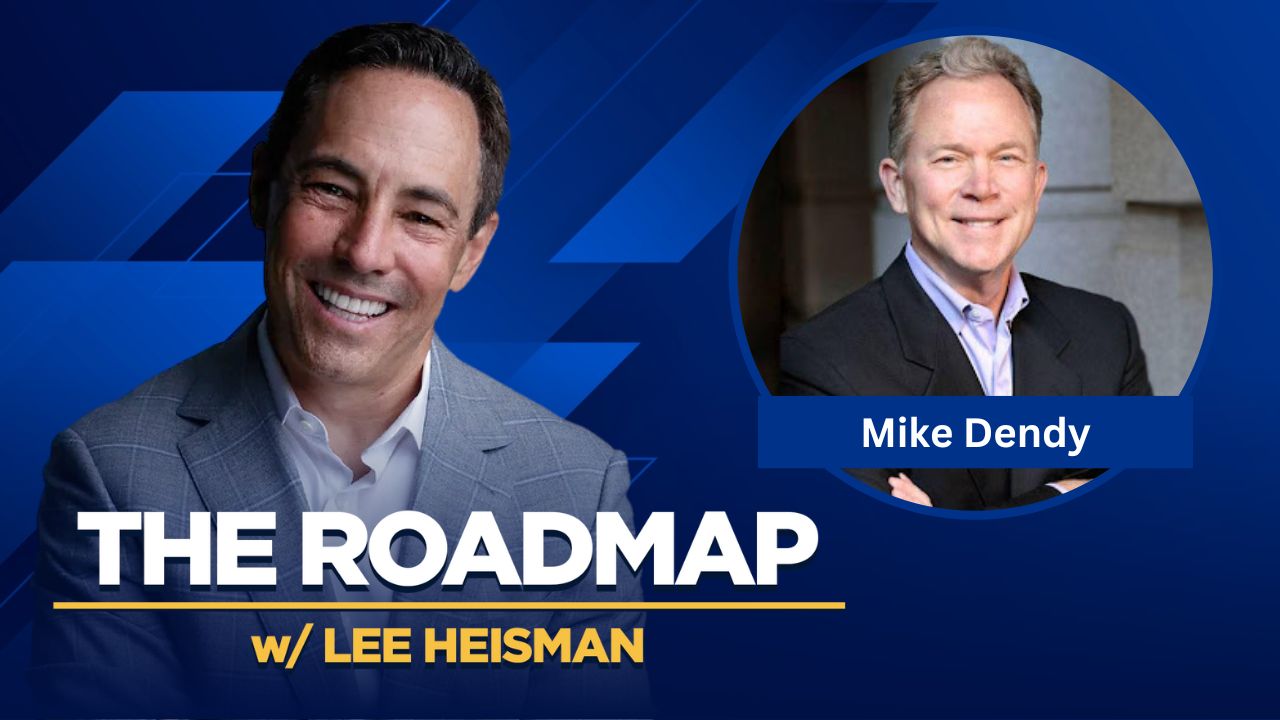
The luxury of taking a year
With CarynHealth, founded in 2018, Dendy and his partners gave themselves time to develop the software before pressing ahead. The early work included a year devoted to building the technology. Previous business experience gave the group room to make that decision.
In describing the partners' attitude, Dendy emphasized getting things right and avoiding embarrassment. He turned the latter into a joke about receiving similar instructions from his wife before going out. The humor is domestic, brief and rather more revealing than another polished claim about excellence.
He called the earlier businesses his passion and described CarynHealth as the first venture he had approached with a sale already in mind. The financing came with an intended five to seven year period for building and selling. That was the plan he described in 2024, rather than an announcement of a completed transaction.
“We had the pressure to do it right.”
Mike Dendy, discussing the startup's early timetable
A year spent preparing and a sale contemplated from the beginning can seem an odd pairing. Together, they make a practical proposition: if the business is meant to change hands eventually, give the next owner something worth taking over.
The work beneath the software
CarynHealth's collaboration with UST provides a more concrete view of that preparation. The teams tested technologies in an innovation lab and developed a cloud platform. Their work included enrollment tools, data repositories and integrated workflows. These are the parts of a software business that rarely make an especially glamorous photograph.
In September 2024, the partnership reported that its development pipeline had brought deployment times to two weeks, along with a 15 percent increase in developer productivity. These were results attributed to the technology partnership, rather than personal performance statistics for Dendy.
The distinction keeps the story human. A CEO may choose a direction and organize the partnerships, but other people build and maintain the machinery. In this chapter of Dendy's career, the company depended on a technology partner as well as on its owners and managers.
CarynHealth now lists him as co-founder and CEO, alongside a leadership team responsible for finance, operations and revenue. The company says annual revenue exceeds $40 million. It is a present operating business, with the daily obligations that description entails.
A career with more than one ending
Dendy's work has also included a seat on Marpai's board. He was appointed in November 2023 and resigned effective May 12, 2024. The company said his resignation involved no disagreement over its operations, policies or practices. It was a defined period of board service alongside his other work.
Put the chapters together and the progression is less tidy than the familiar founder story. There is the early consulting firm, an operating company sold in 2004, AMPS and its new investors, a later startup deliberately prepared for an eventual sale. Each arrangement asks a different question about responsibility.
The godfather's advice survives all of them rather well. Whether the person across the table is a customer, an investor or a prospective buyer, there is still work to explain and value to account for. Dendy began with a lesson about earning his pay. He has spent the intervening years learning what it means to sell the thing that earns it.