Mike Chang’s career contains an unexpected acquisition: a local technology publication. A founder associated with real estate calls and agent referrals helped buy dot.LA, a business devoted to Los Angeles startups. At first glance, the newsroom seems a long way from the sales floor. Look at the people involved, though, and the distance shrinks. Each business depends on getting someone’s attention, making an introduction and giving both sides a reason to keep talking.
The path runs through Calltend, OJO and HouseVenture. Read together, those chapters suggest a recurring interest in the machinery around a conversation. Who gets recruited? Who gets matched? Who follows up? Across those jobs, the operating questions recur even as the customers and business models change. The appeal is in its practical scale. Start with one person trying to reach another. Then try to make that happen reliably for many people.
A network can look wonderfully simple from a distance. Draw some dots, connect them with lines, and it practically runs itself on a presentation slide. The people represented by the dots tend to be less obliging. They have preferences, schedules and other calls to return. Chang’s work has repeatedly involved organizing that inconvenient human detail.
The office was optional. The call wasn’t.
Calltend offered one answer. Its representatives could work remotely, making calls for client businesses through a distributed service. For a founder who had encountered problems while creating call centers, that was a concrete place to begin. Chang dates the company’s establishment to February 2017, after entering real estate in 2012.
The distinction matters to his story. He came to the problem through an industry where a conversation can be the first useful step toward a transaction. A potential customer needs someone to ask a question, listen to the answer and decide what should happen next. The work is small enough to describe in a sentence and complicated enough to occupy an entire company.
Calltend’s public business description includes prospecting, qualification, conversion and agent recruiting. Those assignments put the caller in different relationships with the person answering. Finding someone who might sell a property requires one conversation; following up with someone who has already expressed interest requires another. The common task is making a useful handoff.
Chang’s early ambition was to loosen the relationship between calling work and a particular building. The shared office could become optional while the business still needed the conversation. That change makes the recruiting question larger: where can you find people able to do the work, and how do you decide whom to trust with it?
“Approach it like sales. Know where everyone sits in the sales funnel.”
Mike Chang, on fundraising, 2017
The line is revealing in its economy. A sales operator reaches for a sales process to explain a different job. It places attention on the next step, the person responsible and the state of the relationship. A founder might find romance in a pitch. Chang’s answer gives the pitch a place in a queue.
A choice of hours creates a scheduling problem
The company’s present recruitment pitch gives callers control over their hours and workplace. It also says stronger performers receive more calls. Read those promises side by side and the operating bargain becomes visible. Flexibility brings people into the network; performance affects their access to work.
For a caller, the attraction is easy to understand. A working day can fit around a location of their choosing. For the business organizing the calls, individual freedom creates a coordination task. Clients still need work completed. Someone has to reconcile the choices made by many separate people with the promise made to a customer.
This is where Chang’s founder story acquires some texture. Distributed work sounds airy until it encounters an unanswered request or an uneven afternoon of demand. An office puts people in sight. A remote service needs other ways to establish readiness and decide where the next assignment goes. The organizational work travels even when the desks stay home.
- 01 Recruit
- 02 Verify & train
- 03 Call & qualify
- 04 Hand off
A conceptual view of the company’s described service, not a measurement of results.
Calltend advertises a worldwide community of more than 30,000 representatives. Its company description places the network in more than 40 countries and says it serves more than 1,500 businesses. These are company claims about reach. They describe the pool and customer base, rather than the number of people simultaneously making calls.
That distinction keeps the scale intelligible. A community, an active workforce and an individual assignment are different things to organize. Chang’s business sits at their intersection. Recruiting opens the door; selecting, training and allocating work determine what happens after people come through it.
The next network had agents at its ends
Chang joined OJO in 2020. His role leading the OJO Select Network brought him into another kind of matching business, connecting consumers with real estate agents. A caller network and an agent referral network have different jobs, but both require someone to organize participation before a customer can benefit from it.
At OJO, the company described its approach as combining technology with human expertise to help people navigate real estate decisions. In that setting, the agent network supplies a consequential human connection. A referral begins a relationship in which the consumer and professional still have to establish whether they can work together.
The numbers attached to Chang’s work became substantial. In the network’s first year, Chang and his team were credited with onboarding more than 20,000 agents and facilitating more than 1.2 million consumer-agent connections. Those measures describe recruitment and introductions. They should retain those meanings: a connection is an opportunity for a relationship to begin.
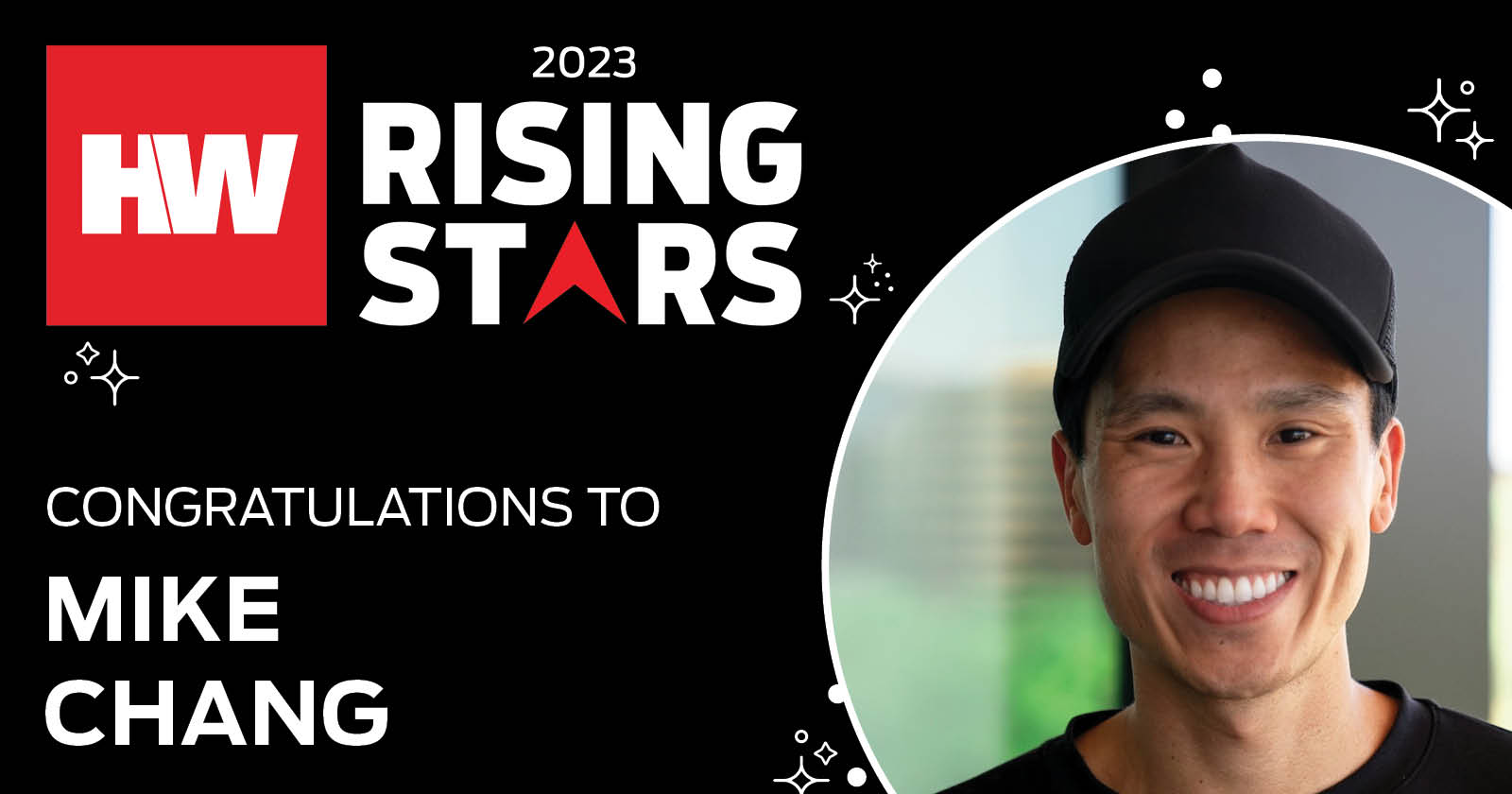
HousingWire named Chang a Rising Star in 2023. The recognition placed him among executives working across housing and real estate. OJO publicly congratulated him for his agent partnerships. A career that had begun with real estate work now included responsibility for the network through which other professionals met their prospective clients.
The interesting progression is from performing work inside an industry to arranging how people in that industry find one another. The second job creates a different kind of responsibility. An individual can make a good introduction. A network operator has to think about the terms under which many introductions happen.
He also joined somebody else’s community
Chang’s professional life includes participating in a network he did not build. Geek Estate Mastermind listed him among its new members in July 2022, alongside other people working in property technology. The group organizes discussion and gatherings around the industry. Membership puts the network builder on the receiving side of an invitation.
In a testimonial for GEM, Chang describes meeting executives, investors and founders, and seeing business relationships emerge from the community. The useful point is specific: people in related work can become accessible to one another through a shared setting. A directory gives you a name. A conversation supplies context for why you might have something to discuss.
There is an appealing symmetry here. Building a community requires convincing people that participation has value. Joining one involves making that judgment yourself. Both sides depend on a reason to return after the first introduction. Attention is easy to request and harder to deserve on the second visit.
Chang’s public record also includes building an online real estate agent community. That adds another setting for the same broad activity: professionals exchanging experience with people who understand the work. The setting changes from a phone platform to a referral network to a shared discussion, while participation remains something that has to be earned.
Then came a newsroom
In April 2024, HouseVenture’s acquisition of dot.LA became public. Spencer Rascoff identified Chang, Adrian Delgado, Hailey Chang and Nick Thomas as the team taking the publication forward. Samuel N. Adams separately announced that the acquisition had completed. The transaction gave Chang a new audience to help convene: the Los Angeles startup community.
Rascoff’s announcement emphasized the incoming team’s community building. That framing connects the purchase to Chang’s earlier professional interests without making a newsroom and a calling service interchangeable. A publication has an editorial relationship with readers. People come to it expecting information worth their attention, and their confidence depends on the quality of what they receive.
The acquisition extends his career into a new professional audience, with a publication and its readers at the center. Chang moved into a business where introductions can happen through a reported story, an event or the discovery that another company nearby is working on a related problem.
Media also changes the terms of the conversation. An agent referral has a particular destination. A publication can let people encounter something they were never looking for. The person who arrives for one company’s news might leave with a better question about their own business. That possibility gives the new chapter its interest.
The line between the dots
Chang’s career can be read through the different things a useful connection must carry. At Calltend, it carries a customer conversation into a client’s workflow. In an agent network, it carries a consumer’s interest toward a professional. In a business community, it carries experience, attention and the possibility of collaboration.
These are different businesses with their own obligations. What makes the sequence worth following is the recurring organizing problem. Finding people comes first. Giving them a workable reason to interact comes next. Keeping that interaction useful takes further work, long after the network looks complete in a diagram.
That leaves a more human picture of Chang than a list of titles alone. His public career keeps returning to the moment when a name becomes someone another person can talk to. The dots are easy to draw. The line between them is where he has chosen to work.