A name in a database is a wonderfully obedient thing. It can be sorted, exported, scored and admired in a meeting. Ask whether it wants to sell a house, however, and somebody has to make a phone call. Calltend has built its business around that less glamorous moment: the conversation that turns a record into something a salesperson can use.
- The job: human calling for prospecting, lead qualification and conversion.
- The audience: real estate teams, with mortgage and insurance applications.
- The mechanism: a distributed caller network, supported by screening, training and performance incentives.
- The buying question: how many useful opportunities reach your sales team?
The expensive silence between leads and listings
Real estate makes the distinction easy to see. A person who appears on a prospect list may be ready to sell, vaguely considering it, or delighted with the house and irritated by the question. Those are three different prospects. A database can place them in adjacent rows. A conversation can separate them.
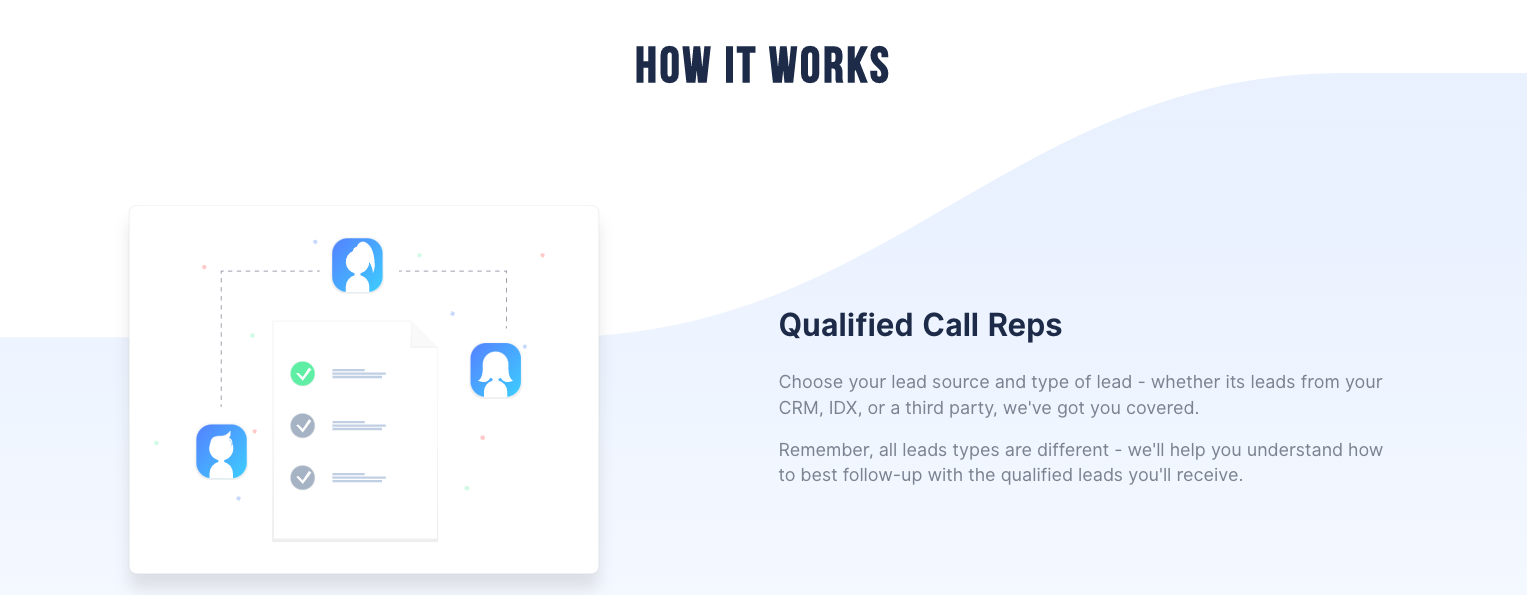
Calltend offers to do that work on behalf of a client. Its public company description lists lead generation, qualification, conversion and agent recruiting for real estate, plus narrower mortgage and insurance services. Its customer-facing pitch is directed at agents, teams, brokerages and technology enterprises. The common need is someone to handle the calling workload while the client handles the business that follows.
Generation and conversion deserve separate attention. One looks for possible business; the other works on interest already obtained. A brokerage seeking potential sellers has a different assignment from a team following up with people who have already enquired. Buying “calls” without specifying which assignment you mean is rather like ordering transport without mentioning the destination.
A workforce is not a floor plan
The company’s website describes a community of more than 30,000 Calltenders. Its LinkedIn profile places that network in more than 40 countries and says it provides calling services for over 1,500 businesses. These are company-reported network and customer figures. They should be read as the scale of the proposition, rather than as a count of people simultaneously waiting beside a phone.
The advantage being sold is access to a pool. A directly hired inside sales agent offers continuity with one person; a distributed calling service offers a way to organize many people around an assignment. Which is preferable depends on the work. Deep familiarity with one team and repeatable prospecting across a large list are different demands.
For callers, Calltend’s recruitment page promises home working and a choice of hours. It also says high performers receive more calls. That is the incentive arrangement in plain sight: flexibility attracts people, while performance influences access to earning opportunities. The operational test is whether those individual choices add up to dependable coverage for the client.
“We make the calls so you don’t have to!”Calltend’s public pitch
The bottleneck was people
Mike Chang dates Calltend’s establishment to February 2017. In a founder interview that November, he identified recruiting as the biggest startup challenge. He also described a learning system that used tests and assignments to produce over 200 data points before a representative could begin calling, and a payment model that rewarded stronger performance with higher pay per lead.
This makes the early idea more interesting than simply sending work home. A bigger recruiting pool creates a bigger selection problem. The screening mechanism determines who reaches the prospect; incentives shape what happens once they arrive. Geography can change quickly. Judgment still needs organizing.
A 2018 recruiter vacancy makes that organizing visible. Duties included sourcing applicants, evaluating them against consistent qualifications and reviewing the applicant funnel daily. The remote role required reliable power, a computer, internet and a headset. The network had an ordinary, demanding backstage: finding people, checking equipment and tracking progress. “On demand” still requires somebody to prepare the supply.
What a monthly price buys
Calltend sits in the market for outsourced inside sales and calling services. Buyers can compare that approach with hiring an inside sales agent, employing a dedicated virtual assistant, or commissioning a conventional call center. The useful comparison includes who recruits, trains, supervises and replaces the people making the calls.
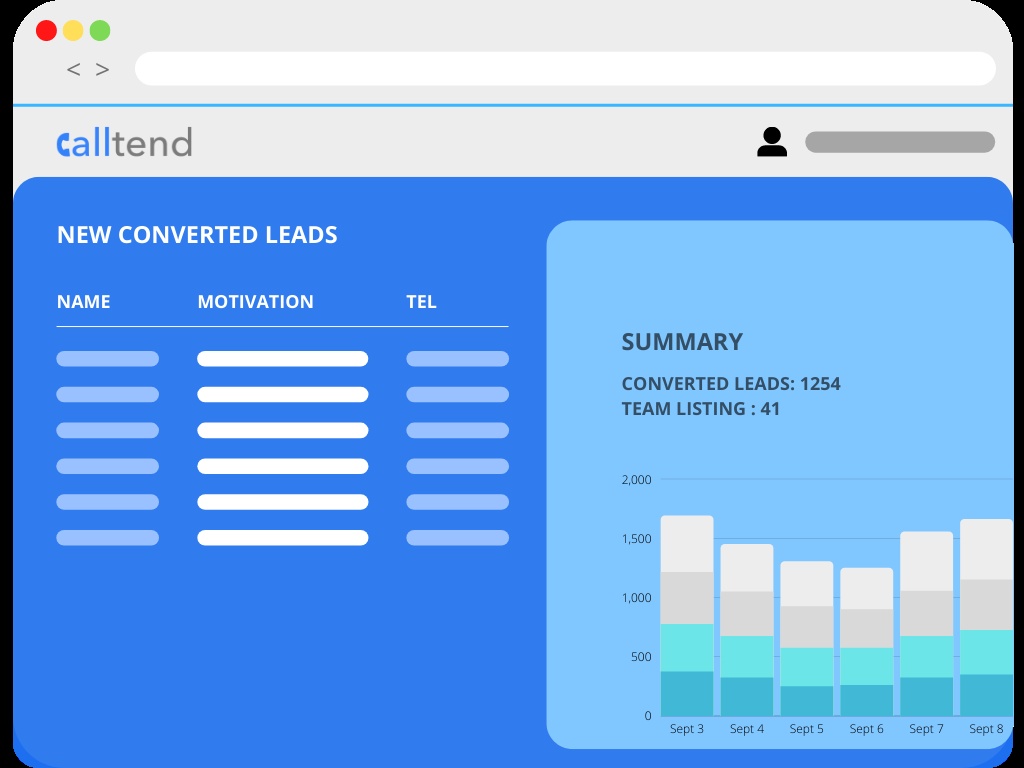
An undated real estate services directory lists Calltend at $800-$1,295 a month and describes outbound prospecting, dynamic dialing and analytics. Treat that range as a historical buying reference. Calltend’s public site directs interested clients to a consultation, so the sensible next step is a written quote for the actual campaign.
A monthly fee alone cannot tell a buyer whether the service is economical. A useful denominator is the number of opportunities the sales team accepts. If a campaign produces many names but few conversations worth continuing, cheap calling can become expensive prospecting. Conversely, a higher fee can be sensible if it removes substantial management work and produces usable handoffs.
How much per accepted opportunity?
A hypothetical campaign, not a Calltend price or result.
PER ACCEPTED OPPORTUNITYSpend ÷ accepted opportunities. Add internal follow-up costs for a fuller comparison.The website advertises “3x better conversion.” A buyer should give that claim a proper denominator too: conversion from which starting point, to which outcome, over what period? Those questions are a useful discipline for any sales service. A promising multiple becomes actionable when both sides agree on what is being counted.
The cofounder who retired a rule
There is a revealing personal footnote to this people business. In a May 2018 essay, cofounder Paul Stavropoulos described his attraction to the “grim trigger,” a strategy of permanently withdrawing cooperation after someone defects. He liked the idea enough to use it as a Snapchat username.
An investor friend challenged his application of that rule to a work situation. Stavropoulos reconsidered it and wrote in favor of openness and difficult conversations. The essay records a personal change of mind, rather than a documented Calltend policy change. Still, it poses a good question for a business built around people: how do you distinguish someone who needs coaching from someone who should no longer represent a client?
Stavropoulos’s earlier productivity post supplies a smaller amusement. He described phone calls as the team’s preferred way to communicate, partly because tone survives a call better than a string of messages. A calling company that likes calling is reassuringly literal.
Keep the handoff in your hands
The lesson a reader can copy is operational. Define the job before expanding the workforce. Agree on what makes a prospect qualified, what information travels with the handoff and who follows up. Then assess accepted opportunities and the work required to turn them into business. Call volume is useful, but it is only one stage.
A distributed service is a plausible fit when the calling task is repeatable, the qualification standard is clear and a client can act on the resulting conversations. A campaign that depends on detailed personal knowledge of every account needs a different staffing discussion. A team that cannot follow up promptly has its own problem to solve before buying more outreach.
Calltend’s proposition is easy to grasp: let a managed human network take on the calls. The harder, more interesting question belongs to the buyer. When the conversation ends and the lead arrives, does somebody know exactly what to do next?