The first thing José Costa Rodrigues wanted was an iPhone. His parents considered it too expensive. This was an ordinary disagreement between a teenager and the people expected to finance his tastes. Rodrigues’s response made it rather less ordinary: he began selling things he already owned. Used books, PlayStation games, phone accessories. Eventually, he had enough for a secondhand phone. The parental refusal had acquired an unexpected business consequence.
The story starts in Ourém, Portugal, where the distance between wanting something and paying for it became an invitation to trade. Classmates wanted phones too. A used device offered a way around the price of a new one. He could find a buyer because he understood the attraction himself. Before there was a company, there was a customer who happened to become the seller.
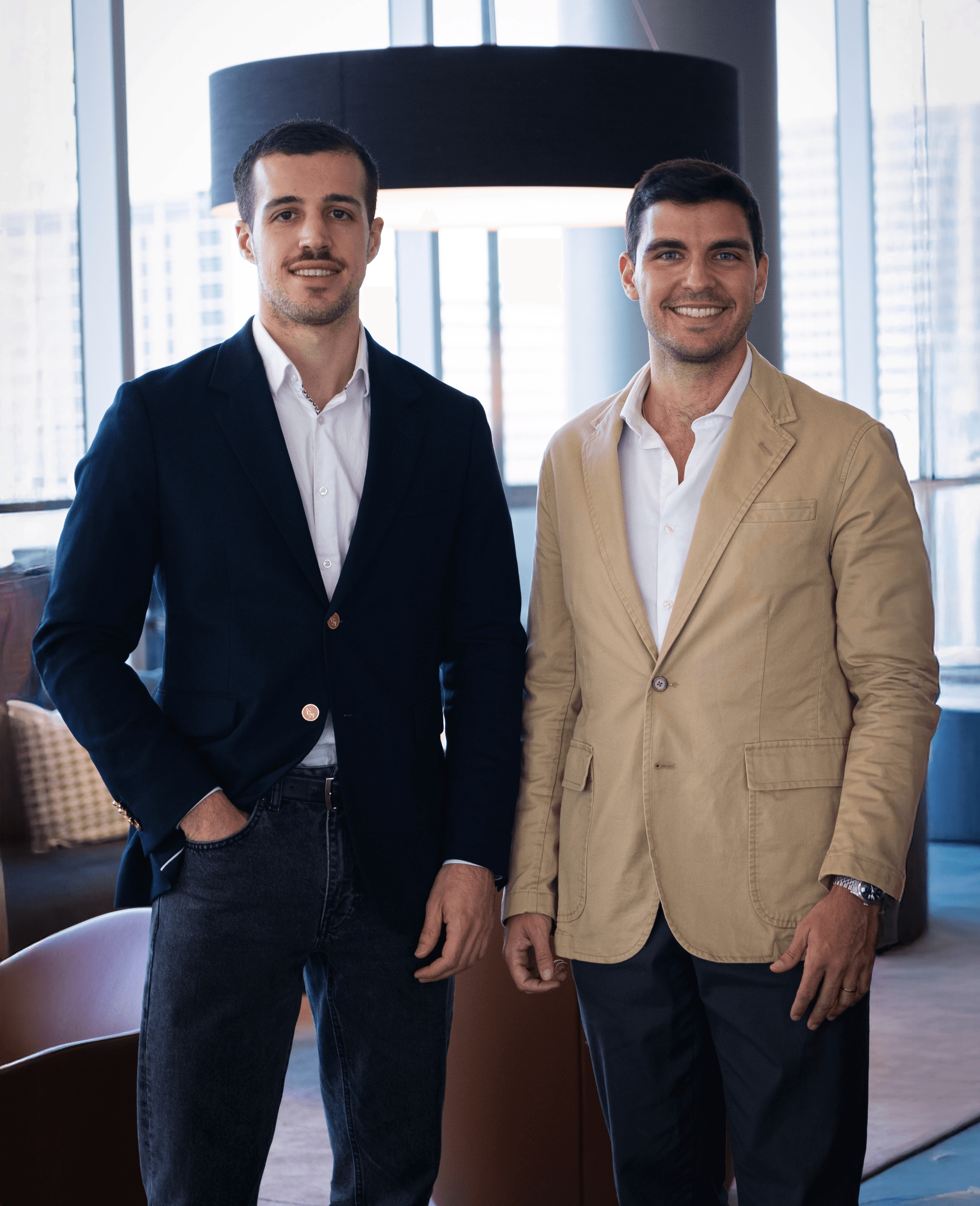
Today Rodrigues is the co-founder and chief executive of Relive, based in Austin, Texas. The products, contracts and amounts involved have changed. His work still depends on persuading people to take a consequential step with someone they may only recently have met. Technology can introduce the parties. Somebody must answer the questions.
The football career that changed fields
For years, he expected competition to mean football. He played through his childhood and adolescence, including for União de Leiria, and captained its youth team for two years. Training supplied a routine of effort, teammates and results. It also brought him close enough to talented players to judge his own prospects without much sentimentality.
By late adolescence, he was reconsidering the professional route. Being good might lead to a place in a lower division; it did not guarantee the career he imagined. Meanwhile, the business hobby was becoming difficult to ignore. A sale produced a result he could repeat. Football had taught him to turn up. Trading gave him another reason to do so.
There is a pleasant continuity in the November 2021 invitation to speak about entrepreneurship at Leiria’s stadium. He had once gone there hoping to progress as a player. The planned talk concerned a different working life, carrying lessons about teams and persistence into a setting where their original meaning needed little explanation.
A shop is also a promise
Rodrigues founded Forall Phones in 2015, at 19. Its business was refurbished electronics: devices with a previous owner, sold to customers who wanted access to technology at a lower price. Buying used asks something extra of a customer. The saving is visible immediately. The condition of the product, and the reliability of the person selling it, require more confidence.
Forall grew beyond the founder’s individual transactions into a retailer with stores and staff. By the time its story reached a sale, it had opened 15 shops and recorded more than €20 million in cumulative sales. The numbers describe phones sold across a business, rather than money deposited in its founder’s personal account. They also describe a considerable amount of work between the first listing and the last receipt.
In summer 2019, he stepped back from executive management while retaining a shareholder and board role. There was a practical judgment behind that decision: a larger company needed experienced management. Founding something and running its later stages can demand different strengths. Recognizing that distinction is a useful achievement, even when it is less photogenic than opening another shop.
In December 2020, Rodrigues and co-founder Manuel Castel-Branco sold Forall to a private Portuguese investor. The buyer’s identity and purchase price remained confidential. Rodrigues was already concentrating on Relive. An exit gave him a completed chapter, but he had chosen a next project before the binding was dry.
The problem waiting inside the previous business
Opening phone shops had required a second kind of shopping: finding premises. That meant visits, contracts and conversations with property agents. Expansion in one industry made him a customer of another. The hours spent securing space became a way to observe how the people selling or letting that space worked.
He noticed capable agents rushing between appointments, handling calls and managing everything around the transaction. Their success created its own congestion. An individual could be effective with clients and still have too little time to organize the business supporting those relationships. Relive grew around the possibility of giving that agent better systems and services.
In its early Portuguese form, the proposition included a mobile application and support for the practical work surrounding a sale. Rodrigues described a business in which agents could manage their activity more efficiently. He was interested in people building a profession of their own, with the infrastructure to make that profession manageable.
The connection to his first company is revealing. A customer’s repeated inconvenience had become material for a second venture. A store lease is an expense in one set of accounts. For someone paying close attention, the process of obtaining it may contain the beginning of another business.
An American plan needs an American address
In January 2022, Rodrigues moved to Austin. Relive had been selected for Techstars Austin, joining a cohort of 12 startups. That month it announced €1 million in funding. The company’s founding team included Henrique Brás and Sérgio Pinto Ferrás. The ambition now had an American location, an accelerator and investors behind it.
A business plan, however, is an unhelpful substitute for a front-door key. During the relocation, the founders spent a month moving between Airbnbs while trying to find somewhere to live. They had a team, an app and preparations for expansion. The question of their own home remained stubbornly open.
An agent eventually helped by narrowing the search to suitable properties and guiding them toward a place. For people building a real estate company, this was a particularly direct lesson. They could see the value of someone who understood a market they were still learning. A shorter, more useful list could matter more than a larger pile of possibilities.
The American operation also needed local expertise to get started. By June 2022, Relive had secured its Texas brokerage license and begun invoicing. Rodrigues described hiring an experienced managing broker and working with licensed agents. The early focus was rentals. A company entering a market had to assemble the people qualified to work there.
The agent behind the agent
Football supplied Rodrigues with a way to explain what he wanted Relive to do. He admired the work of Jorge Mendes, whose agency supports professional players around their central occupation. The attraction was the arrangement: find capable people and handle the surrounding business so they can concentrate on performing.
He had once written to Mendes’s agency, Gestifute, while hoping for a football career. Representation did not follow. Years later, the comparison had acquired a different use. His potential clients were real estate professionals, and the tasks surrounding their work offered an opportunity to be helpful.
The analogy fits his recurring concern with time. Every appointment sits inside a collection of other jobs: arranging it, keeping track of information, responding afterward and finding the next customer. An agent’s day has limits. Relive’s proposition depends on making more of that day available for work that produces a transaction.
“Tudo é possível, step by step”
José Costa Rodrigues, September 2023
His old sporting vocabulary appeared again in September 2023, when he announced that Relive had passed $1 million in US revenue. He compared the milestone to qualifying for the Champions League group stage. It allowed him to celebrate progress while leaving plenty of competition ahead. The tournament, conveniently, could continue.
Growth with the arithmetic attached
By February 2025, the company had announced a €5.3 million Series A led by Indico Capital Partners, with Shilling and Bynd participating. The next expansion plans included other American states. The ambition was to take an operation established in Texas into more markets, supported by a larger team.
Rodrigues described a lean starting point for that next stage: seven full-time employees supporting roughly 100 agents during 2024, across Portugal and the Texas cities of Austin, Houston and Dallas. He reported $4 million in revenue for that year and positive profitability. Those were company figures, attached to a specific period.
Annual revenue, with positive profitability reported by Rodrigues in February 2025.
Portugal and US operations / full-year revenue.The stated goal for the following 12 months was 15 full-time employees and 500 agents. A target belongs in the future tense. It shows the scale of the next assignment rather than proving its completion. For a founder who had already managed physical retail expansion, the question of how quickly to add people was a familiar one.
A route someone else might use
Rodrigues’s education has followed a less orderly route than a framed degree might suggest. He left management studies at ISCTE without completing the course, then pursued postgraduate study at Nova and executive courses abroad, including at Stanford. The pattern combines learning through work with periods of more formal instruction.
His Luso-American Dream initiative extends that interest outward. It shares his experience and aims to help entrepreneurs, investors and venture capital firms doing business in the United States. The move across the Atlantic has become something he can explain to other people considering their own version of it. He is also listed on Startup Portugal’s Strategic Council.
The useful thread through these chapters is the number of times he has had to become a beginner again. The teenager needed a way to buy a phone. The retailer needed premises. The founder arriving in Texas needed local knowledge and a place to live. Each step supplied a fresh reason to ask for help.
His story leaves room for ambition without making every transaction look inevitable. The iPhone could have remained a schoolboy purchase. A shop lease could have remained an administrative chore. An unfamiliar city could have remained somebody else’s market. Rodrigues kept finding another question inside the thing he was already doing. Then he went looking for a customer.