At a busy car wash, a small administrative mistake can acquire a very physical shape: a line of cars. A customer has paid, but the gate has not opened. A membership exists, but the attendant cannot find it. The brushes may be working perfectly. The delay lives somewhere between the systems.
Micrologic has built a business around those in-between places. It sells the software that takes the payment and the equipment that admits the vehicle, then connects them to the records that tell an operator what happened. The wash is brief. The information has to survive much longer.
- What it does: connects checkout, memberships, vehicle recognition and wash operations.
- Who buys it: independent wash owners and chains managing multiple sites.
- The useful idea: fix the handoffs before adding another tool.
A parking problem becomes a wash problem
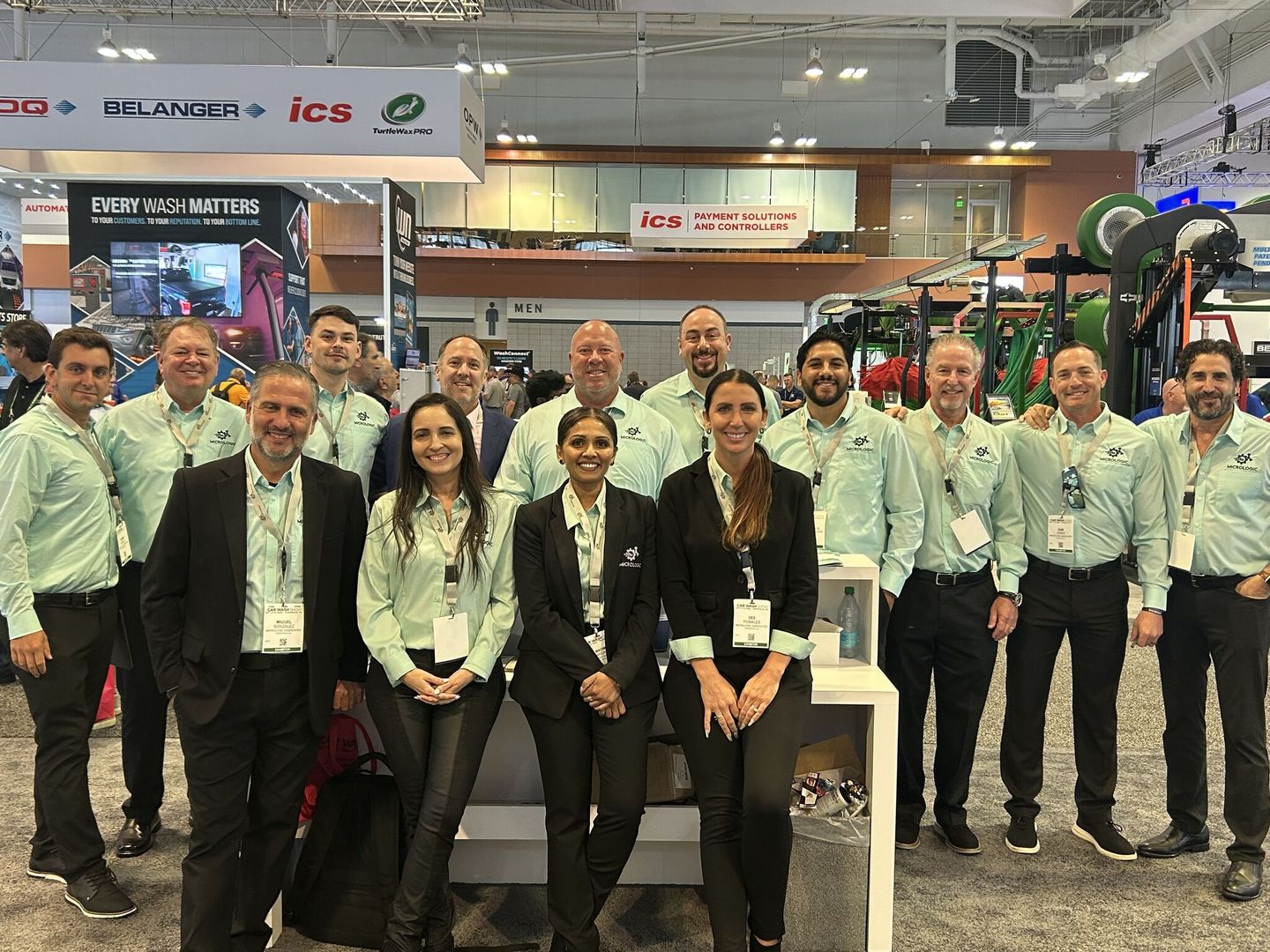
The origin is pleasingly unglamorous. Miguel Gonzalez started Micrologic in a spare bedroom in Roxbury, New Jersey, according to the company's history. Its early market was parking: a touch-screen point-of-sale system in 1999, followed by a handheld version in 2001.
A 2023 New Jersey car wash association tour guide supplies the turn in the story. A parking customer asked Gonzalez about putting a POS in his car wash. Here was another place where a vehicle arrived, money changed hands and someone needed an accurate record. The customer had spotted an adjacent problem.
Today, the product family reaches from LogicWash hardware to WashCentral, the connected platform introduced at The Car Wash Show in Nashville in May 2026. The company calls it a revenue operating system. Behind the terminology is a practical proposition: the customer record should travel with the car.
That requires some decidedly physical engineering. LogicWash includes payment kiosks, counter terminals, waterproof tablets, license-plate recognition, RFID readers and tunnel controllers. The Celeris Forte kiosk accepts cash and cards; the Aero is card-only. These are choices about lanes, staffing and customers, expressed as equipment.
The customer who never cancelled
A monthly wash membership creates a curious distinction. A person can stop paying because they no longer want the service. They can also stop paying because a card expired. The result looks similar in a revenue report. The remedies are entirely different.
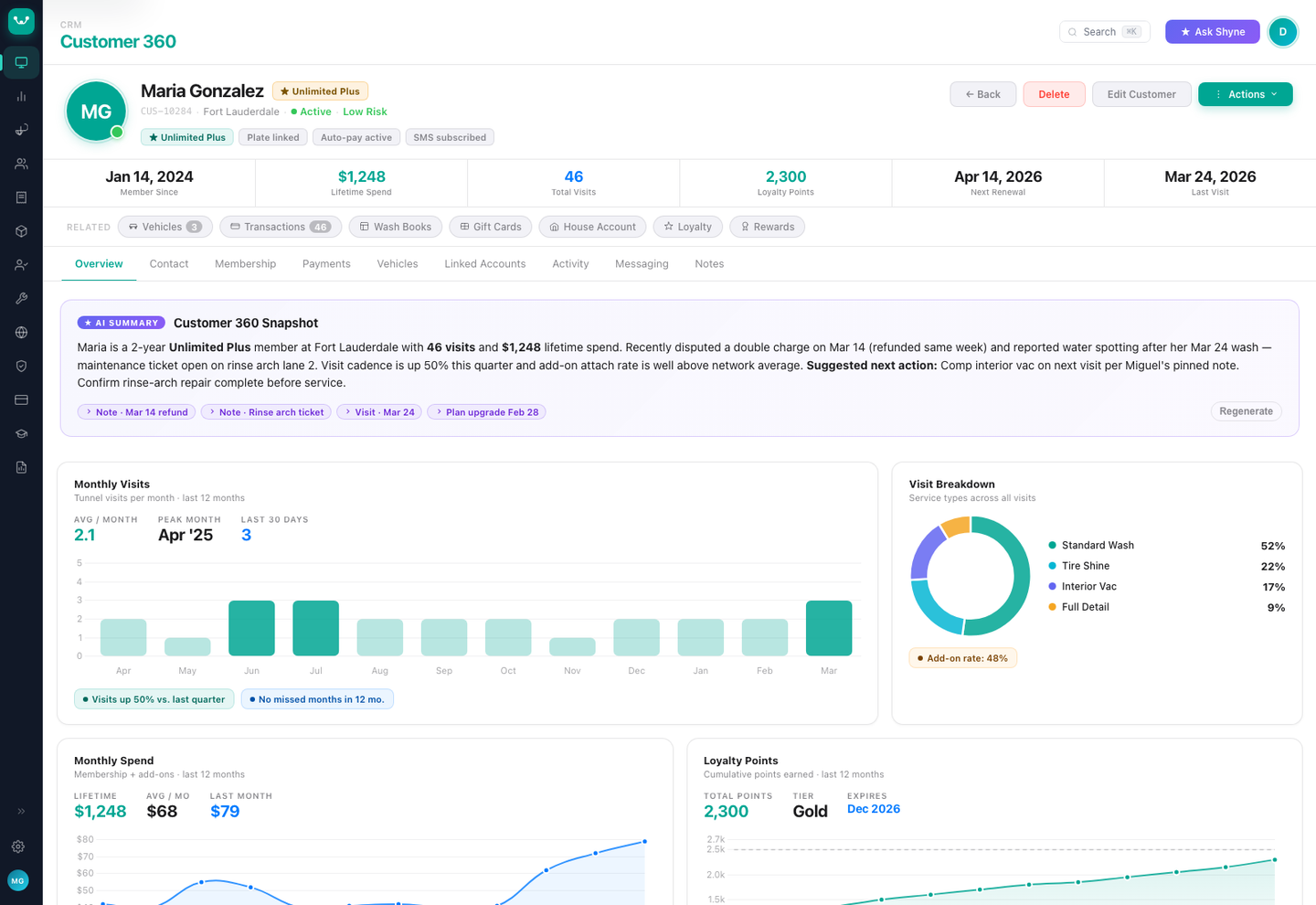
WashCentral addresses the second problem with automatic retries, card updates and prompts to replace a payment method. It addresses the first with customer history, churn-risk signals and offers intended to bring someone back. A quiet member and a failed transaction become separate events an operator can act on.
- 01RecognizePlate or RFID
- 02RetrieveCustomer & plan
- 03DeliverQueue & wash
- 04RenewBilling & follow-up
Conceptual workflow, not measured performance.
There is a mundane lesson here for businesses well beyond car washing. Before buying a cleverer promotion, distinguish a customer decision from a processing failure. A discount is an odd response to an expired card. Better information can change which intervention makes sense.
The digital tools extend that logic. Micrologic offers apps carrying the wash operator's own brand, plus web portals where members can update cards, manage vehicles and change plans. A routine account request can be completed away from the counter, leaving attendants available for the cars already waiting.
One screen is only the beginning
Hoffman Car Wash's Tom Hoffman Jr. describes the starting problem plainly: “We desperately needed to upgrade our point-of-sale system”. In a testimonial published by Micrologic, he credits its handheld computers and waterproof touchscreen with helping the business handle 200 cars per hour on busy days.
200cars per hour on busy days
Hoffman Car Wash customer testimonial. A reported site experience, not a throughput guarantee.
Splash Car Wash's Dan Petrelle emphasizes another benefit in his published account: connectivity between locations. Configurable checkout mattered, but so did richer reporting and the ability to check the business from his phone. The buying decision involved seeing separate washes as one operation.
Wash Intelligence is aimed at that managerial view. Its Command Center combines location metrics, while reporting lets operators compare sites and drill into individual results. Listed integrations include QuickBooks Online and Sage Intacct. The useful question becomes which location needs attention, rather than who has the latest spreadsheet.
Micrologic competes in the specialist wash-technology market, where DRB offers platforms including Patheon and SiteWatch. Micrologic's pitch rests on designing hardware, software and support together. For a buyer, the sensible test is to follow an actual transaction across those boundaries and watch where manual work appears.
Buying the changeover
The commercial model is software priced per location, with custom enterprise and franchise plans. Modules and rollout requirements affect the quote. An operator comparing offers should put hardware, payment processing, conversion work and training alongside the software rate. Those details determine the cost of getting a functioning wash.
Micrologic describes migration of membership and billing history, tokenized payment transfers and an assigned project manager. It also offers retrofits for existing equipment. Training combines online work, instructor-led sessions and onsite instruction; technical support runs around the clock. The purchase includes a change in how people work.
There are limits to what a connected record can fix. Dirty or obstructed plates, glare, snow and awkward camera angles can weaken plate recognition; Micrologic suggests RFID as a backup. Its roughly six-week launch estimate depends on equipment, locations and data conversion. Compatibility deserves a site-specific check.
For a new build, that check belongs before construction. Kiosk placement, camera mounting points, conduit and network cabling all affect the site plan. Moving a screen in a demonstration is easy; moving its wiring after concrete has been poured is a different proposition. The buying process starts on the drawing, not at opening day.
The part worth copying is the attention to continuity. Follow one customer from arrival through payment, service and renewal. Find each place an employee must translate between tools. That is where Micrologic has chosen to work, and where an ordinary wash can become a surprisingly interesting software problem.