Michelle Shnaidman told her mother she was “doing feminist porn.” Her mother tilted her head. There was a question. It was a reasonable response to an announcement with so many possible interpretations, delivered by a daughter who would go on to spend a good deal of her working life explaining exactly what she meant.
She was building Bellesa, an adult entertainment platform designed around women. Getting the idea across could be awkward. Before there was a finished website to show people, the conversation tended to arrive at the word porn and stop there. Shnaidman wanted to keep talking about the person watching it.
Her own experience had been dispiriting. Looking for something she might enjoy meant working through advertising, titles and imagery that made her feel like an intruder. A customer was present, ready to browse. The surroundings seemed determined to suggest she had opened the wrong door.
A customer, apparently imaginary
When Shnaidman raised the question with a friend working in the industry, his answer supplied an unusually memorable piece of market feedback. In her recollection, he compared female sexuality to Narnia and the Easter Bunny. An entire audience had apparently wandered into the department of imaginary creatures.
That exchange helps explain her original conviction. She believed women were being overlooked, and she wanted to build an experience that acknowledged them. The premise was personal enough to make sense without a financial model: she wanted somewhere she would actually like to go.
Shnaidman had graduated from McGill University in 2014, having studied psychology and women’s studies. As the business took shape in Montreal, its name began as a development codename. Bellesa means beauty in Catalan. The word survived the work of building the website and became the name above the door.
There was some care in that choice. A name could set expectations before a visitor saw anything else. So could the page itself. In early interviews, Shnaidman discussed realism, variety and a browsing experience without the intrusive advertising that had put her off. The welcome was supposed to begin with the interface.
Women Shnaidman said she and her team spoke with while developing Bellesa.
Her retrospective wish: speak with twice as many.She has said that early research involved more than 3,000 women. Her advice afterward was to do more of it. For someone entering an established industry with an objection to its assumptions, asking potential customers what they wanted was a way to turn irritation into decisions.
The early platform made room for several forms of attention. There were videos, erotic stories and articles about relationships, culture and feminism. Jess McLaren joined as a fiction writer and became head of erotic fiction. Words had a place alongside images; a visitor could choose how to spend her time.
Bellesa’s public launch came on February 15, 2017. Before that, a closed beta had produced an encouraging nuisance. When the team took the site offline to prepare for launch, users emailed to ask where it had gone. Shnaidman called it “the best kind of problem to have.” A missing website had become somebody else’s inconvenience.
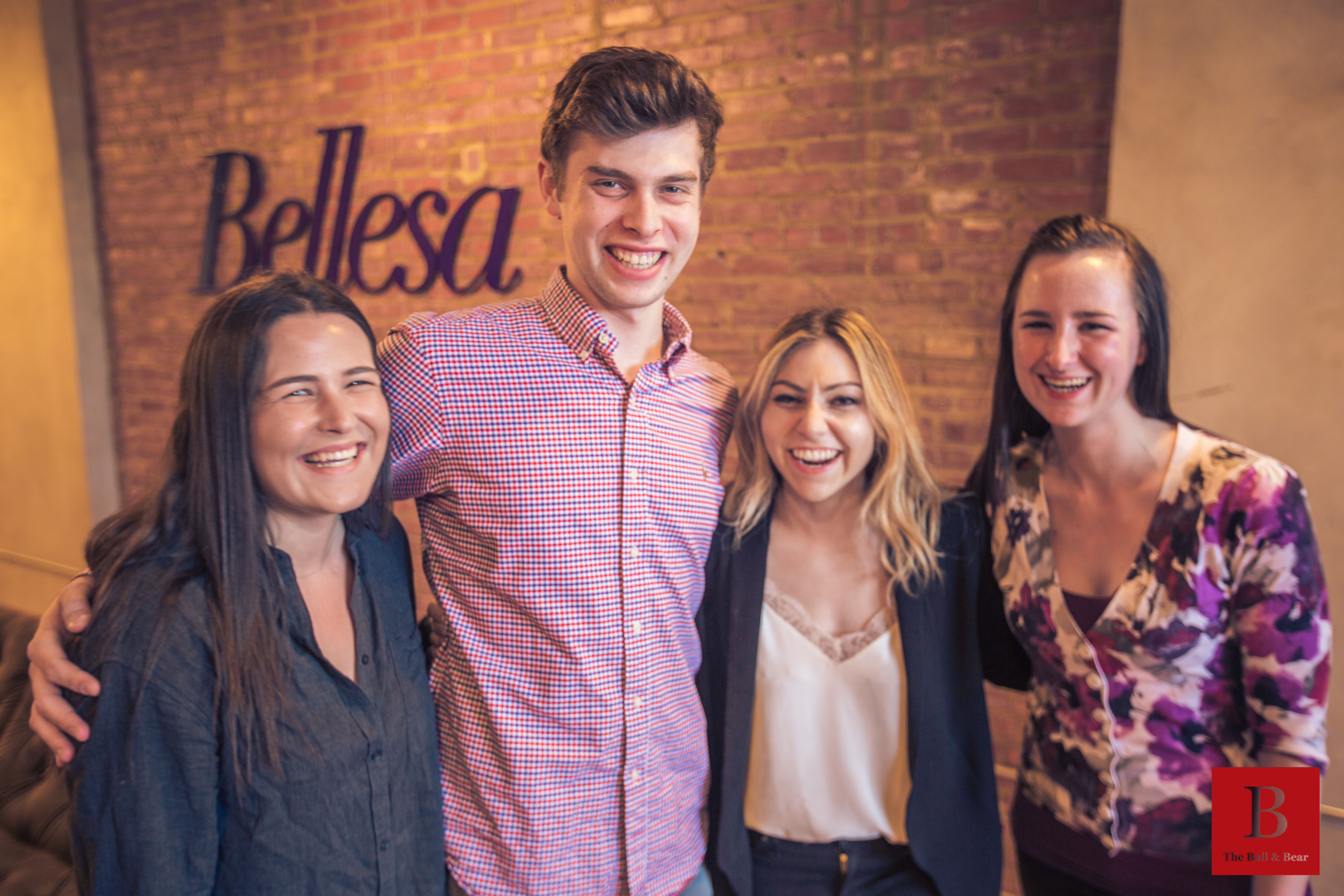
The people on the other side of the screen
Later that year, the business faced a problem of a different order. Performers and filmmakers objected to unauthorized videos appearing through Bellesa. Content embedded from other websites had reached an audience without the permissions or payments its creators expected. The platform’s promise to women was being challenged by women whose work appeared on it.
Shnaidman apologized publicly in September 2017. Bellesa removed its video and picture sections, and she committed to rebuilding the video offering around direct studio partnerships and fair compensation. The distinction mattered: an audience’s enthusiasm did not settle whether a company had the right to distribute the work that attracted it.
The dispute exposed the limits of the original idea. Making a site feel more welcoming to viewers addressed one part of the experience. The people who made the films had their own stake in it. Their work, permission and ability to earn had to be part of the business being built.
For a founder who had objected to being overlooked, the criticism carried a particular force. The original customer’s complaint and the creators’ complaint were now present in the same business. Responding meant recognizing that a welcoming experience depended on arrangements the viewer might never see while browsing the site.
The response went beyond changing the language on a page. Bellesa entered a production partnership with Mile High Media. Shnaidman described a process in which community members could suggest stories and performers they wanted to see. Creating work through direct relationships gave the company a different way to answer demand.
Jacky St. James became an especially telling connection. A director whose work had appeared without authorization, she was among the early critics. She later directed Bellesa productions. That sequence puts a specific working relationship inside what might otherwise sound like a vague corporate promise to improve.
By 2021, Bellesa was introducing a series called Blind Date with St. James. The format began with performers speaking anonymously before meeting. Shnaidman described the company’s decisions as informed by its audience’s interest in unscripted material. The director discussed performers’ choices and their experience of working together.
There is a practical shift across those years: from selecting what was already online to arranging how new work would be made. It brought the company closer to decisions about collaborators, formats and conditions. It also made the original invitation harder to treat as a matter of website aesthetics alone.
- 2017The public platformLaunch, followed by a rights dispute and a commitment to direct partnerships.
- 2018The storefrontBellesa Boutique adds a place to buy products.
- 2020The publisher partnershipBuzzFeed and Bellesa introduce a co-branded AirVibe.
- 2021The celebrity collaborationDemi Lovato and Bellesa launch the Demi Wand.
A publisher, a pop star, a charging case
Bellesa Boutique launched in 2018. A store added a more literal transaction to the company’s relationship with its audience. Someone could read, watch or browse, then decide to buy a product. Shnaidman was now working across entertainment and retail, with different decisions attached to each.
The BuzzFeed relationship shows how those decisions could overlap. What began as advertising and affiliate work expanded into a licensing arrangement and the co-branded AirVibe in 2020. A publisher with an audience and a company making products had found reasons to get more closely involved.
For Shnaidman, BuzzFeed offered access to people beyond Bellesa’s existing customers. She described seeing purchases from men buying gifts when products appeared in the publisher’s coverage. That is a more precise account of expansion than simply saying a brand wanted to grow: the same product was reaching a different buyer.
BuzzFeed also brought information about what readers searched for and purchased. Privacy and discretion were among the considerations informing the collaboration. The arrangement linked editorial attention, shopping behavior and product development. A reader’s interest could help shape something that would eventually arrive in the mail.
Then came Demi Lovato. In November 2021, Bellesa launched the Demi Wand with the musician. Shnaidman described a brief centered on inclusion and approachability. The collaboration placed the company beside a recognizable public figure while keeping the discussion tied to an object people could hold and put away.
The wand came in a compact clamshell case that doubled as its charger. It was a small domestic detail with a useful job. Storage, transport and charging were gathered into the same object. A marketing campaign can make a declaration; a case has to close properly.
That attention to ordinary circumstances runs through the storefront too. Bellesa promises plain packaging and discreet billing. These are quiet design decisions about how a purchase enters somebody’s everyday life. For a customer who values privacy, the parcel and the statement belong to the experience just as surely as the website does.
In 2022, Bellesa Boutique received retail recognition from AVN and XBIZ, along with XBIZ’s Progressive Pleasure Products Company of the Year award. Shnaidman credited the team and its collaborators. The company that had begun by questioning the browsing experience now had products, production partners and a retail operation to manage.
Who gets to keep the conversation?
Shnaidman’s public account of entrepreneurship includes help from other women. She has described cold-emailing established female entrepreneurs who took time to speak with her, offer feedback and make useful suggestions. The detail is modest, which is part of its appeal. Sometimes the useful connection starts with someone answering.
Her account also returns repeatedly to listening. In a 2017 interview, she described the communication loop with Bellesa’s community as essential to a company that kept changing. That leaves a founder with an ongoing task: deciding which feedback requires an adjustment, and which reveals a problem with the underlying arrangement.
“Product-market fit is the only thing.”
Michelle Shnaidman, on her early lessons building Bellesa
More recently, the place where a community can gather has become a public concern for her. In an April 2026 LinkedIn post, Shnaidman challenged Meta over the removal of Bellesa’s Instagram account. She said the community had reached 700,000 people and called for its reinstatement. That figure is her account of what was lost.
Her public profile also carries an announcement welcoming Joy Peabody as Bellesa’s chief growth officer. There are familiar executive responsibilities behind a company built around an uncomfortable subject: hiring, partnerships, distribution and the work of explaining the next decision to the people it affects.
The original question remains easy to understand. Shnaidman went looking for something and felt she had been mistaken for someone else. Building Bellesa gave her a way to change that encounter. Keeping the promise has required answering to viewers, creators, collaborators and customers, each with a different reason to expect the door to open.
Continue the conversation
Company, conversations & further reading. Some links lead to adult-oriented websites.
- Bellesa Boutique
- Michelle on LinkedIn
- Bellesa’s company profile
- The early office interview
- The 2017 redesign
- BuzzFeed partnership
- Demi Wand launch
- Blind Date and Jacky St. James
- The founding conversations
- Early community and fiction
- Her approach to feedback
- Bellesa’s mission
- 2022 retail awards
- The 2026 Instagram post