Before Michael Sanchez was negotiating the economics of the internet, he was traveling the world to play chess. As a junior player, he gave exhibitions and earned a draw against the player ranked third in the world. It is an excellent opening paragraph for a business biography, perhaps suspiciously excellent. Then the biography takes a turn: university soccer, professional soccer in Zimbabwe, high school mathematics, law school, a nonprofit, and a newspaper with an unusually firm deadline for its own existence.
The newspaper was ’94 Cup Daily, devoted to the 1994 World Cup in the United States. Sanchez co-founded it and served as chief executive. A tournament ends. The paper’s reason for being came with a final whistle. His subsequent media career would involve a harder problem: building businesses that could keep paying people long after the excitement of launch had passed.
Today, Sanchez is co-founder and CEO of Raptive, the company formerly known as CafeMedia and AdThrive. Its work sits behind thousands of independent websites. The public sees recipes, travel advice, craft projects and familiar writers. Raptive handles the advertising and business machinery that helps those people earn a living. Sanchez’s current argument is that the people doing the creating deserve a continuing share of the proceeds, even when the technology delivering their work changes.
A friendship with several business plans
Andrew Shue runs through this story with the persistence of a recurring character who has negotiated a very good contract. The two grew up in New Jersey and played soccer together. Their partnership predates the websites, the advertising technology and Shue’s television fame. They were childhood friends before they were co-founders.
Sanchez studied economics at the University of Virginia and played on its soccer team. He later played professionally in Zimbabwe while teaching high school math. Shue was there too. Their shared experience joined competition to an everyday responsibility far removed from a scoreboard: turning up to teach. The later résumé contains a Columbia Law School education, completed with honors, but it never becomes a conventional lawyer’s career.
The friends went on to create Do Something, the organization that encourages young people to take action in their communities. Sanchez served as its president. In an early account of its beginnings, Shue described the two discussing what was missing from their lives and how young people could become active citizens. Their response was to organize people around something they could actually do.
There is a recognizable pattern here, though it would be too tidy to pretend every venture followed a master plan. A youth organization needs participants. A newspaper needs readers. A community website needs people who want to return. Across these different enterprises, Sanchez kept working on the practical arrangements that allow a group to become something more durable.
Two dads, millions of mothers
In 2006, Sanchez and Shue launched CafeMom, a social networking site for mothers. The apparent casting problem was part of its charm: two fathers building a place for women to exchange experiences. Advertisers paid for access to that audience, while members supplied the conversations, advice and reasons to come back.
By September 2008, the site was drawing more than four million unique visitors and 150 million page views a month. Companies including General Mills, Kraft and Walmart were part of the advertising picture. Those numbers described a specific moment in the business, but they also explained its appeal. Conversations that looked ordinary to participants had considerable value to brands.
The business continued looking for audiences whose needs were more specific than a broad demographic label. In 2011, it announced plans for a site serving Hispanic mothers and brought in Lucia Ballas-Traynor, formerly publisher of People en Español. MamásLatinas followed. Knowing an audience meant recognizing that “mothers” contained many communities, with different languages, experiences and expectations.
That history gives Sanchez’s later enthusiasm for independent creators some substance. His career included operating publications and building communities before it concentrated on monetizing other people’s sites. He had participated in the business of persuading people to visit, stay and return. Eventually, he chose to put the company’s resources behind publishers doing that work themselves.
The difficult art of selling your own publications
CafeMedia acquired AdThrive in 2016. The attraction was scale: an advertising operation serving independent bloggers could connect those audiences to buyers more efficiently. Sanchez saw room to combine programmatic advertising with the broader commercial relationships CafeMedia already had.
In 2018, the choice became much sharper. CafeMedia sold its publishing portfolio, including CafeMom, MamásLatinas, Revelist and Baby Name Wizard, to RockYou. AdThrive was profitable; the publications being sold were breaking even. The business that helped other publishers make money had become the reason to keep going.
“It’s hard to be a digital owned-and-operated publisher right now.”
Michael Sanchez, June 2018
The decision carried costs beyond a change to the corporate diagram. Editorial layoffs and the closure of CafeMom’s forums preceded the sale. Forty employees were to move to RockYou, while eighty remained at CafeMedia to focus on AdThrive. For a founder, selling a publication bearing the name of an earlier success is a fairly public admission that the next business deserves the attention.
The surviving proposition was practical. Independent publishers could keep creating, while a shared operation handled increasingly complicated advertising. A recipe writer did not also have to become an expert in every bidder, auction and buyer relationship. The machinery could be pooled, while the writing retained a name and a point of view.
A new name, a larger back room
In April 2023, CafeMedia and AdThrive became Raptive. Sanchez presented the name as recognition of a company that had already expanded beyond its original remit. At the start of that year, it had passed $2 billion in cumulative payments to creators. The rebrand brought an existing operation under one banner.
He was also putting the people behind the websites in front of advertisers. At Raptive’s 2023 NewFronts presentation, Sanchez and sales executive Marla Newman hosted creators including DJ Jazzy Jeff, Harry Connick Jr., and Sarah and Kaitlin Leung of The Woks of Life. A company associated with the plumbing of advertising was making its case through the people whose work gave that plumbing a purpose.
The distinction matters when thinking about Sanchez’s role. He leads a commercial enterprise whose income depends on its partners’ success. His public case for creators combines conviction with business interest. If independent sites lose their audiences or stop earning enough to publish, the company supporting their advertising has a problem too. Their fortunes are connected.
The audience takes a detour
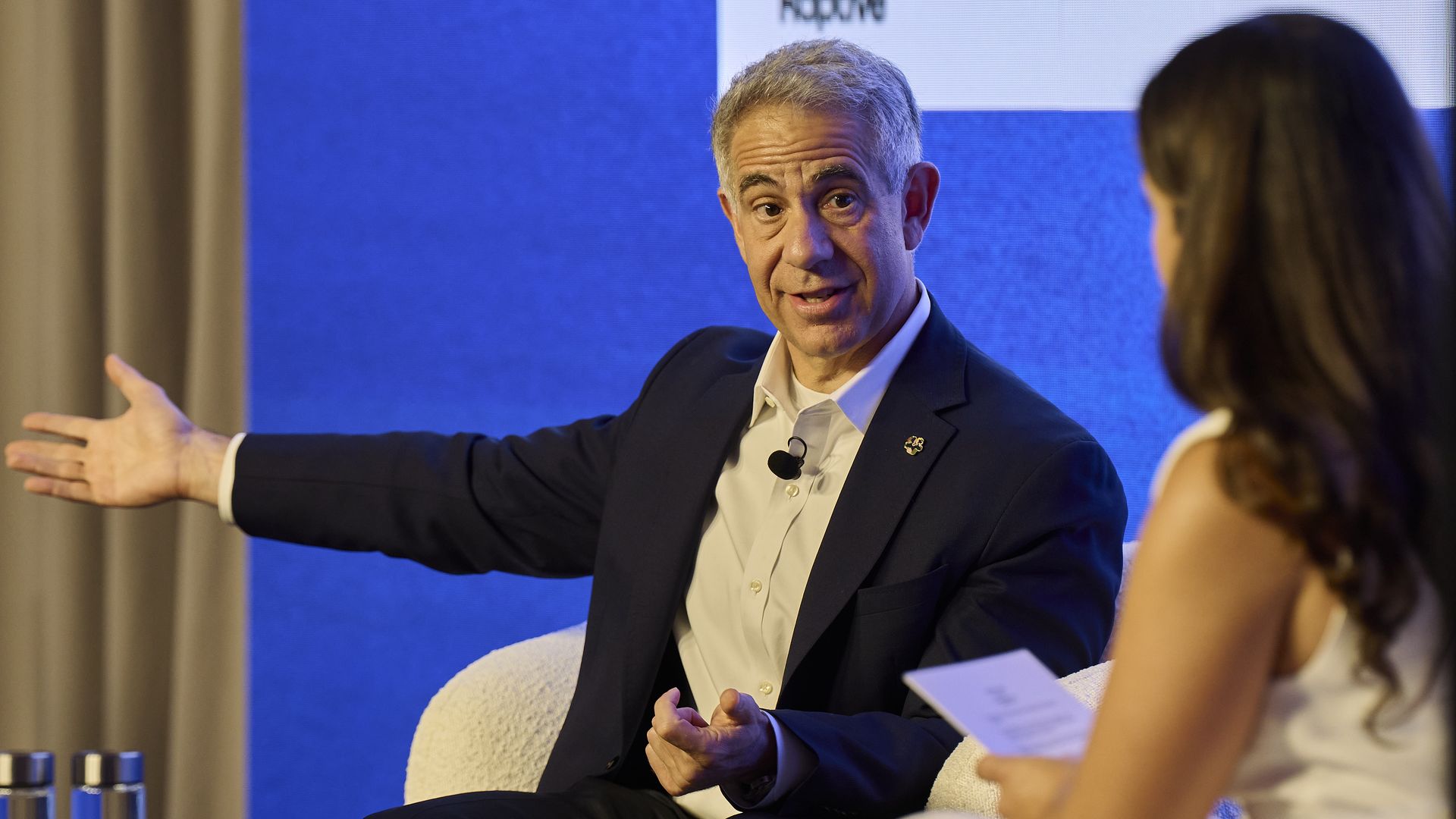
By June 2024, Sanchez was bringing that argument to Washington. Raptive’s Independents’ Day event assembled creators working in food, crochet and country music for a briefing with congressional staff and media. Sanchez opened the session; PBS chairman Larry Irving moderated the discussion. An open letter had gathered more than 13,000 signatures from creators and supporters.
The policy concern was easy to understand without an engineering degree. A publisher produces something useful. A search product can use that material to answer the reader’s question before the reader visits the publisher. If fewer people arrive, the advertising opportunity shrinks. Better advertising technology has less to work with when the audience takes a detour.
Sanchez asked for copyright protections, revenue sharing and product designs that preserved the economics of publishing. Those were demands for how a market should operate, rather than evidence that a remedy had already arrived. The creators beside him gave the discussion its human scale: individual businesses with audiences, colleagues and years of accumulated work.
He continued the effort in March 2025 with a submission to the Office of Science and Technology Policy. It proposed licensing arrangements, compensation, clearer attribution and engagement with independent creators. The recurring concern was bargaining power. A small publisher can make work people value without having much influence over the systems that distribute it.
Another move on the board
Money sent back to the people making it.
By February 2026, Raptive reported $4 billion in cumulative payments to publisher partners. The company’s scale had grown, but Sanchez’s next moves addressed a vulnerability that scale alone could not settle: dependence on somebody else’s audience pipeline.
In June, he announced Raptive Intelligence and welcomed entrepreneur John Roa as chief AI officer. Raptive also acquired Roa’s AlchemyAI. Sanchez’s note to publishers emphasized direct audience connections and new ways to turn expertise into business opportunities. He described the initiative as early work whose plans would continue to develop with feedback.
September brought Raptive Community, an advertising-supported platform for direct relationships between creators and fans. Communities were free to join, with advertising revenue split equally between creator and platform. More than 150 communities had joined at launch. Sanchez’s stated aim was participation and return visits, giving people a reason to stay connected beyond the next appearance in a feed.
The chess detail is tempting here, but a tidy endgame would be premature. These products have to earn their place in working businesses. What makes Sanchez’s career interesting is the repeated adjustment: from a tournament newspaper to a community site, from owning publications to supporting them, from selling advertising to arguing over who should benefit when technology uses someone’s work. The next move still needs readers. Preferably readers who come back.