A music executive walks into gaming. The tempting version of this story involves a sudden conversion, a controller picked up at midnight and a revelation before breakfast. Charlie Baillie’s public account is more practical. He had worked on marketing artists including Rihanna and Justin Bieber, then moved through digital advertising. When he and his co-founders discussed starting Ampverse, gaming looked like the meeting place for several businesses he already understood. The audience had moved. He was following.
That distinction makes his career interesting. Entertainment executives spend much of their time trying to arrange encounters: an artist with a listener, an advertiser with a customer, a performer with a paying crowd. Gaming adds an awkward condition. The crowd is busy doing something. It has teammates, favourite creators, competitive loyalties and plans for the evening. An invitation to purchase shampoo may have to wait.
First, learn where the audience went
Baillie’s earlier career included Universal Music Group, where he became head of digital at Mercury Music Group, alongside roles at Urban Box Office and Beyond. He later worked at RadiumOne and RhythmOne. Taken together, those jobs put him at the junction of entertainment and the machinery that helps advertisers find an audience. The route into games becomes easier to understand when viewed from that junction.
His arrival in Asia involved setting up RadiumOne’s Southeast Asia office. After its acquisition, he continued with RhythmOne, eventually becoming its Asia Pacific managing director. He also co-chaired IAB Singapore’s programmatic committee. This was the less photogenic side of digital media: commercial partnerships, advertising systems and industry discussions about how the whole arrangement should work. A successful campaign needs some plumbing beneath the poster.
There is a useful continuity here. An executive who has spent time selling both culture and advertising technology has encountered two different definitions of success. People must want the entertainment. Clients must see a reason to pay. Gaming puts those tests unusually close together, because a brand’s arrival can happen in a place where people are already talking back.
A company assembled across two cities
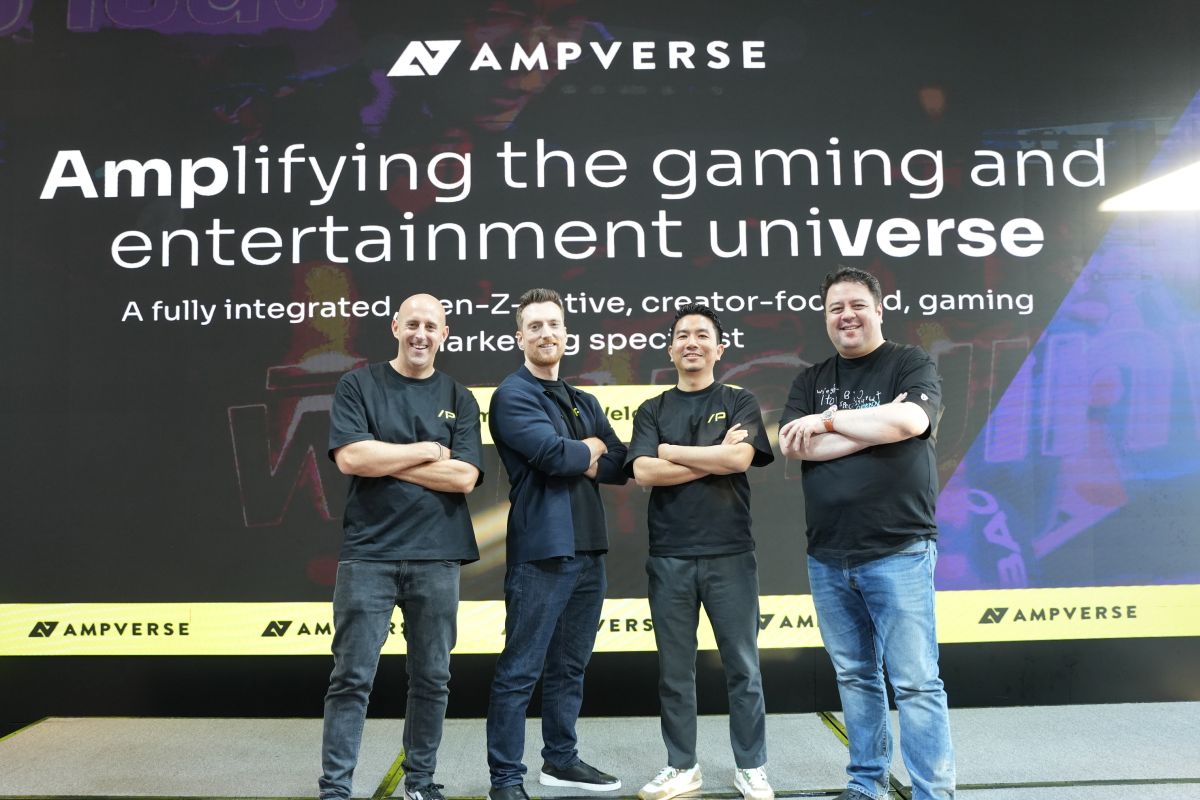
Ampverse launched in Southeast Asia in 2019, starting in Thailand and Singapore. Baillie was based in Singapore as chief commercial officer. Ferdinand Gutierrez led the business from Bangkok; Matthias Beyer and Surasak Winij brought content experience. Their backgrounds included Twitch as well as music and media. The founding proposition involved developing gaming talent and helping that talent work with brands, publishers and agencies.
The original business was organised around influence, talent representation and publishing. In ordinary language, it needed to find people audiences cared about, support their commercial careers and make things worth watching. Those tasks sound adjacent. In practice, each asks a different question: who has attention, who can negotiate a partnership and who can turn an agreement into entertainment?
Baillie’s place in that arrangement was commercial. The business needed clients willing to take gaming seriously, and a way to translate a creator’s appeal into something those clients could buy. The opportunity depended on respecting an existing relationship between performer and audience. That relationship was the valuable part; a contract could provide access to it, but could hardly manufacture it on demand.
The local hero has home advantage
His explanation of talent management starts with geography. Southeast Asian markets differ in language, culture and favoured games. A single regional identity cannot do all the work. His prescription was compact: “It needs to be hyperlocal”. For a business seeking regional scale, that is a revealing starting point. Expansion requires learning distinctions, then finding people who already live comfortably inside them.
The same thinking clarifies his distinction between professional players and gaming entertainers. Winning a tournament and keeping a stream entertaining are different jobs. An audience may admire competitive skill, enjoy someone’s company, follow a running joke or do all three. Treating every gaming personality as interchangeable would make roughly as much sense as hiring a goalkeeper to host the interval show.
“It needs to be hyperlocal”
Charlie Baillie, on talent management
In discussing influencer partnerships, he described several ways brands could participate: product appearances in streams, branded video series, bespoke tournaments and longer team sponsorships. The range matters. It gives a commercial relationship room to fit the entertainer and the audience, rather than requiring every creator to perform the same advertisement with a different username.
An enthusiast who checks the connection
Baillie can be upbeat about an expanding industry without treating every new technology as an automatic improvement. Asked about cloud gaming in 2020, he pointed to the popularity of free-to-play mobile games in Southeast Asia. A paid cloud service would have to offer people a reason to change habits that already suited them. The technology needed a customer argument.
He also distinguished access to cheaper devices from access to adequate infrastructure. Cloud gaming could reduce the need for expensive hardware, but reliable connections remained a practical constraint. It is a useful glimpse of his reasoning: start with what players actually have, then ask whether the proposed service improves their experience enough to justify adopting it.
His answer about creators was similarly grounded. Entertainment value and audience loyalty would still matter on a new channel. Moving the delivery system would not relieve a streamer of the obligation to be interesting. The observation has a certain merciful bluntness. Even a technically impressive platform cannot laugh at your jokes on everybody else’s behalf.
The gaming truck and the campus gate
India gave the company another setting for the same questions. In May 2023, Ampverse and DMI Finance announced a joint venture to develop esports properties and technology-enabled services. College Rivals was its first announced property. For Baillie, then chief strategy officer, the project extended the business from representing existing attention towards creating occasions on which new talent could become visible.
At the tournament’s launch that August, he discussed a gaming truck travelling through Delhi, Mumbai, Bengaluru, Pune and Hyderabad. He expected more than 80,000 students to participate in the first season. That was an expectation at launch, rather than a final attendance figure. He also described plans for a studio and a larger local team.
The truck is the detail that stays with you. An industry associated with remote connections was putting equipment on the road and turning up near students. There is something admirably literal about that. If the audience is on campus, take the competition to campus. A tournament needs a place to happen, even when its contestants spend much of their time online.
Delhi · Mumbai · Bengaluru · Pune · Hyderabad
The gaming truck route announced for College Rivals in August 2023.By 2025, Baillie was describing the event in terms of access, visibility and opportunities beyond playing professionally, including content creation. The wider ambition was to give young participants more ways into the business. It also returns the story to talent development: somebody must create the setting in which a person with potential can be noticed.
The title changes; the questions accumulate
Ampverse raised a $12 million Series A in 2022 and expanded its senior leadership team that year. The hires covered commercial partnerships, marketing, creative work and strategic partnerships. This gives a more concrete picture of growth than the usual vocabulary of momentum. A developing business needs people who can sell, make, organise and maintain relationships, often at the same time.
Baillie became CEO in early 2024, succeeding Gutierrez, who became president. His remit included setting strategic direction, managing the executive leadership team and reporting to the board. For a co-founder, that promotion brings responsibility for the entire arrangement. An attractive commercial idea now has to coexist with decisions about staff, priorities and execution.
Music finds another room
In April 2025, Ampverse announced Pixel, a division for building gaming communities and branded experiences on platforms including Roblox, Minecraft and Grand Theft Auto. Its proposed work included servers, mini-games, branded skins and digital products. The idea moved the commercial conversation further inside the spaces where people play, giving a brand something to contribute beyond an adjacent advertisement.
Baillie subsequently appeared at IMS Dubai in a discussion about music in games and virtual concerts, alongside James Sutcliffe and Inder Phull. For someone who had worked at Universal Music, the subject brought an earlier part of his career into his present one. Music rights, artist engagement and gaming environments now belonged in the same conversation.
The continuity is more interesting than a tidy story of reinvention. A music marketer becomes an advertising executive, then helps build a gaming company, then returns to discussing music through virtual experiences. The work changes because the places where audiences gather change. The old experience remains useful, provided its owner is willing to learn the new room’s manners.
Still explaining the room
In April 2026, Baillie was discussing Indonesia’s gaming market around the release of Ampverse’s Southeast Asia playbook. His emphasis included creators, communities and cultural relevance. In October, WPP Media Thailand’s SPARK programme listed him for a session examining gaming’s place in everyday life. Years after the company’s launch, explaining the audience remained part of the CEO’s job.
That persistence is perhaps the clearest feature of his public career. Baillie keeps returning to the relationship between the people making entertainment, the people enjoying it and the businesses hoping to take part. Each new format changes the arrangement. The recurring task is to make participation useful enough that the audience welcomes it. In gaming, as at any decent party, being invited is only the beginning.