On the second floor of Stanford’s Bass Library, Michael O’Leary came up with an idea for an investment fund. Its holdings would look familiar to anyone with a retirement account: large American companies, spread across the market. The interesting part would happen after the shares were bought. The fund would use the votes that came with them. It was a small change in emphasis with substantial implications for what an investor could expect.
An investment account is usually presented as a number to watch. O’Leary was thinking about it as a relationship to exercise. The idea became VOTE, an exchange-traded fund launched by Engine No. 1. A broad portfolio could also be a vehicle for advocacy. The quiet library setting suits the story. A person studying business had found a question about power tucked inside an apparently routine financial product.
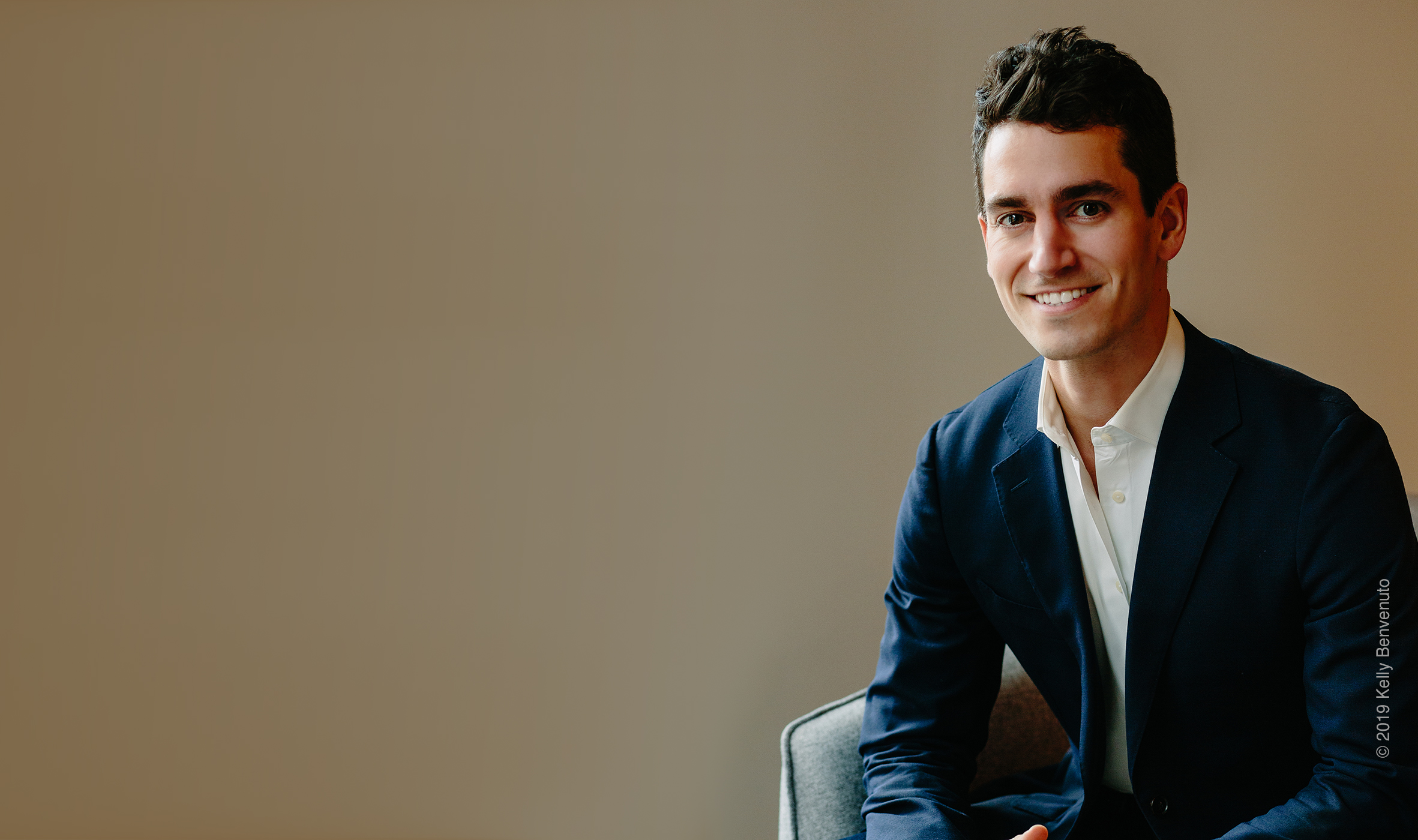
Today, O’Leary is the CEO of AtomicPE, based in New York. His public career includes private equity, economic policy, impact investing, and a book written with fellow investor Warren Valdmanis. Across those different jobs, the recurring subject is ownership. Who benefits from a business? Who gets to influence its decisions? And what happens when the people who own it leave those decisions to someone else?
The philosopher enters the investment committee
O’Leary studied philosophy at Harvard College before earning his MBA at Stanford in 2019. His background also includes economic policy advising in the United States Senate and on two presidential campaigns. Philosophy, politics, and finance make an instructive combination: each has a different way of asking what people owe one another, and a different tolerance for an answer that remains theoretical.
His investment experience took him through consumer, industrial, and technology businesses at Bain Capital. He also worked in private equity in Boston and Hong Kong. Those are useful coordinates for understanding his writing. He approaches the corporation as an institution he has worked inside, where the allocation of money has consequences for the people doing the work.
At Bain, he joined the founding team of the firm’s social impact fund, Bain Capital Double Impact. The name contains the proposition: investments could pursue financial performance alongside social outcomes. It also contains the problem that would occupy much of his subsequent work. If an investor claims to achieve two things, someone needs to check both. An attractive name is a remarkably inexpensive asset.
A loss on one line, a livelihood on another
In 2017, O’Leary published an essay proposing a broader view of corporate profitability. His example was Snap, the parent of Snapchat, whose financial losses looked rather different when the money paid to employees was considered. From a shareholder’s perspective, wages belong among expenses. From the recipient’s perspective, the same money pays the rent.
He called his proposed lens profit to people. It asked readers to look beyond the return accruing to investors and consider the money a company generated for employees as well. He was explicit about the limitations. The measure could miss training, working conditions, and the distribution of earnings. Nor could it tell investors whether a business would survive. A larger accounting frame still needs a functioning business inside it.
The essay reveals an early feature of his thinking: he is interested in what a measure leaves out. A financial statement can be accurate and still answer a narrower question than the one a citizen wants to ask. The accountant and the employee may be looking at the same transaction with quite different reasons to celebrate. O’Leary’s proposal gave that difference a name.
A book for people who already own things
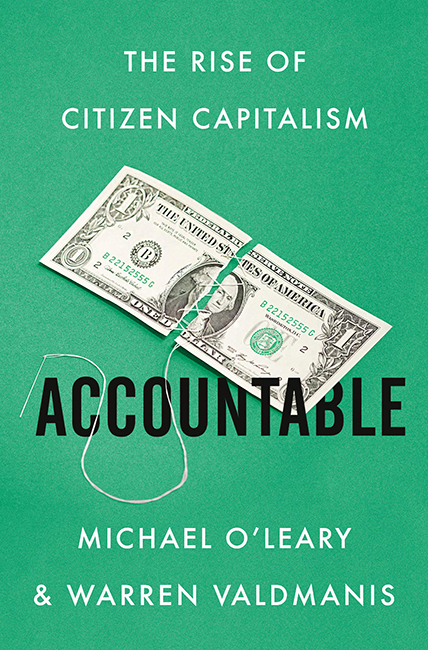
Accountable: The Rise of Citizen Capitalism arrived in August 2020, co-written with Warren Valdmanis and published by Harper Business. Its central audience extends beyond professional investors. Consumers, employees, shareholders, and voters all participate in the economy, and the authors ask what would happen if those roles carried a more deliberate sense of responsibility.
The book examines familiar approaches to reform, including corporate social responsibility, divestment, and impact investing. Its argument asks more of them than good intentions. Corporate purpose needs a way to influence behavior and a way to hold people responsible for the result. A promise becomes interesting when someone can ask whether it was kept.
For O’Leary, writing with Valdmanis also made the conversation public. The pair discussed the book at the London School of Economics in September 2020, in an event chaired by management professor Sarah Ashwin. The premise invited people to think about their economic power across several parts of their lives. A purchase, a job, an investment, and a vote each offer a different point of entry.
The shareholder who needs twenty years
In a 2020 conversation about the book, O’Leary described a typical American shareholder as someone around fifty, with savings in a diversified retirement account and a long wait before accessing the money. His point was about time. A person saving for retirement has an interest in the future of the wider economy, as well as the performance of an individual stock today.
That argument gives his interest in ownership a practical shape. When investment is delegated through funds and intermediaries, the human being at the far end can become difficult to see. The person whose money is invested may care about conditions a quarterly scorecard does not capture. O’Leary’s citizen capitalist asks institutions to take that person seriously.
He and Valdmanis also argued that employees should be understood as investments in a company’s capabilities. Motivation, ingenuity, and the ability to attract people matter to business performance. Treating every wage increase as merely an additional cost can make it harder to see what a workforce contributes. The larger question is how a company becomes more valuable over time, and who helps it get there.
When ownership reached the ballot
At Engine No. 1, O’Leary served as a managing director and led active ownership strategy. The firm became known for its 2021 campaign at ExxonMobil, which won three board seats despite a very small shareholding. The result belonged to a firm and a coalition of shareholders. It gave O’Leary a concrete example of the influence investors could exert through an organized campaign.
The important distinction is between holding an opinion about a company and assembling enough support to change its governance. A small stake cannot do the work alone. Ideas, strategy, partners, and votes have to meet. When O’Leary later discussed the Exxon campaign, he described it as a test case and acknowledged the difficulty. The shareholder meeting, an occasion seldom confused with entertainment, had delivered an unusually consequential plot.
The broad-market VOTE fund pursued the same underlying interest in a different form. Its portfolio could resemble an ordinary market investment while its voting behavior expressed an active position. In the library, O’Leary had seen room for choice in a product often treated as automatic. The insight was about the rights attached to a share, and the responsibility of the institution exercising them.
Won by Engine No. 1’s shareholder campaign. A firm achievement, supported by other shareholders.
The consumer still has to want it
In October 2022, L Catterton announced a new impact investing platform led by partners Tehmina Haider and Michael O’Leary. Its focus was mission-driven consumer companies. The move brought his work into a setting where intentions face a particularly brisk examination: people deciding whether a product deserves their money.
In a 2024 interview, he emphasized the investor’s demand for evidence. That insistence helps explain why an impact investor might spend as much time on commercial fundamentals as on social aspirations. A company needs customers, and customers arrive with budgets, preferences, habits, and perfectly ordinary impatience.
When he discussed his consumer work publicly that June, O’Leary emphasized cost, quality, and convenience alongside sustainability. People can approve of a product’s environmental ambition and still choose something else at the checkout. The ambition has to travel with an offer they want. This is an unromantic observation, and a useful one for anyone hoping to turn a worthy idea into a durable business.
“In finance, it’s all about ‘show me the evidence.’”
Michael O’Leary · SRI360 interview · 2024
At Atomic, the work changes again
O’Leary’s present company affiliation is AtomicPE. Its website puts human connection and judgment at the center of its pitch, with automation handling the remaining work. That is a different proposition from a public-market campaign or a consumer investment fund. It places the work of private equity itself under examination: which activities need human attention, and which can be handled another way?
The company’s language offers an interesting point of contact with his earlier work. Decisions belong to people, even when systems and institutions make those people difficult to identify. In investment governance, the question was how to exercise ownership deliberately. In Atomic’s pitch, the emphasis falls on keeping connection and judgment human. The continuity is a question about responsibility, rather than a claim that every role has the same answer.
O’Leary’s career has produced several ways of asking that question: a proposed accounting measure, an impact investment strategy, a book, and a fund built around shareholder votes. Each makes a familiar financial activity available for closer inspection. What looks like a passive holding may contain a decision someone still has to make.
The library idea is a fitting place to leave him. A portfolio of familiar businesses had concealed an opportunity to act. O’Leary noticed the vote attached to the share. The rest of his public story keeps asking owners to notice what comes attached to ownership.
Keep the conversation going
WRITING, WORK & CONVERSATIONS
- AtomicPE · Author website
- LinkedIn · Twitter / X
- Accountable: The Rise of Citizen Capitalism
- Read: Measure Profit to People - All People
- Read: The Promise and Pitfalls of Investing for Change
- Read: Stakeholder capitalism, beyond happy talk
- Watch: O’Leary’s SRI360 interview on YouTube ↗
- Listen: O’Leary and Valdmanis at the LSE