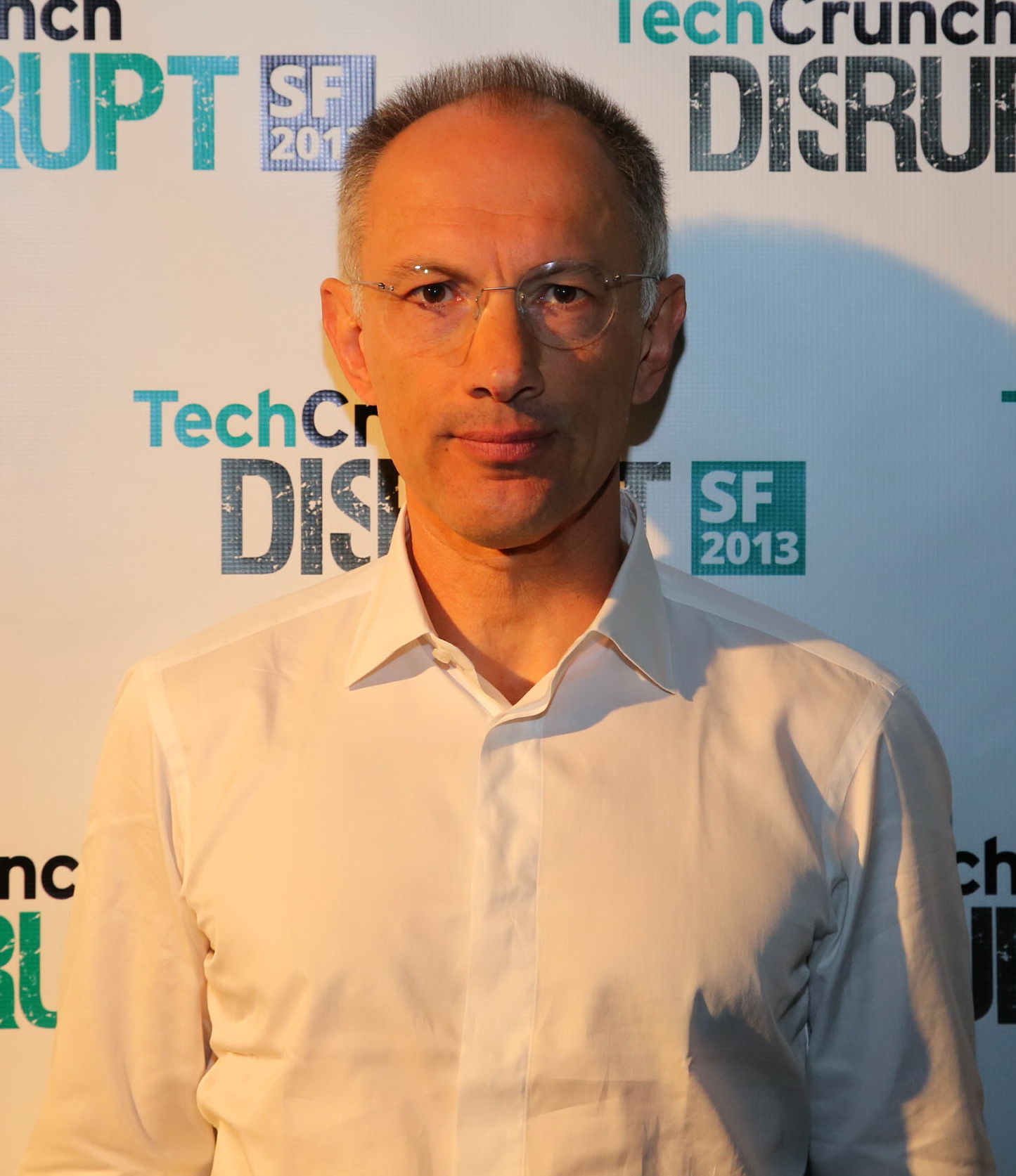
The Man Who Threatened Google
It was 1999. Google had just raised $25 million split equally between two VC firms. Michael Moritz, representing Sequoia Capital's half, did something that most investors would consider professional suicide: he told Larry Page and Sergey Brin that if they didn't hire a professional CEO, he'd demand the money back.
They hired Eric Schmidt. Moritz's $12.5 million became worth billions. That's the Moritz method in miniature - the willingness to be the person in the room who says the thing nobody wants to hear, backed by enough conviction to stake everything on being right.
He had done this before. As a Time magazine journalist in the early 1980s, Moritz wrote one of the first authoritative books about Apple Computer, gaining the kind of insider access that journalists dream about. Then he wrote an article about Steve Jobs that Jobs felt was a betrayal. Jobs cut him off. Moritz didn't retreat - he changed industries. He joined Sequoia Capital in 1986, and began backing the next generation of Jobsian visionaries instead.
"Britain is an uncomfortable place for Jews today."
- Sir Michael Moritz, BBC interview, March 2026What followed is not just a success story. It's something stranger and more instructive. A Welsh-born historian with a journalism degree and an MBA found himself at the center of the biggest wealth-creation event in human history - the commercialization of the internet - not because he had technical training, but because he knew how to read people, ask questions, and wait.
Nearly four decades, a rare incurable blood cancer, and several hundred billion dollars in portfolio companies later, Sir Michael Moritz departed Sequoia Capital in July 2023. He was 68 years old. He had nowhere near finished.
Sequoia's investment in Google (1999) - one of the most profitable VC bets in history
Donated to create Moritz-Heyman Scholarships at Oxford - for students from disadvantaged backgrounds
Spent on San Francisco political causes over roughly three years to improve the city
Cardiff, Nazis, and Oxford
Ludwig Alfred Moritz, a Jewish professor of Classics, and Doris Rath had one thing in common when they met: they had both escaped Nazi Germany. They settled in Cardiff, Wales, where they raised their son Michael, born on September 12, 1954.
That origin story hangs over everything Moritz has done. The son of refugees who fled persecution became a billionaire who spent £150 million to extend the National Gallery in London. The heir to a family that was stripped of citizenship in Germany applied, in 2026, for German citizenship as a protest against rising antisemitism in Britain - one of the most pointed acts of political symbolism imaginable.
Before any of that, he was a history student at Christ Church, Oxford, then a Thouron Scholar at Wharton, one of the most prestigious transatlantic academic awards available. He was not training to be a venture capitalist. He was training to understand how things work - institutions, power, people, time.
He graduated from Wharton in 1978 and became a journalist. He landed at Time magazine. He landed in San Francisco. He landed, inevitably, at Apple Computer's door.
The Journalist Who Jumped Sides
Moritz's 1981 book, The Little Kingdom: The Private Story of Apple Computer, was one of the first serious attempts to document what Apple was actually doing inside. He had extraordinary access to Steve Jobs, Wozniak, and the early team. Then, in 1983, he wrote a Time article about Jobs that Jobs felt misrepresented him. The access was revoked. The relationship soured.
What Moritz took away from journalism wasn't a Rolodex or a byline. It was a method: how to evaluate founders, how to ask the question beneath the question, how to read a company's culture from the outside. He joined Sequoia Capital in 1986 as a general partner, and began applying that method to venture capital.
The early results were solid. The later results were historic. When Yahoo! was just a graduate student project at Stanford, Sequoia backed it. When the internet was a novelty, Sequoia backed PayPal. When two Stanford PhD students had a search engine that nobody thought could be a business, Sequoia and Kleiner Perkins split a $25 million investment, and Michael Moritz threatened to take it back if they didn't get a grownup in the room.
The Companies That Changed Everything
No single VC backed all of these. But Michael Moritz, through Sequoia Capital, came closer than almost anyone. The pattern across these investments is consistent: early, uncomfortable, and correct.
| Company | Year | Result |
|---|---|---|
| Yahoo! | 1995 | IPO 1996 - landmark internet win |
| 1999 | $12.5M → billions; one of the greatest VC returns ever | |
| PayPal | 1999 | Fintech pioneer; IPO then $1.5B acquisition by eBay |
| YouTube | 2005 | Acquired by Google for $1.65B in 2006 |
| Zappos | 2004 | $35M invested; ~$1.2B Amazon acquisition |
| Early | Acquired by Microsoft for $26.2B in 2016 | |
| Early | Acquired by Facebook for $19B in 2014 | |
| Stripe | 2011 | Seed investor; now valued $65B+ |
| Klarna | 2010 | 22% stake; NYSE IPO 2024 |
| Skyscanner | 2013 | Acquired by Ctrip for £1.4B in 2016 |
Questions, Patience, and the Willingness to Be Uncomfortable
Ask people who have pitched Moritz what the experience was like and you get a consistent answer: he asks questions nobody else asks. Not technical questions. Not market-size questions. Questions about why you care, what you're afraid of, who you'd hire if you could hire anyone. He trained as a historian. He worked as a journalist. He approached venture capital the way both of those disciplines approach any subject - by trying to understand what is actually happening, rather than what appears to be happening.
The results speak for themselves. But the method is harder to copy than the portfolio. Moritz succeeded not by having superior financial models or better industry contacts, but by being genuinely curious about people and genuinely willing to be wrong. He backed companies that the consensus thought were strange or premature. He was early on the internet, early on mobile payments, early on fintech. He didn't chase trends - he identified the people who were going to create them.
"The greatest investment decisions are often the ones where you see what others don't yet see."
- Michael MoritzThere's a harder thing to say about Moritz, too. In 2017, comments he made defending Sequoia's lack of female partners - suggesting the firm couldn't "lower the bar" to hire women - caused significant backlash. The controversy was a rare public stumble for a man who otherwise navigated Silicon Valley's political terrain with unusual grace. He didn't walk the comments back in any memorable way. The VC diversity debate that followed was, in some ways, accelerated by the reaction to what he said.
The picture of Moritz that emerges from his full career is not a saint's portrait. It is something more useful: a person who was right about very large things and sometimes wrong about smaller ones, who kept working through illness and controversy and the accumulated weight of wealth, and who turned his attention, late in life, to questions of civic responsibility, cultural preservation, and family history.
The CEO Demand That Changed Everything
He told Larry Page and Sergey Brin: hire a CEO or we take our $12.5 million back. They hired Eric Schmidt. The investment became one of the most profitable in the history of venture capital.
An Incurable Diagnosis, and 17 More Years of Work
Diagnosed with a rare incurable blood cancer in 2006 - the same year he topped the Forbes Midas List. He stepped back from Sequoia in 2012. He departed in 2023. He never fully stopped.
Two Talent Scouts Walk Into a Co-Author Agreement
Sir Alex Ferguson ran Manchester United. Moritz ran one of the world's great VC firms. Together they wrote Leading (2015) - a business leadership book built on football analogies and a shared obsession with spotting exceptional people.
His Parents Fled Germany. He Applied to Go Back.
In 2026, Moritz applied for German citizenship as a protest against rising antisemitism in the UK. His parents had fled Nazi Germany as Jewish refugees. The symbolism was precise, pointed, and impossible to miss.
The Money He Gave Away
Michael Moritz and his wife, novelist and sculptor Harriet Heyman, signed the Giving Pledge - Warren Buffett and Bill Gates's commitment to donate at least half of one's wealth. They did not interpret this as a floor. They treated it as a starting point.
Their Crankstart Foundation runs out of San Francisco and gives away roughly $100K to $1M grants at a time, mostly to Bay Area organizations working on education, housing, civil rights, and the arts. The larger donations have been headline-grabbing.
On top of the philanthropy proper, Moritz spent roughly $336 million on San Francisco political causes over approximately three years - backing candidates and civic organizations focused on public safety and urban policy. He co-founded The San Francisco Standard in 2021 with a $10 million investment, attempting to build sustainable local journalism in a city that had seen its news coverage collapse.
The Writer Who Never Stopped Writing
Moritz never fully left journalism. He left the press pass, but kept the habits: rigorous research, direct questions, and the discipline to find the detail that explains the whole. He has published five books across four decades.
The first serious inside account of Apple. Written while Moritz was at Time magazine. Jobs later acknowledged it as one of the most accurate books about the company's early years.
Co-authored with Barrett Seaman. A detailed account of Chrysler's near-bankruptcy under Lee Iacocca - a study in institutional crisis management.
An updated edition of his 1981 Apple book, covering the company's extraordinary resurgence under Steve Jobs - the iPod era through the iPhone launch.
Co-authored with Sir Alex Ferguson. An international bestseller drawing leadership lessons from one of sport's most decorated managers. Two different kinds of talent scout, one book.
A memoir about his parents' escape from Nazi Germany. The title - "foreigner" in German - carries the weight of everything that came after. His most personal work.
Private, Rigorous, and Occasionally Impossible
Moritz is not a man who turns up often. He is private in the way that people who don't need attention can be private - not cultivating mystery, simply not performing for the room. He gives few interviews. He doesn't maintain an active social media presence. He lets the work speak.
What the work says is something like this: he has a very long attention span and a very short tolerance for self-deception. The investments he made well were the ones where the founders were honest about what they didn't know. The friendships he maintained were with people who told him things he didn't want to hear. The philanthropy he pursued was in areas where he had genuine opinions, not just checkbooks.
He lives in San Francisco with Harriet Heyman - they have two sons - and has remained deeply invested in the city's future even as that investment has become controversial. The $336 million he spent on SF politics over a few years was more than most large foundations spend in a decade. It was also, by some accounts, not particularly effective. He kept spending.
The cancer diagnosis in 2006 - a rare, incurable blood condition - did not produce the kind of dramatic public reckoning that such diagnoses sometimes provoke. He didn't write about it, speak at conferences about it, or reframe his career around it. He just kept going. He ran Sequoia until he couldn't, then chaired it until he left it, then chaired Klarna, backed journalism, funded museums, and wrote a memoir about his parents. The illness is part of the biography, not the biography.
What He's Doing Now
Ausländer
Published a family memoir about his parents' escape from Nazi Germany. The book is personal in a way none of his previous writing has been.
German Citizenship Application
Told the BBC that "Britain is an uncomfortable place for Jews today" and announced he was applying for German citizenship - his parents' country of origin, the country they had to flee.
National Gallery London
Donated £150 million via Crankstart Foundation to fund a major extension of the National Gallery - the largest private gift in the gallery's history.
Klarna IPO
Klarna went public on the New York Stock Exchange. Sequoia held approximately 22% of the company. Moritz remains chairman of the board.