A pool table is an expensive place to lose an afternoon. In Michael Intrator’s case, it became an unusually consequential place to put a computer chip. In 2016, in a lower Manhattan office overlooking the East River, he and his colleagues plugged in a graphics processing unit and began mining Ethereum. There was no public company yet. There was a machine, an experiment and a surface that presumably had other plans.
Intrator later described the experiment as an afternoon diversion that grew into a hobby. The hobby became a business in 2017. Friends invested. More hardware arrived. The operation moved into a New Jersey garage. Eventually, those chips would lead him into an industry whose customers include the companies building AI models used around the world.
Intrator is now CoreWeave’s co-founder, chairman and CEO. The route there runs through political science, environmental markets and natural gas. It also offers a useful complication to the familiar technology-founder biography: the person organizing the computers had spent much of his career organizing risk.
A trader’s education, with a power bill attached
Intrator earned a bachelor’s degree in political science at Binghamton University, then a master of public administration at Columbia’s School of International and Public Affairs. His Columbia studies focused on environmental policy. These are reasonable qualifications for someone expecting to spend time thinking about institutions, incentives and public resources. They are less conventional entries on the résumé of an AI cloud chief.
In September 1998, he joined Natsource Asset Management. Over almost sixteen years, he took on increasing responsibility, including work as a principal portfolio manager overseeing investments in environmental markets and energy products. In January 2013, he co-founded Hudson Ridge Asset Management, a natural gas hedge fund, where he served as CEO until January 2018.
Those dates overlap. His move into computing did, too. The first GPU experiment happened while he was running Hudson Ridge, rather than after a neatly staged farewell to finance. Brian Venturo and Brannin McBee became his fellow founders in the venture that grew into CoreWeave.
Energy markets supplied a relevant education. A data center needs power before it can sell computing time. Its machinery must be paid for before customers finish using it. Money, equipment and delivery dates have to agree with one another. Intrator’s later business would give those familiar problems a different address.
The chips outgrew the room
The hardware accumulated faster than the office could accommodate it. Intrator and his partners worried about the heat generated by their mining equipment; the move to New Jersey gave the operation somewhere more practical to run. The celebrated garage stage of a startup usually sounds charming in retrospect. Here, ventilation had a stronger claim to the credit than romance.
The venture initially operated as Atlantic Crypto. After the cryptocurrency downturn of 2018 and 2019, it bought distressed hardware and expanded its collection of GPUs. A falling market in one business had made the essential equipment for another business easier to acquire.
GPUs could do useful work beyond mining. Rendering graphics was one route. In 2019, CoreWeave bought Leonardo Render and subsequently introduced Concierge Render. The company was moving toward selling access to computing capacity, with the CoreWeave Cloud Platform launching in 2020.
This intermediate chapter matters. The path from crypto to AI passed through customers with other demanding computing jobs. Running a fleet, making capacity available and understanding why a customer’s workload stalled were skills the business could carry forward. The machines were acquiring a second career before the company became associated with the AI boom.
“What began as a fun afternoon quickly turned into a hobby.”
Michael Intrator, recalling the first GPU experiment
A research collaboration before the rush
By 2021, CoreWeave was building an NVIDIA A100 cluster for distributed training and working with EleutherAI, the open-source AI research collective. Their work supported GPT-NeoX-20B. It put CoreWeave alongside researchers trying to make large language models available beyond a small group of well-funded laboratories.
In January 2022, the company described another step: GooseAI, developed with Anlatan, the company behind NovelAI. The service offered access to open-source language models through an API. The same business that had started with mining equipment was learning how developers wanted to use a model once it existed.
Training and serving a model create different jobs for infrastructure. Training builds the model through computation over data; inference runs it to produce an answer. CoreWeave’s early work touched both. That history helps explain why Intrator’s ambitions extend beyond collecting chips and waiting for somebody to rent them.
It also places the timing in perspective. These collaborations were underway before ChatGPT’s public arrival in late 2022. Intrator’s company had already been working on the less visible arrangements that allow a language model to become a usable service. The public conversation would soon catch up with the equipment.
When a GPU became something you could borrow against
In August 2023, CoreWeave announced a $2.3 billion debt facility led by Magnetar and Blackstone. NVIDIA H100 chips served as collateral. Intrator had found a way to make the equipment do two jobs: perform calculations and help secure the money needed to buy more equipment.
The arrangement required negotiations over how much collateral lenders would receive, how quickly the hardware would depreciate and how repayment would line up with that decline. These are unglamorous details. They are also the details that determine whether an expensive collection of computers can become a growing business.
Intrator said the financing would pay for hardware tied to contracts already signed with clients, as well as hiring. The sequence is central to his explanation of CoreWeave: obtain a customer commitment, finance the capacity, then deliver it. In Davos in January 2026, he again emphasized that signed, long-term contracts underpinned infrastructure purchases.
That approach gives his earlier career a visible role in the story. The question becomes how to connect a customer’s future payments to a present purchase of scarce machinery. A lender still has to believe the customer will pay, the equipment will work and the timing will hold. Even excellent silicon cannot negotiate an extension for itself.
- 01Customer signsFuture demand becomes a contract.
- 02Hardware is financedCapital pays for capacity.
- 03Compute is deliveredMachines perform the contracted work.
The bell rings. The bills keep coming.
CoreWeave began trading on Nasdaq on March 28, 2025, under CRWV. The IPO was priced at $40 a share, with an initial offering of 37.5 million shares. A garage experiment had acquired a ticker symbol and the regular examination that comes with one.
The revenue figures explain the attention. Annual revenue rose from $229 million in 2023 to $1.915 billion in 2024, then $5.131 billion in 2025. The same annual accounts show a 2025 net loss of $1.167 billion and year-end indebtedness of $21.6 billion. Growth required a large amount of money and left a large amount to repay.
For Intrator, the public-company chapter brings a second audience. Customers judge whether their workloads run. Investors also judge whether the financial structure can keep supporting them. Those assessments can diverge, particularly when the infrastructure must arrive ahead of much of the revenue it is expected to earn.
In October 2026, CoreWeave’s bonds came under selling pressure, with yields rising above 15%. Intrator responded in an internal staff memo by defending the company’s business model and arguing that markets could misunderstand a new kind of technology company. His confidence and investors’ anxiety were occupying the same week. Both belong in the account of his rise.
Revenue climbed. Obligations did, too.
The garage problem reaches Washington
On May 8, 2025, Intrator appeared before the Senate alongside Sam Altman, Lisa Su and Brad Smith. When the conversation turned to early computers, he volunteered a detail considerably smaller than his current hardware fleet: “I started out with a VIC-20.”
His larger argument concerned what the United States would need to build. He advocated expanded electricity generation, a modernized grid, more workable permitting and training for the workforce needed to construct and operate AI infrastructure. Computing had brought him back to the intersection of energy, finance and public policy that his education and early career had already covered.
The practical cast of this ambition is revealing. A new model can be announced on a stage. The capacity behind it requires electricians, plumbers, engineers and an electricity supply. Intrator’s version of the AI race includes those people and systems in the foreground.
His leadership account follows a similar preference for movement. At Columbia in September 2025, he described delegating decisions and prioritizing execution rather than letting the pursuit of perfection delay work. That is a demanding management philosophy for a business where a delay can involve buildings and equipment as well as software. Speed has to survive contact with the construction schedule.
There is always another machine to plug in
In January 2026, NVIDIA invested another $2 billion in CoreWeave. The expanded partnership aimed to accelerate the buildout of more than five gigawatts of AI factories by 2030. The companies also set out plans spanning multiple hardware generations and closer software collaboration.
By September, CoreWeave was presenting Forge, a development environment connecting the work of running, observing, improving and evaluating AI models and agents. The direction extended a theme already visible in its earlier model-serving experiments: offer more of the working environment around the compute.
Intrator’s career makes an appealing story about recognizing an opportunity. It also leaves a harder question open: how well can the promises, power supplies, chips and repayments continue to line up as the operation grows? His achievements have made that question larger and more public.
The pool-table experiment survives as a good origin story because it was modest enough to be believable. There was no need to imagine an entire industry to justify plugging in the first GPU. A decade later, the person who helped plug it in must explain an enterprise that asks customers, lenders and employees to think years ahead. The afternoon hobby has become a considerable responsibility.
Follow the circuit
- CoreWeave · Official biography
- Michael Intrator · LinkedIn
- The pool-table years · Intrator’s 2021 essay
- AI infrastructure · Senate testimony
- Leadership and energy · Columbia conversation
- The financing · Reuters reporting
- October 2026 · Market scrutiny
- Watch · CNBC earnings interview
- Watch · CNBC on AI demand
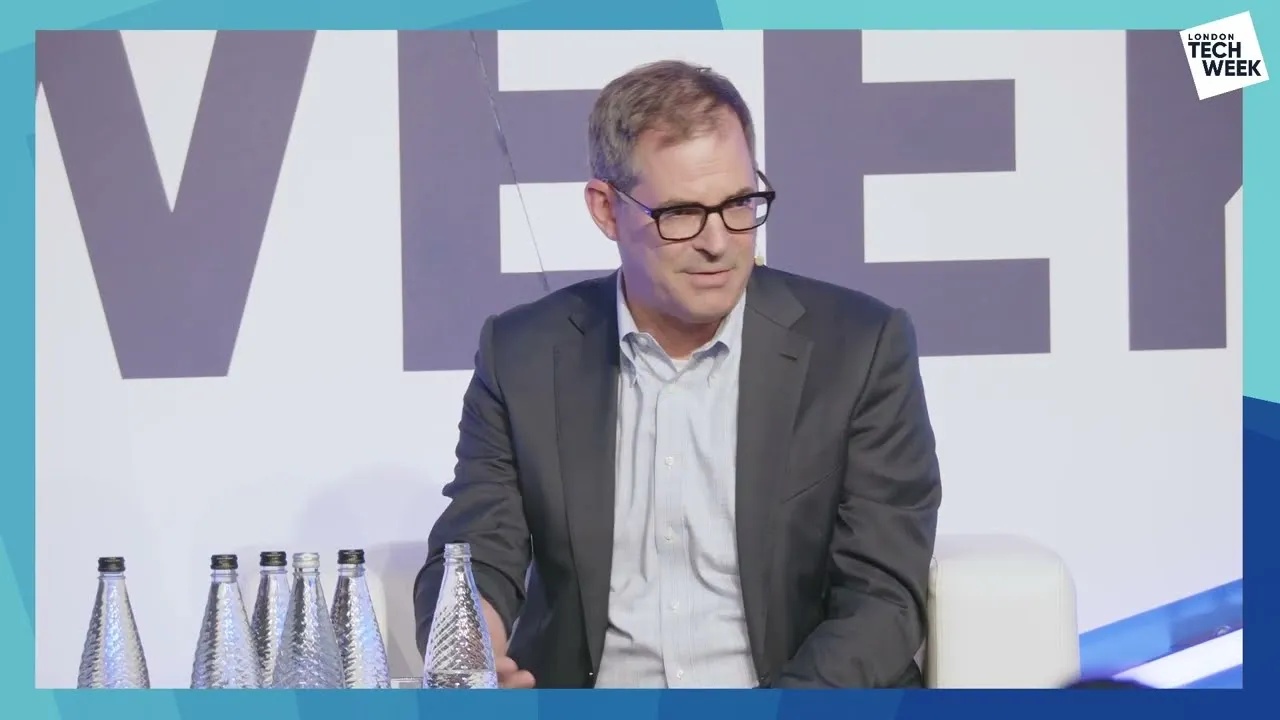
- Watch · London Tech Week conversation