An email app can get almost everything right and still fail to get invited to work. It can look good, move quickly, and inspire the sort of affection usually reserved for software people discovered before their colleagues did. Then someone in the purchasing process asks about single sign-on. The romance meets a checklist. Michael Grinich learned how expensive that encounter could be at Nylas, the email company he co-founded.
He had concentrated on the person reading the inbox. The enterprise IT administrator had a different set of needs. A company wanted control over access, integration with its existing systems, and the ability to manage the software responsibly. Nylas Mail’s appeal to individual users could not settle those questions. The app was eventually discontinued as the business moved toward infrastructure. Grinich left Nylas in 2017 with a fairly intimate knowledge of the distance between being liked and getting paid.
His next company, WorkOS, would occupy that distance. It supplies the enterprise features that developers need when their software starts attracting larger customers. There is a certain satisfaction in the reversal: the requirements that had interrupted one company’s ambitions became the reason to start another.
An Oregon detour to the software business
Grinich grew up in a small town in Oregon and arrived at MIT with interests that wandered across disciplines. He explored architecture, including studio work and 3D modeling, then physics. Software gradually drew him in. A temporary departure to work at Dropbox made the attraction concrete. Here were people building a product used by millions, in a company small enough that the connection between a person’s work and the result was visible.
He returned to MIT, switched to computer science and earned a CS degree, according to his own account. His capstone project involved synchronizing and visualizing email data. That work supplied the beginnings of Nylas. The inbox had become a place where his technical interests and his appetite for making things met. Everyone around him depended on email; there seemed ample room to improve the experience.
That sequence matters because the later infrastructure founder began with a very personal attachment to the application. He wanted to change the tool people used all day. Finding out that a better interface could leave the business problem unresolved was an education he would carry into his next project.
A listening tour of the unloved work
Before WorkOS became a product, Grinich investigated who actually understood the problem. He spoke to founders approaching enterprise customers, product teams that had already made the journey, and IT administrators. These were three views of the same crossing. Founders could describe the interruption to their plans. Experienced teams could explain the engineering. Administrators could explain why they kept having to say no.
He asked about requirements, trust and timing. What would make a team depend on an outside service? Which features could stop a purchase? What had proved less important than expected? Some founders wanted to avoid enterprise work altogether. People who had already built the features recognized the effort immediately. The apparent lack of glamour was useful information. Here was work that mattered to a transaction and that many builders would prefer somebody else to do.
Grinich’s own phrase for the gap is the enterprise chasm. The phrase gives an organizational problem a geographical shape: a product can have real users on one side while the larger company remains out of reach on the other.
The product has to make sense to all three.
A launch without the conference hall
WorkOS began writing code in early 2019. Grinich chose a distributed company from the outset. He wanted to recruit beyond a single location and avoid building the organization around the practical limits of an office. That required deliberate communication; being remote was an operating decision, with consequences for how people worked together.
The planned public introduction was a conference. When that event was canceled, the team took the launch online. On March 17, 2020, WorkOS appeared on Twitter and Hacker News. Grinich remembers the response partly because the usual reflexive dismissal was absent. Developers recognized the problem. Some had built versions of these features themselves and had little enthusiasm for repeating the exercise.
Webflow became an early major customer after co-founder Bryant Chou tried WorkOS during a hackathon and implemented it himself. That is a pleasingly literal demonstration of a developer product’s argument. A person with other things to build could try the infrastructure, get it working, and return to those other things. Investment followed, including a $15 million Series A led by Lachy Groom. The proposition was becoming legible to people outside the founding team.
The infrastructure should get out of the way
Grinich’s engineering preferences could be pragmatic to the point of unfashionable. In a 2021 interview, he described running WorkOS on Heroku and using TypeScript across the stack. A common language helped engineers move through the code. Managed infrastructure spared the team from spending its early energy on machinery that customers were not purchasing for its own sake.
The test was whether a choice helped solve the customer’s problem. Infrastructure can become a hobby expensive enough to require a board meeting. His account kept bringing the conversation back to the thin layer of work that made the product useful. It is a consistent position for someone selling other developers a way to avoid rebuilding shared requirements.
Design remained part of the business. In 2022, WorkOS raised an $80 million Series B and acquired Modulz, the company behind the Radix interface components. For a founder whose earlier company had cared intensely about the application experience, the acquisition connected developer infrastructure with the pieces people actually see and touch.
By March 2026, Grinich was announcing that Series C. Meritech and Sapphire led the round. WorkOS named OpenAI, Anthropic, Cursor and Perplexity among its customers. The enterprise requirements that once arrived after an application had found its audience were arriving quickly for AI products. The earlier infrastructure business had customers building in a new technological rush.
Try the material in a smaller room
Grinich’s approach to explaining software has room for an unexpected teacher: Julia Child. Show someone the work being done, and the process becomes imaginable. In conversation with Kent C. Dodds, he described live demonstrations as a way to make a technical product understandable. A developer can watch the steps and picture taking them.
He also compared smaller meetups to working out material in a comedy club before a larger performance. The comparison is useful precisely because it admits that a story needs testing. An audience may miss the point. A demonstration may expose an awkward step. Better to discover that in a room where the explanation can still change.
His public GitHub offers another view of the builder behind the presentations. Projects include a keyboard-driven interface for LinkedIn messages, a calendar extension and an offline video queue for macOS. They address ordinary software irritations. Even a founder occupied with enterprise access apparently finds time to object to the inbox.
“Don’t let others define what you can be.”
Michael Grinich, on advice to his younger self
He has applied that advice to his own role. In discussing WorkOS, he describes deciding to learn sales rather than accepting that an engineering background ruled it out. His interest in curiosity and internal drive also shows up in how he talks about hiring. These are accounts of skills being developed, with the founder still learning alongside the company.
Now the visitor is software
AI agents give the access problem a new participant. A person may ask software to work across several services. Each system still needs to understand who is acting, what authority has been delegated, and which actions are permitted. Grinich’s talks address the need for scoped agent identities and for enforcement outside the agent itself. An assistant’s ability to perform a task does not settle its permission to perform every step.
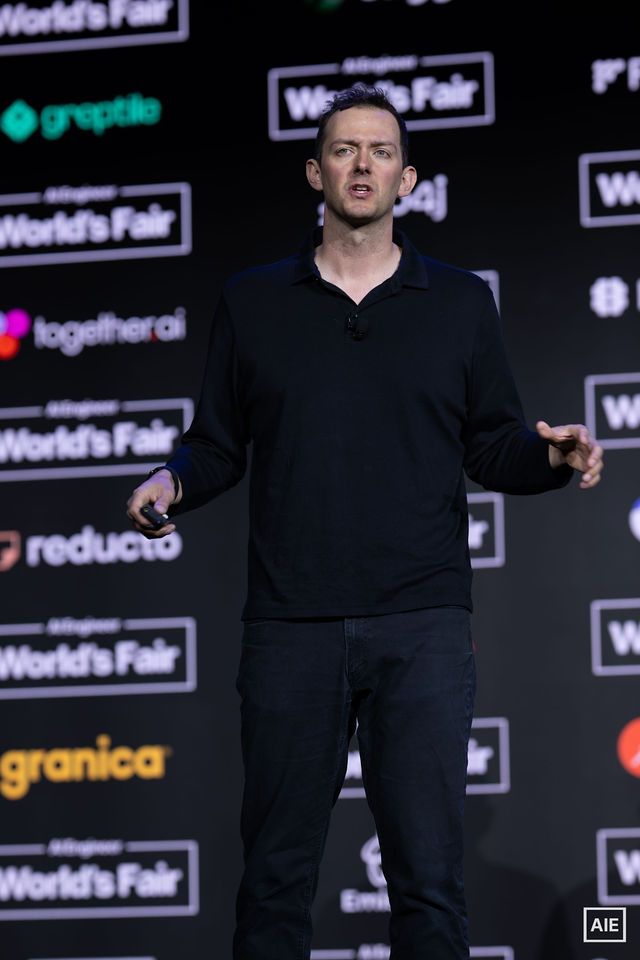
At WorkOS’s init() conference on October 7, 2026, he presented previews of Airlock, Atlas and Passport. Airlock evaluates agent actions against company policy. Atlas provides infrastructure for internal applications built with AI. Passport aims to reduce repeated sign-ins through a Mac’s organizational enrollment. The company described all three as previews rolling out over the following weeks and months.
The demonstrations brought his familiar concerns into the same room: identity, useful software, company requirements, and the friction between them. Grinich asked how organizations might change when intelligence is abundant and machines operate their systems. It is an ambition with substantial engineering still attached. He has chosen to spend his working life on the conditions that let other people’s products get used. The overlooked guest from the Nylas years now has a standing invitation.
Keep the conversation going
WorkOS ↗Company profile ↗LinkedIn ↗X ↗Bluesky ↗GitHub ↗Writing ↗