Michael Freeman’s route to veterinary software begins with a spreadsheet, or more precisely, with the mistake of insulting one. At Adaptive Insights, the conventional marketing argument was tidy: Excel was cumbersome, fragile, and no longer fit for serious financial planning. The product was the improvement. The customer simply needed to see the light. Then Freeman listened to a finance leader describe a spreadsheet as something closer to a handmade machine. It held assumptions, formulas, years of practice, and a quiet creative pride. Criticizing Excel did not challenge a tool. It challenged the person who had mastered it.
Freeman found a better metaphor. A carpenter does not throw away a grandfather’s hammer when the next commission is an apartment building. The hammer stays on the belt. The larger job calls for a nail gun. Adaptive Insights could be introduced as the nail gun, not as a sneer at the hammer. The story respected what customers already knew while opening a path to something more capable.
That small act of translation contains most of Freeman’s working philosophy. The person on the other side of the screen has a history. The workflow has emotional weight. A feature list can be accurate and still miss the truth. Now, as Chief Marketing Officer at PetDesk, he operates in a business built around another crowded interface: the veterinary front desk, where calls, reminders, forms, appointment requests, and conversations arrive with little concern for one another’s timing.
The customer is not using your monitor
Freeman is an optimizer who distrusts optimization performed at a polite distance. During one experiment at Adaptive Insights, his team redesigned pages for downloading reports and ebooks. Previous tests had gone well. The old pages looked sparse and dated, so the replacement seemed certain to win. It lost.
Instead of declaring the audience irrational or the sample unlucky, Freeman kept the test alive and cut the results by device. The problem appeared on mobile. Oversized image files crawled over data connections. A form sat far below the first screen. There was no useful shortcut to it. The designers had been admiring the page in conditions the customer did not have.
The mobile experience was rebuilt and the revised version ultimately beat the old design by 30 percent. The durable insight was not that smaller images load faster. It was that every experiment tests the artifact and the confidence of the people who made it. “You need to let the market decide,” Freeman said. Curiosity, in this telling, is less a charming personality trait than a willingness to be corrected by evidence.
The same instinct surfaced at Airbase. Complex software often asks a visitor to choose between reading another paragraph and submitting to a sales process. Freeman wanted a useful middle step: an interactive product demo that gave the prospect value quickly and let them recognize a fit for themselves. In the published case study, those interactive demos produced about 10 percent more leads than custom demo requests. His advice was sober: start small, iterate, and understand the demo as part of the user’s journey, not merely the vendor’s funnel.
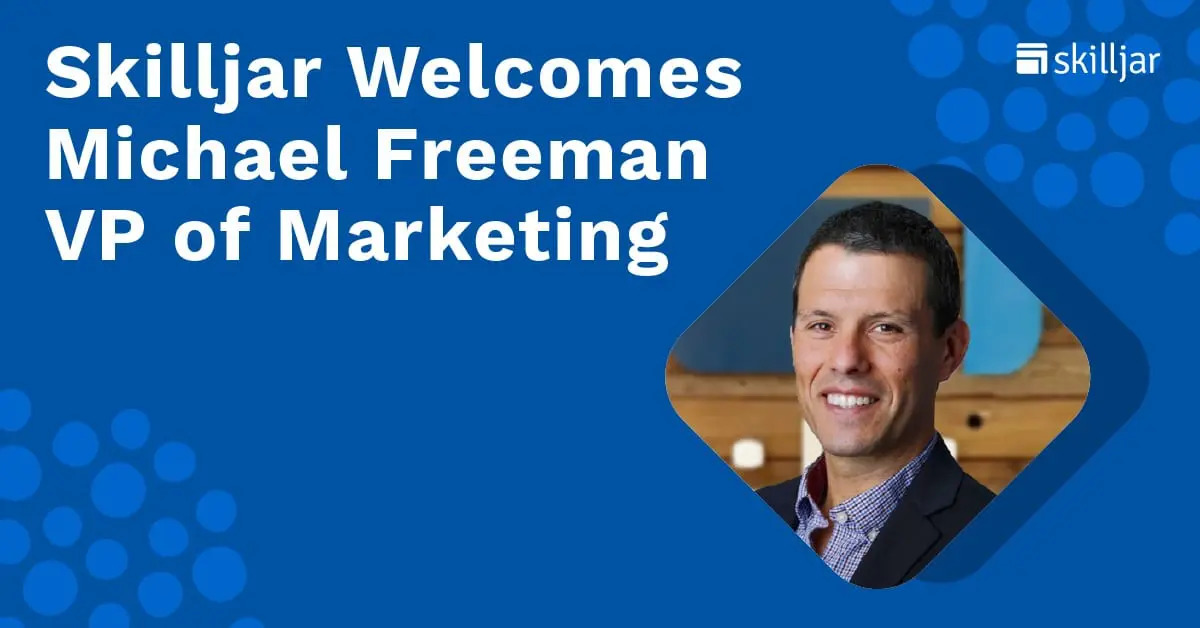
A career made of different rooms
Freeman’s résumé refuses to stay in one industry. His early work included Maersk Logistics and sourcing at The Walt Disney Company. He spent six years near Barcelona, worked with the warehouse-systems company Mecalux, then returned with his family to San Luis Obispo in 2012. ShoreTel put him into cloud communications. Highfive dealt in workplace video. Adaptive Insights and Certent brought him into financial software. Skilljar focused on customer education. Airbase sold spend management. PetDesk serves veterinary practices and pet owners.
The category changes are less random than they look. Each business asks a marketer to translate a complicated system into a reason for someone to alter a familiar routine. Freight, communications, planning, training, procurement, veterinary workflow: every room has its own vocabulary and its own beloved hammer. Freeman’s repeatable skill is finding where the customer’s pride lives, then introducing change without trampling it.
When the bridge is usable
PetDesk gives that method a particularly tangible brief. Freeman has spoken about the fatigue caused by endless calls, manual reminders, and scheduling. The company’s integrations, communications tools, phone system, and app are positioned as ways to remove repetitive work while preserving a personal experience. His language stays close to the working day: free valuable time, reduce friction, help practices operate with less stress. The promise is not technology floating above the office. It is technology behaving well inside it.
In 2025, announcing PetDesk’s support for the Veterinary Hospital Managers Association, Freeman called practice managers “unseen heroes” and tied the sponsorship to more efficient offices and better experiences for staff and clients. The phrase fits his broader attention to overlooked operators. Marketing tends to celebrate the buyer with the budget. Freeman keeps returning to the person doing the repeated task.
The coach leaves room on the field
His management ideal sounds simple: set tough but achievable goals, provide the resources, remain available, and get out of the way. The second half of his success test is the revealing one. Results matter, but people should also feel the progress and recognize their part in it. Former colleagues describe him as a coach by nature, a leader who cares about honest dialogue and creates room for challenge.
Soccer supplies an obvious grammar. Freeman plays and coaches the game and follows FC Barcelona. He has compared organizational work to the movement around a center forward: the pass, the off-ball run, the space someone else creates. A goal may have a single name beside it, but the work has more authors. Management means noticing those dependencies early enough to support them.
It also means refusing fantasy schedules. When junior colleagues estimate a project at perfect utilization and perfect efficiency, Freeman tells them to double the timeline. Real work includes Slack, Zoom, company meetings, sudden requests, and the stubborn fact that collaborators have priorities of their own. Ambition survives contact with reality better when the calendar admits reality exists.
The Freeman checklist
Challenge the status quo. Write the hypothesis. Identify the audience and its job. Tie creative choices to the objective. Preserve coherence. Explain the why before saying no. Give the team resources, then give it room.
The seriousness has an escape valve. Freeman once described himself with three words: curious, silly, competitive. Colleagues at Skilljar encountered unusual travel backgrounds on Zoom and the occasional ukulele tune at the end of a meeting. He learned “Lose Yourself” for his teenage son. His team requested “Over the Rainbow.” He obliged, explaining that he bends over backward for his team.
Away from work, the pattern remains energetic. Soccer, rock climbing, surfing, family, and a mixed-breed rescue dog named Athena fill the list. His coffee is medium or light roast from a French press, no sugar, heavy cream. He is an early bird who likes to sleep in, a contradiction so tidy it could be a campaign brief. If instant mastery were available, he would choose cooking. If the itinerary opened wide enough, he would travel around the world with his wife. He once entertained the idea of hosting Jeopardy!, before celebrity casting made the odds look less friendly.
Do the chosen thing well
Freeman traces one standard to his mother. Trained as a nurse, she devoted herself to her children and community and spent decades making costumes for dance productions in San Luis Obispo. She did not commit to everything. When she committed, she went all in. The distinction matters. Excellence without selection becomes exhaustion; selection without care becomes mere prioritization. Her example joined the two.
That lesson echoes through his fondness for continuous improvement. One spectacular campaign fades. A thoughtful testing practice compounds. One dazzling idea may win a meeting. A coherent system helps customers remember who made it. A leader with the right answer can still fail if the team never travels the reasoning with him. The how of execution, Freeman argues, is as important as the what.
There is a literal expression of that boundary in his backyard. After returning from Spain, Freeman began remote work in 2012, years before it became ordinary. In 2017 he built a shed office. Each morning he leaves the back door with a backpack and coffee, crosses the yard, and arrives roughly 30 seconds later. The space is for work, not weekends. When he leaves it, work stays behind.
A small commute still marks a transition. It creates a place where curiosity can be rigorous, silliness can loosen a meeting, and competition can aim at the problem instead of the people. The office is modest, but the operating principle travels well: make the conditions for useful work, respect the humans inside them, and keep testing what you think you know.
That principle now meets the veterinary front desk, a place where the glossy abstraction of “digital transformation” becomes a phone ringing while a form waits and an appointment moves. Freeman’s career suggests that the interesting question is rarely whether software can do more. It is whether the software, the message, and the company can pay close enough attention to make more feel like less work.