In October 2025, a chemical company sold a disused manufacturing site in northern England and sent money in the same direction as the property. Elementis reported a cash outflow of about $11 million when it transferred Eaglescliffe to Flacks Group. It also removed roughly $20 million of environmental liabilities from its balance sheet. Michael Flacks had found a bargain with a past attached.
For most of us, buying a building involves handing over money and receiving keys. Here, the seller paid to leave. The arithmetic becomes less mysterious once the obligations enter the picture. The site needed an owner prepared to deal with what earlier industrial activity had left behind. Before completion, the Environment Agency consented to the transfer of its operating permits. There was paperwork behind those keys.
This is a useful place to meet Flacks, the Manchester-born investor based in Miami. His career has taken him through clothing, property, pumps, industrial cleaning equipment and minerals. The subjects change; the recurring situation is an owner ready to depart. He arrives with a willingness to examine whatever has made the departure difficult.
The seconds counter gets bigger
Flacks grew up in Cheetham Hill, Manchester, and left school at 16. He began selling fur coats and leather jackets from street-market stalls. Flacks Group dates its beginning to 1983. The later international business had a retail beginning, with merchandise you could pick up, inspect and offer to the next customer.
He has described buying factory-second clothing from manufacturers in the North West. Seconds have a particular commercial charm: they have already disappointed somebody. The next buyer has to decide how much that disappointment matters. A fault, a fashion change or an awkward batch can make stock troublesome for one owner and affordable for another.
When explaining his later investment career, Flacks returned to that early trade. “We were buying seconds from manufacturing factories in the North West,” he said. The continuity matters more than the picturesque origin. He sees a connection between the goods a factory wanted to move and the businesses a multinational wants to sell. His shopping basket has become considerably harder to carry.
“I’m looking at opportunities others won’t look at.”
Michael Flacks
Retail earnings led into property investment, including German real estate after the financial crisis. By 2023, his acquisitions extended well beyond clothing. Yet he retained a recognizably shopkeeper’s interest in the purchase price. Expensive surroundings have not dislodged the attraction of a discount.
A multinational’s exit becomes his entrance
The corporate version of unwanted stock is often a division. It may still have customers, equipment and skilled employees while sitting awkwardly inside its parent’s plans. Selling it can involve disentangling operations as well as agreeing a number. Flacks Group seeks carve-outs, spin-offs and divestitures where an ordinary sale process has become difficult.
Pleuger provides a concrete example. Founded in 1929, the pump business passed through a succession of industrial groups before Flacks Group acquired it from Flowserve in 2018. It returned to independent ownership with products serving water, mining, marine and energy applications. This is the portion of his portfolio where the word “flow” describes actual machinery.
In 2024, Pleuger acquired AVI International, extending its North American operations. There is a modest but useful distinction here: the original deal established a new owner; the later acquisition showed that the company was still making moves of its own. For a profile built around turnarounds, the years after purchase deserve as much attention as the signing.
Zippel followed a similar route between corporate homes. In October 2020, Flacks Group bought the German industrial cleaning-machine manufacturer from Japan’s Sugino Machine. The business, based in Neutraubling and established in 1968, had 142 employees at the time. Financial terms were undisclosed. Its machines clean manufactured parts, a useful occupation that seldom commands a glamorous dinner conversation.
Different products. A recurring route out of a larger group.
The expansion continued with Imerys’s assets serving the paper market. In July 2024, Imerys announced completion of their disposal to a Flacks affiliate for a net equity value close to €150 million. The businesses became Artemyn. The seller’s description identifies both what changed hands and the valuation measure, useful precision in a world where every transaction seems to arrive wearing several price tags.
The obligations come with the land
Property adds another dimension to this approach. An older industrial building may be difficult to let, expensive to modernize or burdened by its previous use. Those complications can outlast the manufacturing business itself. A vacant site still needs decisions, expenditure and someone responsible for it.
Flacks Group’s property portfolio includes warehouses, apartments, retail centers and industrial land across several countries. Its stated approach is to buy complex properties as they stand and work toward stabilization, decommissioning or repurposing as appropriate. Those verbs describe very different futures. A useful account of such investing has to leave room for all three.
Eaglescliffe makes the trade visible. The March 2024 agreement had specified negative purchase consideration of £11.5 million. Completion came in October 2025 after regulatory consent. Even an investor who emphasizes speed can encounter a transaction whose timetable belongs partly to someone else. The interval between agreement and closing is part of the story.
Elementis reported this payment when the Eaglescliffe site transfer completed in October 2025.
The group advertises closings in as little as 30 days and a capacity to assume legacy environmental obligations. Those are statements of its offer to sellers. They are best understood alongside the actual transfer of a particular site, with its permits and its timetable. A business model can promise speed; an individual property supplies the complications.
The chapter after the announcement
Flacks’s appetite for difficult situations has also produced outcomes that resist a tidy success story. His group acquired Kelly-Moore Paints in 2022. In January 2024, the company announced that its stores would close and operations would wind down, with its Union City distribution center temporarily fulfilling remaining orders. More than 700 employees had been furloughed.
For workers and customers, the decisive event was the shutdown. That belongs beside the acquisition in any account of his career. Buying a troubled company creates an opportunity to change its course. The purchase itself cannot establish that the course has changed. Turnaround is a demanding word to print before the ending arrives.
The distinction matters especially for an investor whose public identity is built around businesses others have left behind. There is an appealing narrative available: the unfashionable asset finds an attentive owner and flourishes. Kelly-Moore requires the reader to keep another possible ending in view. The same portfolio can contain continued operations, expansion and closure.
Private money, public conversations
Flacks Group describes itself as a privately owned family office, financed with its own capital. It says affiliated businesses have a global asset value exceeding $7 billion. That figure refers to assets across businesses; it should not be mistaken for a personal bank balance. Flacks’s wealth and the value of the assets his affiliates hold are different questions.
The current leadership roster lists him as chairman, with James Gassenheimer as chief executive. The team includes financial, legal and operating roles as well as specialists in brownfield acquisitions and environmental risk. Such responsibilities help explain what must sit behind a taste for complicated bargains. Someone has to keep working after the buyer has found the price agreeable.
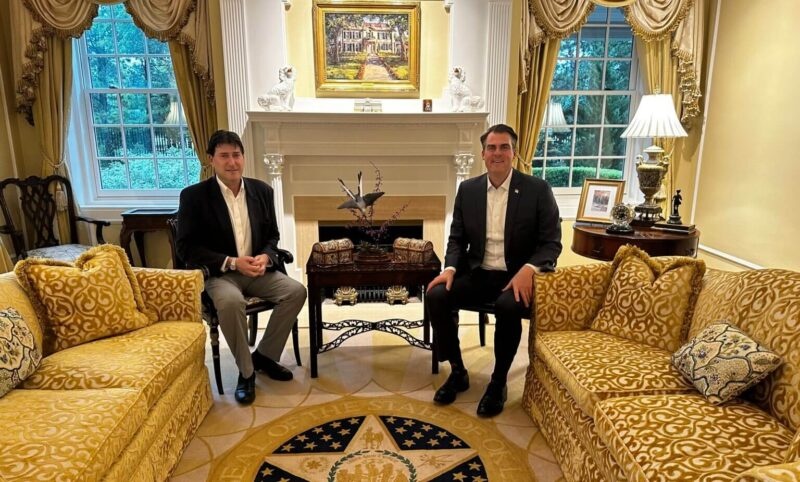
In May 2024, Flacks met Oklahoma Governor Kevin Stitt for breakfast to discuss industrial and manufacturing investment opportunities. In September 2026, the group announced the appointment of former Shell Midstream US president Sean Guillory to lead energy investment activity from Houston. The appointment adds operating experience to the search for acquisitions. It also moves the story beyond a founder’s instinct and toward the people asked to execute it.
Steel brings a larger audience
During 2026, Flacks pursued a more public set of ambitions in European steel. In February, he discussed a possible acquisition of British Steel and proposed replacing existing furnaces with electric-arc technology. His group was also pursuing the former Ilva operations in Italy. These were proposed transactions and plans, with government decisions standing between interest and ownership.
British Steel subsequently entered UK public ownership on July 16, 2026. The event gives his earlier interest an essential date boundary. A prospective purchase belongs to the moment when it was proposed; it does not quietly turn into an acquisition because the ambition was memorable. The group also published a Sky News Italy interview in April, giving his Italian plans a public platform.
Steelworks make the scale of this investing style apparent. A factory is equipment and property, but it is also a place around which other people have arranged their lives and businesses. Announcing a plan invites those people to judge it. The audience for a complicated bargain can become much larger than the parties sitting across a table.
A tower, a club, and the next set of keys
There is another use for property in Flacks’s public life. In 2024, Michael and Debbie Flacks contributed $5 million toward Colel Chabad’s planned ten-story community center beside Jerusalem’s Machaneh Yehudah market. Its announced uses included an art studio, soup kitchen, synagogue and housing. The charity also described their earlier support for a supermarket in Beitar, opened in 2005. The relationship predates the tower.
On October 9, 2026, Gateshead FC announced a sale agreement in principle with Flacks Group, subject to Independent Football Regulator approval. The club said player and staff wages would be paid immediately. It thanked Flacks and his colleagues for acting during a difficult period. The condition attached to the sale remains part of the news.
A football club gives an investor a particularly attentive audience. Supporters have invested years before anyone discusses the purchase price. Their stake is expressed in Saturdays, friendships and expectations about next season. In that setting, ownership will be judged through events that a balance sheet can only partly describe.
Flacks began with goods a manufacturer wanted to move. Four decades later, the goods have acquired employees, operating permits and supporters. Finding a willing seller still starts the transaction. What gives the bargain its meaning is the work that follows, once the keys have changed hands.