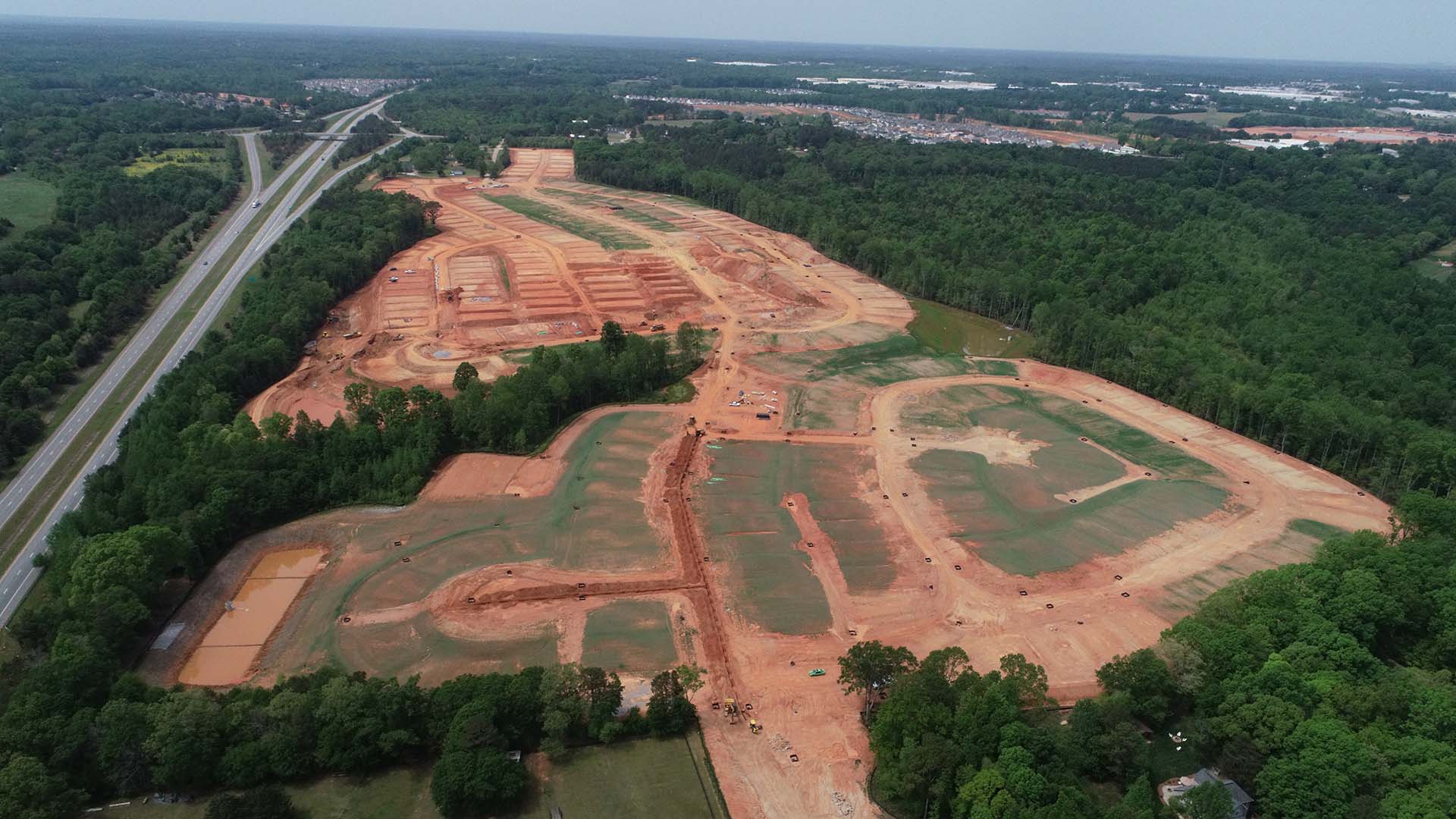
A neighborhood has a surprisingly long preface. Before anyone chooses a kitchen countertop, somebody has to make the ground usable. Roads, drains, utility connections and permissions precede the house. David Feingold’s business life has taken him deep into that preface, where a development is still a set of obligations and a stretch of earth.
The Miami-based chief executive of Broadstreet Global works across businesses that can seem an odd assortment: housing infrastructure, hotels, specialty finance and crypto mining. Their finished products look different. Their practical requirements bring the conversation back to land, capital, contracts and the people who turn plans into operations. Even a digital coin needs somewhere to plug in.
His career also brings the less picturesque side of private equity into view. Feingold and related parties face a disputed SEC civil enforcement action. Alongside the development projects and management interviews sit questions about disclosures, investor money and accounting. A portrait of this executive has to hold those subjects together without letting the size of a portfolio answer questions it cannot answer.
A lawyer learns the machinery
Feingold began as a corporate and litigation attorney at a national law firm. His public biography describes work on complex transactions, arbitration and litigation. He attended Emory University and its law school. The early professional setting was one in which agreements were written, interpreted and, when necessary, fought over.
His later work ranged into derivatives, liquidity arrangements for early Silicon Valley investors and international carry trades for hedge funds. The same biography credits him with developing more than $1 billion in residential housing and working with factored receivables and nonperforming mortgage pools. These are claims about his career, rather than an audited personal scorecard.
By July 2022, his public employment profile places him in the CEO role at Broadstreet. His work had moved across legal practice, financial structures and property development. The nouns changed considerably. The need to understand how an arrangement works remained.
The map gets smaller, the portfolio gets wider
Broadstreet’s regional story has a personal route into it. David Berger, who joined the business in 2022, had known Joseph and Steven Baldassarra since their childhood in Florida. Berger’s move to Greenville in 2013 brought the brothers to the area on visits. Broadstreet moved its headquarters from South Florida to Greenville in 2016.
Feingold’s home city remains Miami. At a 2022 dinner at Hall’s Chophouse, he spoke warmly about Greenville as a place to raise a family. The company’s investment attention settled on the Carolinas, where its projects included preparing land for housing. The 572-lot Chestnut Ridge development in Mauldin supplied a particularly visible example of that work.
Berger brought experience from Hospitality America. His appointment connected the company’s hotel interests with an operator who already knew the region. Joseph served as president and Steven as chief operating officer alongside Feingold. The public account of the business is full of such connections: people with previous relationships taking on defined jobs in a growing collection of ventures.
Broadstreet’s current firm overview reports more than 130 projects and over 44,000 expected homesites. It also reports more than $5 billion in transactions. Those are company figures. Expected homesites describe a pipeline; transaction volume describes activity. Neither label means completed houses, money under management or personal wealth. The little word beside a large number does quite a lot of work.
Broadstreet’s firm overview also lists 44,000+ expected homesites. Pipeline figures describe expectations, not completed homes.
The firm lists land infrastructure, home development, lodging, land banking, restaurants, specialty finance, mining, storage and automobile dealerships. Its stated regional strategy aims to connect expertise and relationships across projects. For Feingold, the executive assignment spans all those operating interests, while the businesses themselves still require people who understand their particular work.
Electricity has entered the conversation
Crypto entered Feingold’s story through a change of mind. When two bitcoin miners approached him, he described himself as “a big naysayer.” One explained the opportunity; six months later, that miner began working with him to establish an operation. His account offers a useful reminder that a person can enter a business without arriving as its enthusiast.
In March 2025, he described an operation with roughly 16,000 machines. Components came from three countries and required assembly. Cooling systems and individual machines needed attention. Unpacking a device and putting it into a rack took time. His description of mining sounds distinctly industrial: equipment, logistics and maintenance, with a digital asset at the end.
He said the operation converted mined altcoins into USDC each day. This was his stated method of limiting exposure to volatile coin prices. Daily conversion does not eliminate every business or counterparty risk; it describes how he said the output was handled.
“We know what we’ve made each day.”
David Feingold, March 2025
- 01Assemble
machines - 02Operate &
maintain - 03Mine
altcoins - 04Convert daily
to USDC
The land-and-power connection helps explain why mining appears in this portfolio. In his account, access to sites and utility relationships gave the firm relevant capabilities. The digital business had a substantial physical underside. There were still machines to install, temperatures to control and people to organize.
Who gets to make the decision?
In his June 2025 conversation with Alex Rawlings, Feingold put listening near the center of executive work. He described giving division leaders the authority to operate much like CEOs, supported by weekly Zoom meetings and collaborative decisions. It is an approach that puts responsibility closer to the particular business.
He also described shared vacations among partners and voluntary participation in Navy SEAL training. The anecdotes give his account of company culture an unusually strenuous social calendar. A shared trip and a demanding exercise are different ways of spending time together; both appeared in his explanation of how the leadership group connects.
Feingold said he devoted regular time to business podcasts and global news, while conversations with people supplied ideas. He described building a brokerage after investors asked for one. Listening, in that telling, extended beyond the internal meeting. It could lead to another business line.
His stated outlook for infrastructure extended across generations. The ambition was long-term participation in a sector, with expansion shaped by margins and capabilities. In August 2025, his appearance with Ryan Glick on The Land Development Podcast returned to master-planned communities, partnerships and profit margins. Across those conversations, his preferred subjects were people, operations and the conditions that allow a project to work.
A neighborhood needs more than houses
The self-storage plans announced in July 2025 show another part of that regional argument. Broadstreet described 15 projects in development, more than 8,100 units in its pipeline and a target of over 25 facilities across Southeastern markets. The announcement linked storage locations to nearby infrastructure and residential developments.
It named Public Storage and Extra Space Storage as national operators managing Broadstreet-owned facilities. Feingold’s public role in the announcement was to explain the expansion as an extension of the company’s investment approach. The figures described development and intended rollout. A pipeline is a promise of work still ahead, with its own schedule and execution requirements.
Community commitments form another part of his public profile. In April 2025, Broadstreet announced it would continue supporting the Community-Police Relations Foundation through that year. The described work included food assistance, educational access, essential supplies and programs connecting residents with law enforcement. Foundation leader Al Eskanazy credited Feingold and the company with several years of support.
“Giving back is in our DNA,” Feingold said in the announcement. His biography also describes funding a school in Guatemala, a children’s food program in Russia and educational projects and scholarships in Florida. It says he is married with seven children and spends time in Miami, Greenville and Latin America. Those details place a family and a wider geography beside the company’s regional business focus.
The accounting comes into view
On January 29, 2025, the SEC filed a civil action against Feingold, Joseph and Steven Baldassarra, Broad Street Global Management and Broad Street Inc. The agency alleged fraud involving a fund that had raised approximately $1 billion from more than 1,000 investors. Its allegations included diversion of investor money and misleading representations about returns. The defendants dispute the claims.
Their February 2025 response argued that offering documents and other disclosures authorized the fees and uses of capital challenged by the SEC. It also emphasized that property development can take years to generate cash flow. These are the defendants’ arguments, rather than findings establishing that their conduct was lawful.
A separate attempt by Broadstreet and the executives to challenge the SEC’s investigation in Texas was dismissed without prejudice on February 6, 2025. The court found the case unripe and said it lacked jurisdiction. That ruling concerned the challenge to the investigation; it did not decide the Florida fraud allegations.
- 29 JAN 2025
- SEC civil complaint filed.
- 21 APR 2025
- Agreed monitor appointed.
- 25 JUL 2025
- Complaint ordered unsealed.
The April 21 order appointed an agreed monitor to examine records and operations. It resolved motions concerning preliminary relief and a receiver, while preserving the SEC’s ability to prosecute and the defendants’ ability to defend. The order continued restrictions on soliciting or accepting additional fund investments until further court order. Appointing a monitor was a procedural intervention, not a final fraud judgment.
On July 25, the court ordered the complaint unsealed and required completion of an accounting by August 31. The focus on accounting gives the story a concrete object: records of where money went, how assets were held and how the arrangements operated. Project photographs cannot supply those answers.
The litigation continued into 2026. An August 25 order in a related South Carolina subpoena dispute described the Florida enforcement action as pending. It denied Contender Development’s request to strike portions of SEC briefing or file an additional reply. That decision addressed the briefing dispute. It was not a final determination of the allegations against Feingold.
What lies underneath
Feingold’s public career takes the reader through several kinds of unfinished work: a contract being structured, land being prepared, machines being assembled, a portfolio being expanded. He has spoken about listening, delegation and opportunities that fit existing capabilities. These subjects give his executive life a practical vocabulary.
There is another vocabulary alongside it: disclosures, ownership, accounting and court orders. Both belong in the picture. A road can make a neighborhood possible; a record can show how its financing worked. Feingold’s story reaches beneath the finished asset, where the work happens and where the questions have to be answered.