Michael FitzGerald once went looking for a job and handed over a novel instead of a résumé. The prospective employer, Steve Saroff, put Radiant Days on a shelf. They talked. By the end, Saroff had offered to invest in FitzGerald’s startup so he could work on it full time. The book would have to wait to be read. Its author had apparently passed a different sort of audition.
Saroff remembered the encounter years later, after the two had become close friends. It is a pleasing place to begin with FitzGerald: a person arriving with evidence that he could finish something difficult, even if it was not the evidence usually requested. A novel is an inconvenient business card. It does, however, suggest a certain tolerance for unanswered questions.
That tolerance came in handy at Submittable, the company FitzGerald co-founded with Bruce Tribbensee and John Brownell in Missoula, Montana. They began with a problem he knew from writing. They spent years learning what it meant to make a business from it. Along the way, the question widened from how to get a manuscript read to how to give people opportunities, including people living in their own town.
A book before a business
Born in Rochester, Minnesota, in 1970 and raised in Skaneateles, New York, FitzGerald graduated from Hobart College, lived in Budapest and later moved to San Francisco. He earned an MFA in creative writing at the University of Montana and taught himself programming while in graduate school. Software work in Boise helped pay the bills while he wrote fiction.
His literary life had an agreeable lack of corporate polish. In Budapest, he edited a DIY punk zine called FAT. His novel, Radiant Days, appeared in 2007, published by Shoemaker & Hoard, now part of Counterpoint. Its setting included Budapest and Croatia in the early 1990s, territory he knew from having lived in the region.
The route from that world to entrepreneurship included an unexpected reading list. Interested in the sound of natural speech, FitzGerald studied the punk oral history Please Kill Me. Reading interviews eventually led him to Jessica Livingston’s Founders at Work. The founders in its pages seemed recognizable: uncertain, improvising, working through problems. Business began to look less remote from the creative life he already understood.
He was careful about that connection. Starting a company did not mean abandoning writing in defeat. It offered another way to make something and have autonomy. The daily discipline was familiar, too: working before anyone had asked for the work, making decisions without knowing whether a stranger would care. There was no customer waiting impatiently for the first draft of his novel.
The useful part was the bit they almost missed
The company began with friendship and a lunch spent making a list of irritating things. Sending writing to publishers made FitzGerald’s list. Tribbensee supplied the early name, Submishmash. It captured the experience rather well. It would prove less reassuring to people responsible for approving a purchase.
The underlying frustration was specific. Writers faced a jumble of email, postal submissions and different online systems. Every destination brought another procedure. FitzGerald could see the waste because he was doing the work himself. His co-founders brought their own creative pursuits: Tribbensee made films; Brownell played music. The people writing code were also people trying to get things into the world.
The first idea was a marketplace connecting creators and publishers. After months of building, conversations with publishers exposed the distance between an attractive concept and something they wanted to buy. Yet a smaller feature caught their attention: a way to receive a document, read it in a browser and review it with colleagues.
One shared task gave the software a place to start.
The founders removed most of the original functionality and concentrated on that task. The scale of the cut mattered. They had to give up work they had already done to find work worth continuing. A software company, it turned out, could need a rather severe edit.
The early money was humbling. FitzGerald recalled first-year revenue of $491. The founders built, sold and supported the product themselves. There was no clean division between having an idea and answering a customer’s question about it. The name eventually changed to Submittable, a word better suited to an administrator’s invoice.
“Solve one problem rather than creating a solution.”
Michael FitzGerald
His advice to other people starting things had that same practical edge. He cared about the repetitive obligations behind the romance: selling the work, paying people and keeping a process going. A publishing venture needed more than an attractive site. A software venture needed more than working code. Someone had to take responsibility for tomorrow.
The address was part of the ambition
Submittable went through Y Combinator in 2012. The founders spent three months in Mountain View, California, learning inside a much denser startup world. FitzGerald valued the speed with which people there made introductions and acted on problems. The experience could improve a Montana company without requiring it to become a California company.
By 2017, True Ventures was leading a $5 million Series A investment. The business had more than 35 employees in Missoula. FitzGerald’s ambition included a company of 500 people in the city, giving his children and other young people a reason to imagine a future there. He wanted growth to produce careers within reach of home.
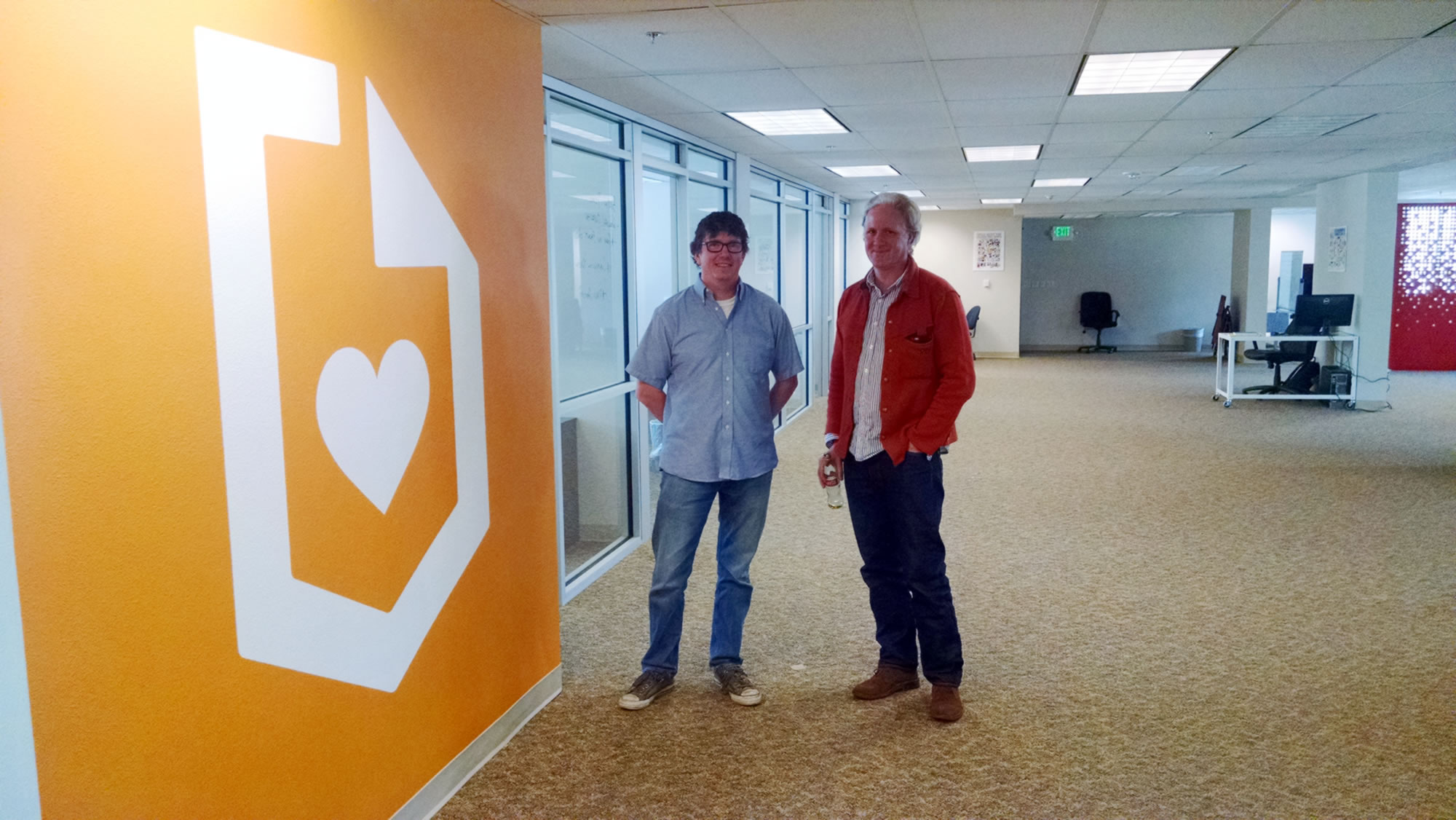
In 2018, the company had 72 employees and a place on the Inc. 5000. Its staffing needs were changing. FitzGerald spoke openly about bringing in executives who had already dealt with stages of growth that were new to him. The person who could help start the company also had to recognize the experience it now needed.
The employment goal was unusually concrete. He described substantial careers, with room to begin and learn, rather than a future in which talented people left and returned only by accepting a pay cut. His number was an aspiration. Its purpose was already legible in the people being hired.
For a founder, geography can become a sales pitch. FitzGerald made it a working preference. He liked the focus of building away from the constant circulation of investors and status. He also liked the work itself, including the slow stretches when showing up was the main available achievement.
“I’m a show up and do shit person.”
Michael FitzGerald
A poem, a grant, a soccer shirt
The product kept finding new uses because many organizations faced versions of the same task. Someone sent material. Other people needed to examine it, discuss it and decide. By 2019, Submittable supported dozens of file types, with tools for several stages of review. FitzGerald described working with customers to fit the software into their particular processes.
One example was NBCUniversal’s talent programs. The company used Submittable for applications and creative material, including reviews involving outside evaluators. A tool that began near the literary slush pile could also help people assess emerging entertainment talent. The connection was in the work of choosing.
FitzGerald could explain corporate giving with a smaller scene: another parent asking for a $200 soccer sponsorship. Agreement was easy. Then came the reminder, accounting, the right expense category and marketing materials. A modest gift could acquire a surprisingly expensive procession of internal tasks. He saw a reason to gather the necessary information at the beginning.
The example carried his usual humor, but it also showed his habit of examining the awkward steps between intention and action. A company might want to support a team. A foundation might want to award a grant. Good intentions still needed an application received, information checked and a decision recorded.
Publishing brought its own tensions. The platform let writers track submissions and receive status updates. Publishers could collect fees, donations and other revenue. Submission fees remained contentious: writers worried about the cost of seeking publication, while journals needed ways to pay for publishing. Making a process easier did not settle the argument over who should fund it.
That complication belongs in FitzGerald’s story because he knew the writer’s side and ran a company serving organizations. The work required attention to both. An efficient review system could save an editor time; a writer still needed a fair chance to be read. Those interests could meet, but they did not automatically become identical.
Work that kept going out
In October 2020, FitzGerald stepped down as CEO and Thor Culverhouse took over. Submittable reported a team of more than 100 and use by more than 11,000 organizations. FitzGerald was named chairman. The company he had helped begin with two friends now required a leadership transition of its own.
- 2007Radiant Days appears
- 2010Submittable launches
- 2012Y Combinator, then back to Montana
- 2020A decade as CEO ends
Selected milestones in FitzGerald’s writing and company career.
He died on September 4, 2023, aged 53. Beyond the company and the novel, his life included skiing, running, reading and following the Buffalo Bills. His family remembered his good humor and devotion to them. The biography contained room for things with no business model at all.
In its review of 2025, Submittable described honoring him with a grant to Giving Art to Missoula, which makes art supplies available free. It was a fitting local gesture for someone whose business had begun among people trying to make and share their work.
Saroff found another way to remember his friend. He used Submittable to send five stories to literary magazines. Four were accepted. He imagined bringing the news to FitzGerald and falling into another long conversation about fiction. The software was still doing its ordinary job: carrying someone’s work toward a reader. This time, the sender knew whose company he was keeping.
Keep reading, keep listening
- Submittable The company he co-founded
- Michael FitzGerald on LinkedIn His professional profile
- Radiant Days and author profile Books and background
- Watch the 2013 conversation Writing and building Submittable · YouTube
- Listen: building a business in Montana The 2018 Can Do conversation
- Finding the problem customers will pay to solve An early founder interview
- Steve Saroff remembers FitzGerald A friend’s writing and recollections
- The grant in his memory Submittable’s 2025 retrospective