The spreadsheet had become a postal service. At MSAntunes, a Brazilian software firm serving property developers, clients were moving roughly 300 workbooks between departments. Two people could spend ten days distributing and collecting them. The cells were familiar. The system around them was exhausting.
MSAntunes’s response was to keep the spreadsheet experience and change its job. Existing workbooks became templates inside a browser application, connected to a central database. The firm says consolidation dropped to a few hours for one person. The component supplying that familiar interface was SpreadJS, made by MESCIUS.
- MESCIUS sells components that developers put inside their own applications.
- Its territory: spreadsheets, reports, grids and documents.
- The buying decision is about engineering time, compatibility and deployment rights.
A business hiding inside other businesses
MESCIUS USA occupies an unusually discreet place in software. Its customer buys a component, builds an application around it, and puts another name on the finished product. A user may spend the afternoon sorting its grid or editing its spreadsheet without encountering the vendor’s name.
That position explains the product catalogue. ComponentOne supplies .NET interface controls. Wijmo brings grids, charts and inputs to JavaScript applications. Spread provides spreadsheet components; ActiveReports supplies reporting designers and viewers. Document Solutions handles Excel, PDF, Word and imaging through APIs. The recurring task is making business data usable without rebuilding every piece of machinery underneath it.
These are tools for developers and architects, including teams building financial, healthcare, government and technology applications. They require code and integration. Buying a reporting component does not supply a reporting strategy. It supplies working parts with which a team can implement one.
The shortcut is knowing what people expect
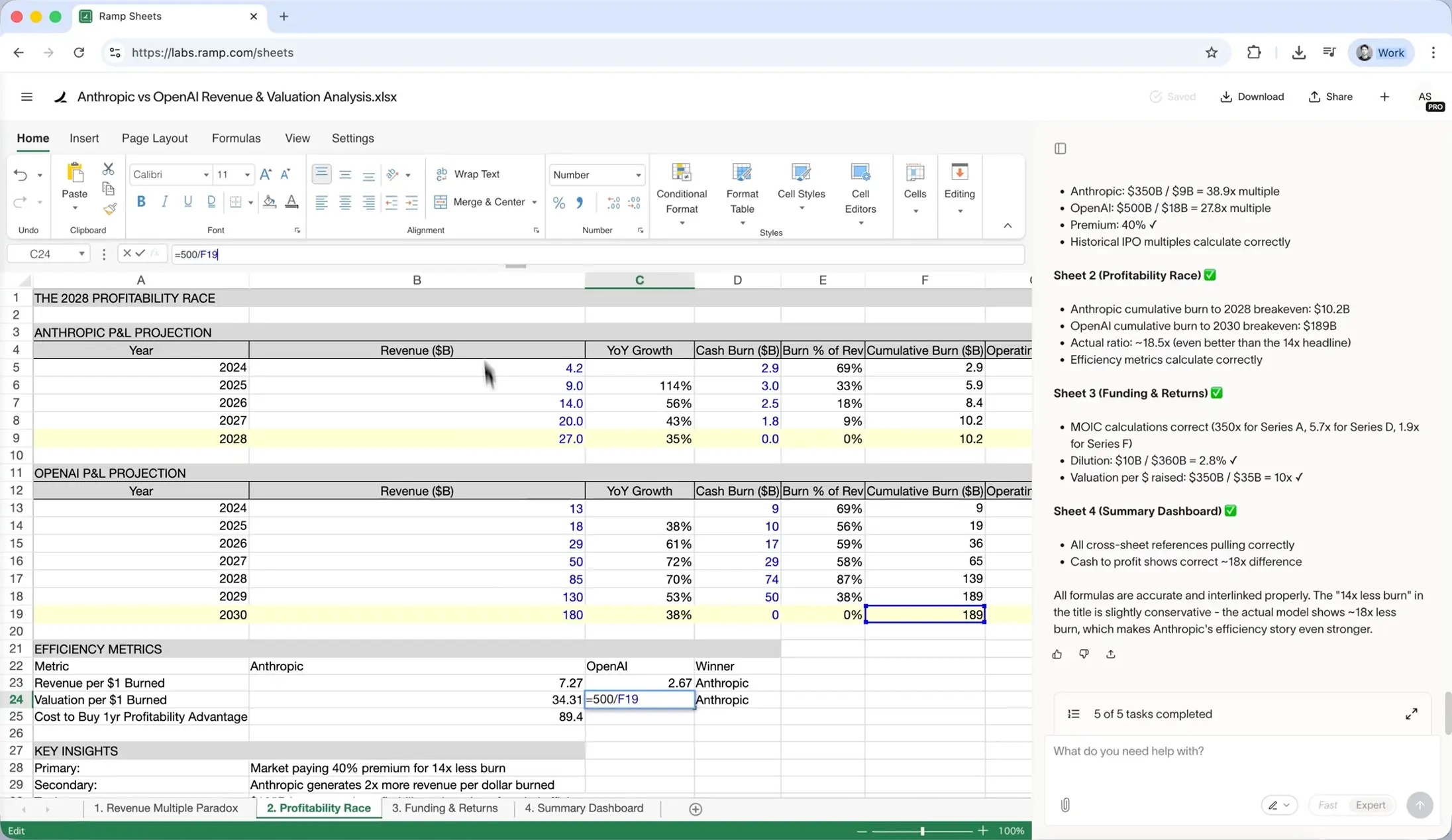
Consider Ramp Labs. Its engineers were developing Ramp Sheets, an AI spreadsheet experience. The interesting work involved financial workflows and agents. But the interface still had to satisfy people accustomed to Excel and Google Sheets.
They selected SpreadJS. A less obvious difficulty appeared in formula evaluation: experiments involving different calculation environments, including a Python backend, created consistency problems. The team standardized on the SpreadJS engine. One place to calculate meant fewer opportunities for the same workbook to disagree with itself.
“Spreadsheets are complicated… and I don’t want to build them myself.”
Alex Henkel · Ramp Labs
This is the practical distinction between drawing cells and delivering a spreadsheet. Users bring expectations about formulas, shortcuts and charts. Those expectations become engineering obligations. Ramp’s choice illustrates why a component can be central to a product even when the product’s main selling point is something else.
Schools, acquisitions and a new name
The company’s route here began far from AI. Its history reaches back to American educators in Japan and the software their schools needed. Paul Broman founded the parent’s predecessor, Bunka Orient Corporation, in 1980. School administration became a software business; developer tools followed.
The portfolio then grew through acquisitions: Data Dynamics products in 2008, FarPoint Technologies products in 2009, and ComponentOne products in 2012. Those transactions brought together the reporting, spreadsheet and interface families that remain visible today.
GrapeCity became MESCIUS in 2023, following a capital and business alliance with iSigma Capital. On April 1, 2025, the U.S. branch became the wholly owned MESCIUS USA subsidiary. The Pittsburgh operation has older roots than that legal milestone suggests. Customers were told the transition required no action.
The U.S. company’s own description of its workplace is pleasingly specific: flexible hours, 401(k) matching and an onboarding question about a new employee’s favorite snack. It describes collaboration and time for family alongside the technical work. That is the employer’s account, but the snack is an unusually tangible detail in a category whose recruiting language often sounds interchangeable.
The price of skipping the groundwork
The business model is commercial licensing, with support and updates attached according to the product and plan. At the time of this profile, ComponentOne Studio Enterprise lists at $1,299 per developer annually. Spread.NET with standard support also lists at $1,299 per developer annually. Those are distinct products, not interchangeable bundles.
ComponentOne Studio Enterprise
Listed October 2026. Product and deployment terms vary.
SpreadJS requires both developer and deployment licensing. Optional features introduce further choices. A team should price its intended production setup, including where the application runs and which extras it needs. A development-seat price alone does not describe every deployment.
The alternatives depend on the job. A narrow grid requirement invites a different evaluation from a spreadsheet with workbook import, formulas and charts. The useful comparison is the cost of meeting the actual requirements: implementation, testing, maintenance, support and licenses. A long feature list matters only where it overlaps the work. Vendors such as DevExpress, Progress Telerik and Syncfusion also compete for component budgets. MESCIUS’s particular proposition is the combination of interface controls, spreadsheets, reporting and document processing under one supplier. The value of that breadth depends on how much of it an application actually uses.
Old components, new callers
Recent releases show MESCIUS adapting the same catalogue to AI. SpreadJS v19 added optional AI Assistant and Collaboration Server components. ActiveReports.NET v20.2, released in September 2026, added AI visualization suggestions to its Web Designer alongside reporting and export improvements.
In July, MESCIUS also announced an MCP Server that gives coding assistants access to product documentation, APIs, samples and implementation guidance. That addresses another cost of sophisticated components: learning how to use them. Purchasing the code does not remove the need to understand its behavior.
There is evidence of an established commercial market here. ComponentSource ranked MESCIUS its number two publisher in the 2026 awards, based on orders placed through that distributor during 2025. It is a sales-channel result, with a defined scope.
The lesson a reader can copy is precise: preserve the interactions users depend on, then decide which engineering problems your team needs to own. Try representative workbooks and outputs before committing. If a small table meets the need, a spreadsheet engine may add unnecessary expense. If familiar behavior is the requirement, buying it can leave more time for the application people came for.
Open the toolbox
Try the components, inspect the examples, or watch them work.