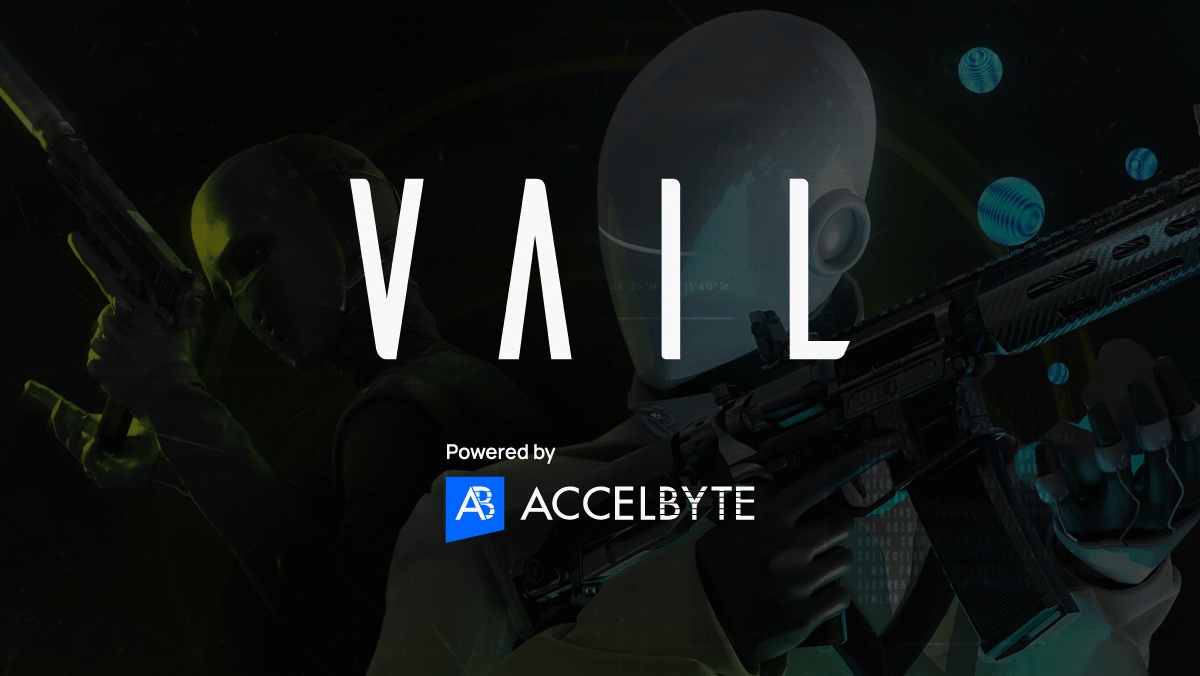
AEXLAB had a problem that no amount of better gunplay could fix. Its virtual-reality shooter, VAIL VR, was already in early access. Thousands of people were playing. Then the backend it depended on was being deprecated. The studio had ten weeks to move the machinery underneath a running game. Imagine replacing a restaurant’s kitchen while dinner service continues.
That is a useful way into AccelByte. The Bellevue company sells the systems players rarely admire: sign-in, saved progress, matchmaking, virtual wallets, and the orchestration that puts matches on servers. These are ordinary expectations with complicated dependencies. A beautiful game still needs to remember who you are and which items belong to you.
- Managed accounts, matchmaking, commerce, and game servers.
- Custom logic stays with the studio through Extend.
- VAIL VR’s reported server savings: 45.98%, after specific infrastructure changes.
Ten weeks. A game already running.
AEXLAB brought in multiplayer specialists Companion Group to evaluate alternatives and help with the move. The requirements were concrete: server orchestration, matchmaking, a server browser, and continuity for existing players. AccelByte’s April 2024 account says the teams moved the core services and multiplayer servers in one and a half months, without disrupting those players.
What changed the studio’s mind was an options analysis, rather than a sudden enthusiasm for outsourcing. Companion Group recommended AccelByte for its documented services and lower implementation risk. AEXLAB CTO Albert Ovadia described being able to forget the service was there. For infrastructure, disappearing from someone’s thoughts is a respectable outcome.
Leave room for the strange bits
Co-founder Junaili Lie had worked at EA, LucasArts, and Epic Games before starting AccelByte in 2016. His experience was in the connective tissue of online games. The company’s premise is that studios should be able to buy dependable backend foundations while retaining control over the behavior that makes their games different.
AccelByte Gaming Services, or AGS, supplies modular services for identity, progression, commerce, social features, and multiplayer. AccelByte Multiplayer Servers handles dedicated-server deployment and scaling. Extend lets developers run their own backend logic alongside those services. The Development Toolkit addresses another everyday nuisance: getting the correct build to testers and keeping crash reports attached to useful context.
The distinction matters. A standard login is useful; a standard game design is less appealing. Extend offers service extensions, event handlers, and overrides so a studio can customize behavior. AccelByte is selling a division of labor: its engineers maintain common systems, while a game team writes the rules its players came for.
Investors bought into that division. A $10 million Series A announced in September 2021 was followed by a $60 million Series B announced in May 2022, led by SoftBank Vision Fund 2 with Sony Interactive Entertainment participating. The company’s working culture puts a similar emphasis on coordination: written decisions and handovers across time zones.

The cloud bill had a pattern
VAIL VR’s next lesson was financial. Its initial dedicated-server setup relied on cloud virtual machines. Those were flexible, but the bill grew with the fleet. In a separate August 2025 case study, AccelByte described two changes: move predictable baseline traffic to bare-metal servers, then fit more dedicated game-server instances onto each remaining virtual machine.
Cloud capacity remained available for spikes. The reported result was a 45.98% reduction in server costs. That percentage belongs to this customer’s workload and configuration. It is not a platform-wide discount. The transferable idea is to inspect demand and server density before treating a bigger infrastructure bill as an unavoidable consequence of growth.
The condition matters as much as the technique. Bare-metal capacity is easier to justify when a game has a recurring baseline of demand. A highly unpredictable audience changes that calculation. Packing more sessions onto a machine also requires measuring memory, CPU, and the experience players receive. A crowded server is only economical while the matches still work.
Less server spend.
Read the meter before you build
AccelByte’s business model combines usage charges, private-cloud subscriptions, paid support, and professional services. As of October 2026, AGS Public Cloud includes the first 30 concurrent users free. Billing follows daily peak concurrent users, rather than total registrations. The first paid band lists Foundations at $0.0124 per peak concurrent user per day; Multiplayer is $0.0770.
Private Cloud starts at $1,500 per environment per month for Foundations, plus usage. Dedicated-server hosting and Extend compute have separate meters. A studio needs to model those costs alongside support and its own engineering work. Comparing a backend fee with a game’s total infrastructure bill would give the wrong answer before the first player logs in.
Alternatives include Microsoft PlayFab, Unity Gaming Services, Pragma, and Heroic Labs’ Nakama. AccelByte’s case rests on the breadth of its managed stack, customization, and integration help. For a team committed to operating an open-source backend itself, Nakama offers a different starting point. An offline game has a different set of needs again.
“It’s nice to not have to think about it.”
Albert Ovadia / CTO, AEXLAB
Buy the plumbing. Keep the rules.
The customers illustrate that boundary. Skybound used Extend for Invincible VS match-result reconciliation, checking reports from both sides before accepting outcomes. In October 2026, AccelByte published the story of three-person studio HexNest, which used AGS, Multiplayer Servers, and custom Go services for Birds of War. HexNest still wrote reward reconciliation and challenge rules. Buying infrastructure left meaningful engineering work.
The platform is also moving closer to payments. In August 2026, Xsolla announced closed testing of an integrated offering combining AccelByte’s backend with its commerce tools. That is a test program, with developers helping shape the integration ahead of broader availability.
For another studio, the practical sequence is clear: list the services the game needs, identify the rules that must remain yours, test a real build, and price realistic traffic. A publisher spreading one internal backend across several games may make a different choice. VAIL VR’s lesson is narrower and more useful: spend engineering effort where your team has an advantage, and examine the bill for everything underneath.
Go deeper into the machinery
- AccelByte website ↗ · Developer documentation ↗
- Plans and pricing ↗ · GitHub SDKs and samples ↗
- Customer stories ↗ · Company blog ↗
- Xsolla integration announcement ↗
- BlackBox overview - an earlier AccelByte debugging product video ↗
- AccelByte Virtual GDC 2020 - Day 3 session ↗
- More demos and talks on AccelByte’s YouTube channel ↗