Lars Ugleberg had a perfectly sensible reason to choose a competitor to DevExpress: the license was free. He had used DevExpress’s WPF tools before, but his first web application seemed an opportunity to economize. Then he encountered the documentation. In a testimonial published by DevExpress, he says he abandoned the alternative and got started with DevExtreme with less effort. The interesting purchase was not a collection of buttons. It was a way out of an expensive afternoon.
- Buy reusable grids, editors and reports for business apps.
- Choose individual suites or a broader developer subscription.
- Keep your licensed version if you stop renewing.
“Their documentation is inadequate.”
Lars Ugleberg, on the free alternative he abandoned
The second time you write the same thing
Developer Express, usually called DevExpress, began with a similarly mundane discovery. Its early developers were writing financial applications for banks in Delphi. Different projects kept demanding much the same interface code. Remove the banking particulars and a reusable control remained. In CTO Julian Bucknall’s anniversary account, the group sought help packaging and selling those controls. The first product appeared in November 1998. Repetition had become inventory.
The early enterprise was less orderly than its grids. At BorCon in Philadelphia in 1999, a large exhibition booth nearly failed to arrive because it had not shipped on time. Ray Navasarkian recalls emergency air cargo and a crew assembling it just before opening. Here was a company selling developers predictability, briefly undone by particle board. The booth survived; the anecdote is a pleasing reminder that abstraction has limits.
Today the company supplies components for Windows desktop applications, Delphi, .NET web projects, JavaScript interfaces and mobile apps. Think of the software used to reconcile invoices, schedule appointments or inspect inventory. Such applications need reliable sorting, editing, exporting and printing. None of these tasks becomes interesting merely because a developer must implement it again.
A hospital is a permissions problem
Consider MediManage Pro. ASTGD built the medical management system for Barind Medical College & Hospital, whose established working routines had to survive the transition to software. Its published case study describes a tight timeline and more than 100 users needing different views and permissions. The difficulty was fitting an institution, with its existing habits, into an application.
ASTGD chose XAF, DevExpress’s application framework, for its generated interfaces and customizable security modules. XAF builds on a data model and connects it with interface components; developers can use Entity Framework Core or DevExpress’s XPO for data access. The framework also provides modules for concerns such as validation and auditing. You still define what the business means. There is less scaffolding to erect around that definition.
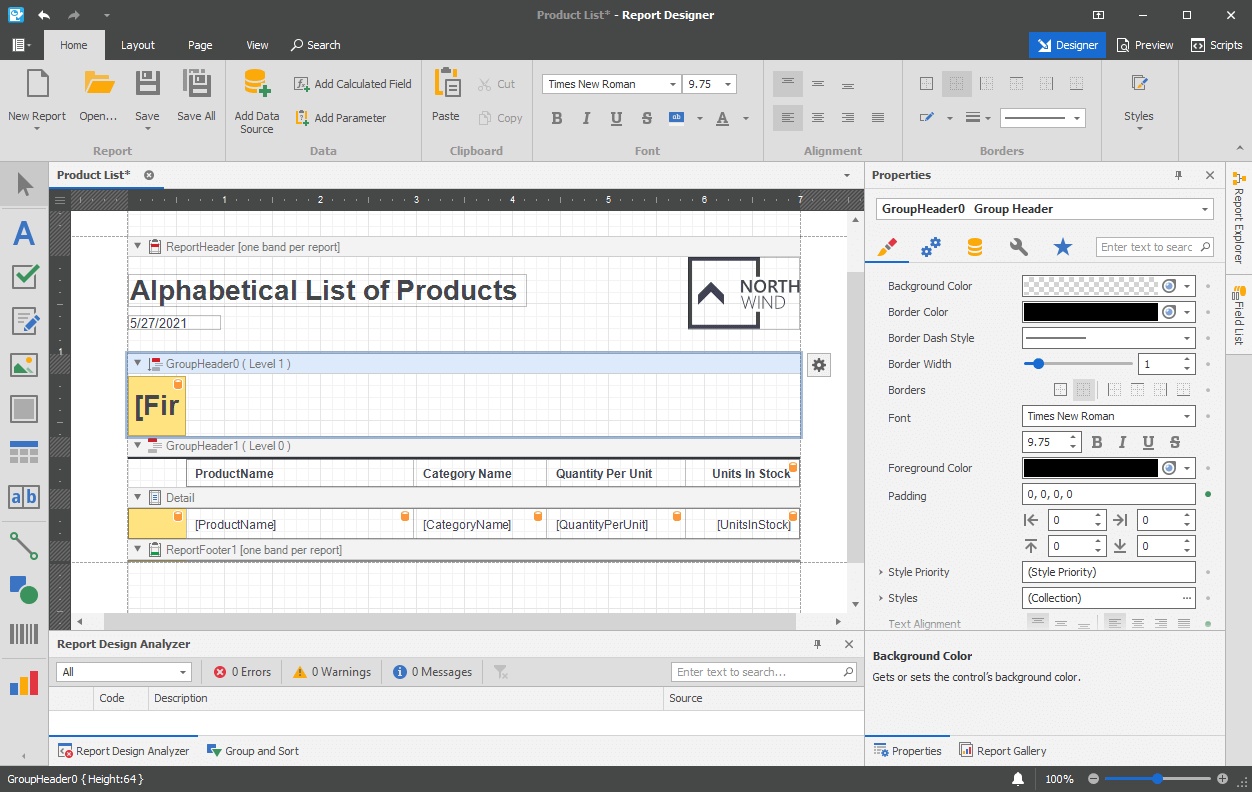
Reporting supplied another practical dividend. ASTGD describes using the end-user report designer to meet changing reporting requests and reuse reports for other clients. This is DevExpress’s market in miniature: developers and software vendors buy the machinery, while the hospital, office or customer service team uses the finished application. An end user need never learn the supplier’s name.
What the subscription actually buys
The catalog has several entry points. DevExtreme supplies JavaScript and TypeScript components for Angular, React, Vue and jQuery. The WinForms suite includes grids, spreadsheets, schedulers and document viewers. Reports and Dashboard cover embedded documents and analytics. Universal gathers a broader toolset, including XAF. CodeRush, the Visual Studio productivity extension, and XPO are available free, so the paid bundle is not the only doorway.
At the prices checked for this profile, DevExtreme Complete lists at $899.99 and Universal at $2,299.99, in US dollars. These are initial per-developer subscriptions with 12 months of updates and technical support. DevExtreme’s listed renewal is $449.99; Universal’s is $1,149.99. Teams must budget for the developers using the tools, rather than treating one license as a communal umbrella.
The licensing FAQ makes an unusually consequential distinction: when you stop renewing, you can keep using the version you licensed, subject to its agreement. Further releases are the subscription’s continuing benefit. Eligible components embedded in your application can be redistributed royalty-free. That matters when a successful application gains users: the component license and the application’s audience are separate calculations.
How many hours would justify it?
License price ÷ assumed hourly cost. Integration, training, renewals and model fees are extra. Actual time saved depends on the project.
Progress Telerik/Kendo UI and Syncfusion occupy overlapping territory. DevExpress’s case rests on the particular combination of desktop experience, web components, model-driven applications and support. Component counts alone settle little. A team maintaining a Windows application and introducing a Blazor interface has a different shopping list from a team building one small React screen.
The grid meets the language model
The company’s newer work brings AI into familiar places. Its v26.1 release describes natural-language assistance for configuring DevExtreme grids and agent integration for chat controls. An August 2026 update added 14 WinForms agent skills to guide coding assistants through product-specific patterns. The stated problem is wonderfully concrete: generated code can run while leaving the visual designer broken for the next developer.
DevExpress does not supply its own language model. Its AI extensions connect to separately configured providers or supported local inference. A cloud service can therefore add its own usage bill and data-handling terms. Buying a chat component purchases interface machinery; choosing, operating and evaluating the model remains another job.
Try the ugly data first
The practical lesson is to test the repetitive work before buying relief from it. Use the trial to reproduce your hardest grid, busiest report and least forgiving permission rule. Try keyboard navigation, awkward data and the export somebody will inevitably request. Compare the support experience as seriously as the demo. DevExpress’s job listings emphasize tests, maintainability and backward compatibility, useful qualities for tools that become somebody else’s dependency.
The bargain weakens when a suite brings more complexity than your application needs, or when a distinctive interface demands extensive customization. XAF makes most sense when a model-driven business application fits the task. Reusable components can buy development time; they cannot decide how your organization should work. The thing worth copying from DevExpress’s beginnings is the question its developers asked: which part of this are we about to write twice?