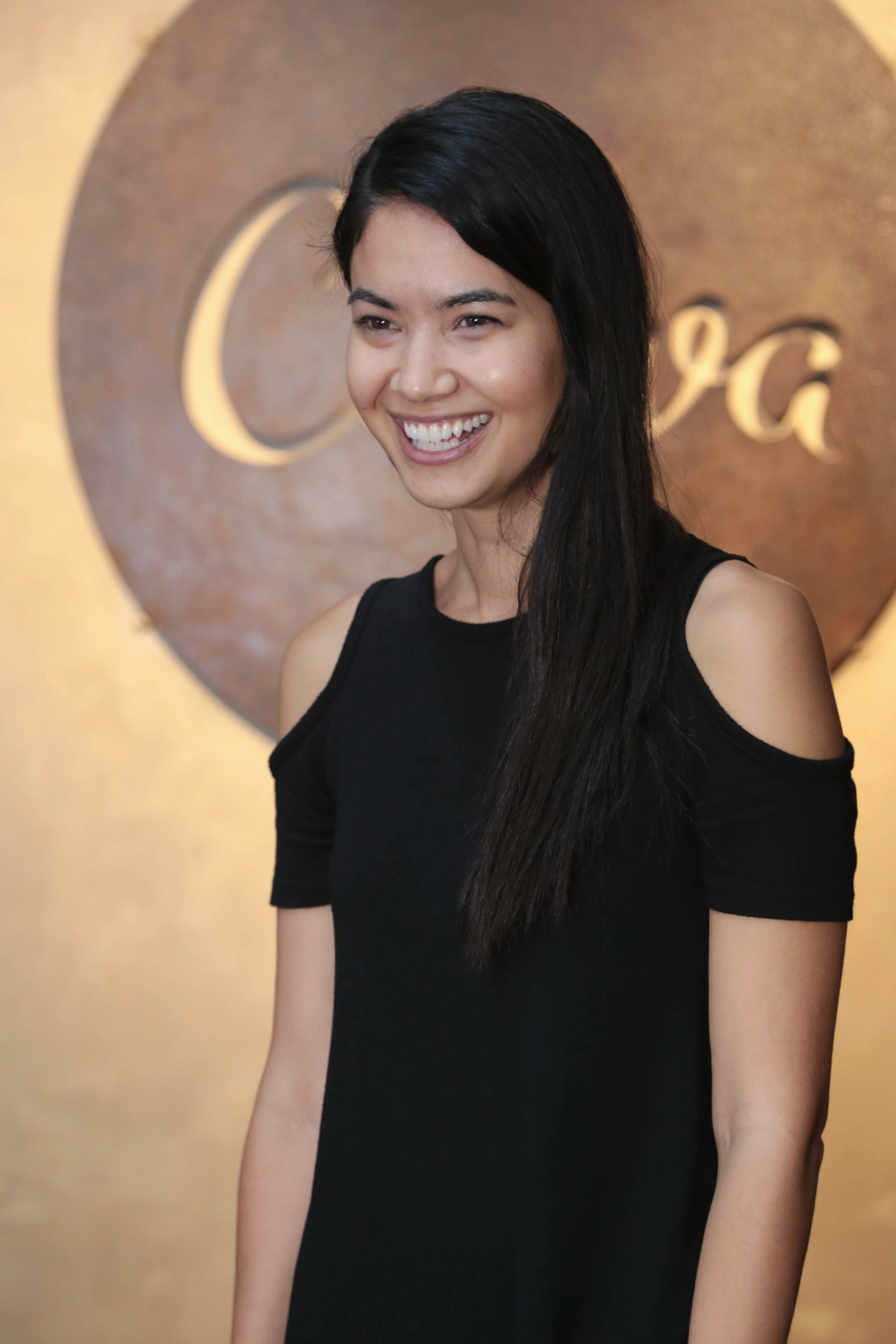
The Designer Who Disrupted Design
Melanie Perkins runs one of the world's most valuable private tech companies. Canva - the platform she built with co-founder Cliff Obrecht - sits at a US$42 billion valuation, serves 220 million users in 190 countries, and pulls in US$4 billion in annual revenue. It takes up 85% of the Fortune 500's design workflow. She is 38 years old.
The comparison people reach for is Adobe. That framing flatters Adobe more than it should. Perkins didn't set out to beat Adobe - she set out to replace the idea that design was something you had to be trained for. Adobe was just the most conspicuous symbol of that wrong assumption when she was tutoring design students at the University of Western Australia in 2006, watching them spend whole semesters learning menus instead of making things.
The product she built to fix that problem is now the visual layer of the modern internet. The office presentation, the Instagram story, the school newsletter, the nonprofit's annual report, the Fortune 500's investor deck - a statistically large portion of everything you look at was made in Canva. That is what the word "disruption" actually means when it's not being used as marketing copy.
In April 2025, she launched Canva Visual Suite 2 - adding a spreadsheet, a code editor, and AI-powered photo tools - which means Canva is now coming for Google Workspace and Microsoft 365 at the same time it's absorbing Adobe's market. After acquiring Affinity's professional creative suite for US$380M and Leonardo AI for generative image capabilities, the total picture is hard to overstate: Perkins is building a single destination for everything anyone would ever want to make, at any skill level, at any price point (including free for nonprofits).
And she's pledged to give most of the money away.
"We are squarely in that category. We're only 1% of the way there."- Melanie Perkins on Canva's potential
From Scarves to Software
Perth, Western Australia, is about as far from Silicon Valley as geography allows. Melanie Perkins grew up there, born in 1987 to a Malaysian engineer father and an Australian teacher mother, attended Sacred Heart College in the suburb of Sorrento, and by age 14 was already running a business - handmade scarves sold at local markets. Not as a hobby. As a business.
At university she was tutoring classmates in graphic design on the side. That's where the idea crystallized: professional design tools were hostile by design. Students paid thousands of dollars for software that required weeks of instruction before you could do anything useful. The software was the gate, not the key.
She dropped out at 19. Not because she had a company yet - she had a problem she wanted to solve and a conviction that staying in class wasn't the fastest path to solving it. She and Obrecht built Fusion Books first: a drag-and-drop yearbook designer for schools, launched from her mother's living room in Perth. Within a few years it was the largest school yearbook company in Australia, then expanded to New Zealand and France. It was proof the model worked. The next question was how big that model could get.
The pitch trips to San Francisco were not going well. Perkins was sleeping on her brother's floor to save money, collecting rejections at a pace that would have discouraged most people - eventually over 100 of them. A connection to investor Bill Tai led to an invitation to his networking events in Maui. The events involved kite-surfing. Perkins did not know how to kite-surf. She learned. She went. Through Tai's network she met Lars Rasmussen, co-creator of Google Maps, who mentored the Canva project and introduced Cameron Adams - former Google engineer - who became the third co-founder. The company got funded. She has never made a big deal out of this story. It is, however, the most instructive thing about how she operates.
Canva launched publicly in August 2013. 750,000 users in its first year. In 2018 it became a unicorn. In 2021 it hit a US$40 billion valuation, making Perkins one of the wealthiest women in technology. In 2025 it exceeded that at US$42 billion - this time on actual revenue, not just projections.
How She Actually Runs Things
Perkins personally onboarded every new Canva hire during significant stretches of the company's growth - eventually over 1,500 people. This is not the behavior of someone who delegated culture to an HR deck. It's the behavior of someone who understood, early, that a company is its people more than it is its product, and acted accordingly rather than just saying so.
Canva's workforce is 41% women - compared to a tech industry average of around 28%. That gap is not accidental. Perkins has talked about building the kind of company she would have wanted to work at, and built in the conditions for that rather than hoping it would emerge organically.
When the 2022 tech downturn arrived and Canva's valuation dropped from US$40B to US$26B, Perkins gave employees stock options worth approximately US$2 billion - roughly 5% of the company - as part of a program that predated the downturn. It cost her personally and signaled that the wealth created by Canva was not exclusively for the founders.
The business decisions track the same logic. When Canva made its premium tier free for all nonprofits and educators globally, it wasn't a PR move - it was baked into the product philosophy that design access shouldn't be gated by budget. These are not the choices of someone who figured out how to talk about values. They are the choices of someone who actually holds them.
"We have this wildly optimistic belief that there is enough money, goodwill, and good intentions in the world to solve most of the world's problems."- Melanie Perkins & Cliff Obrecht, Giving Pledge letter, 2021
The Two-Phase Plan
In 2021, Perkins and Cliff Obrecht signed the Giving Pledge - committing to donate the majority of their fortune to charitable causes. Their letter to the Giving Pledge describes their life plan with a clarity most people reserve for investor memos: "Step 1: Establish one of the world's most valuable companies. Step 2: Maximize positive impact."
They have already donated US$50 million to Malawi through GiveDirectly and pledged an additional US$100 million. Their rationale is not the usual billionaire-philanthropy framing about leaving a legacy - it's a more direct argument that extreme poverty is a solvable problem if the people with resources treat it as one.
Perkins' individual net worth is estimated at US$7.6 billion (Forbes, February 2026). The joint net worth she shares with Cliff Obrecht is estimated at A$14.14 billion by the Australian Financial Review. A meaningful fraction of this is already committed to leave their hands. The $30 engagement ring remains the symbol that sticks - she's never replaced it. The logic is consistent: the wealth is a means, not the point.
Her engagement ring cost $30. She has never replaced it. Cliff bought it in Cappadocia, Turkey, and she wore it through the years of building a company worth more than 250 million of them.
She and Cliff have pledged to give away the majority of their fortune. They have already donated to Malawi through GiveDirectly - $50M in the first tranche, $100M pledged on top of that.
The Giving Pledge letter doesn't read like charity. It reads like a plan.
What Canva is Becoming
In April 2025 Perkins launched Canva Visual Suite 2 - a product expansion that crossed several category lines at once. Canva Sheets added spreadsheet functionality. Canva Code added a coding environment. AI-powered photo editing deepened the creative toolkit. Together they signal that Canva is no longer positioning itself as a design tool that competes with Adobe. It's positioning itself as the place where work gets done, period.
The acquisition of Affinity's suite - professional-grade photo, vector, and layout software used by serious designers - for US$380M in March 2024 was particularly telling. Affinity had built the best credible alternative to Adobe's Creative Suite. Canva didn't acquire it to kill it. Perkins has maintained Affinity as a standalone professional product while integrating its capabilities into Canva's platform. The strategy: be the right tool for every user at every skill level.
The acquisition of Leonardo AI in August 2024 adds generative image capabilities native to the platform, making Canva a competitor in the AI image generation market without needing to build the models from scratch. In early 2026, Canva added Cavalry (animation), MangoAI (advertising automation), Simtheory, and Ortto (marketing automation). The acquisition pace has accelerated. The gaps in the platform are being filled systematically.
Perkins has said Canva is "only 1% of the way there." With 220 million users and US$4 billion in revenue, that statement is either profound humility or a quiet warning to everyone who thinks they see the ceiling. Probably both.
The Arc
What She Actually Says
"Failure was never an option. Being rejected a lot just meant I had to try harder."
"If you get your foot in the door just a tiny bit, you have to kind of wedge it all the way in."
"We pitched to hundreds of investors, getting rejected time and time again. I was quite literally living on my brother's floor."
"We want Canva to be the place you can go to by default, and so we've made it free to use."
"Stories we hear from the community is what makes all of the work worth it."
"Step 1: Establish one of the world's most valuable companies. Step 2: Maximize positive impact."