In 2019, a large American media and technology company discovered an expensive habit. One division would upgrade its equipment and sell the old hardware. Somewhere else in the country, another division would buy it. The company was shopping for things it had just owned. Between the two transactions sat a market that understood the value of its equipment better than the company did.
This is the kind of problem MDSi likes. The Georgia IT services business operates where network engineering meets the loading dock: acquiring equipment, configuring it, shipping it, recovering it and deciding what deserves another assignment. Its useful question is simple. Before buying something new, have you checked what is already yours?
- Sources, configures and deploys enterprise IT equipment.
- Uses Acuity software to make assets visible across locations.
- Repairs and redeploys hardware before sending it for recycling.
An $18 million inventory lesson
According to MDSi’s account, the customer invited more than 40 vendors to propose a fix. It selected MDSi, which established a central distribution hub. Returned equipment was assessed, repaired when necessary and held for another department. Unusable equipment went to a certified recycler, with the proceeds shared between MDSi and the customer.
MDSi reports moving 500,000 parts through the hub in its first year and conservatively estimates annual customer savings of $18 million. Later, a regional backorder list supplied a revealing test: equipment already in storage could satisfy 10% of it. These are company-reported results for an unnamed customer, rather than a forecast for every engagement.
The first thing to fail here was visibility. A local sale could look sensible while creating a needless purchase elsewhere. The lesson travels well beyond telecom: give procurement access to reusable inventory before it places an order. A warehouse becomes more useful when the people spending money can see inside it.
Annual savings from a centralized reuse program.
RECOVER02
ASSESS + REPAIR03
INVENTORY04
REDEPLOY ↗
Software with a loading dock attached
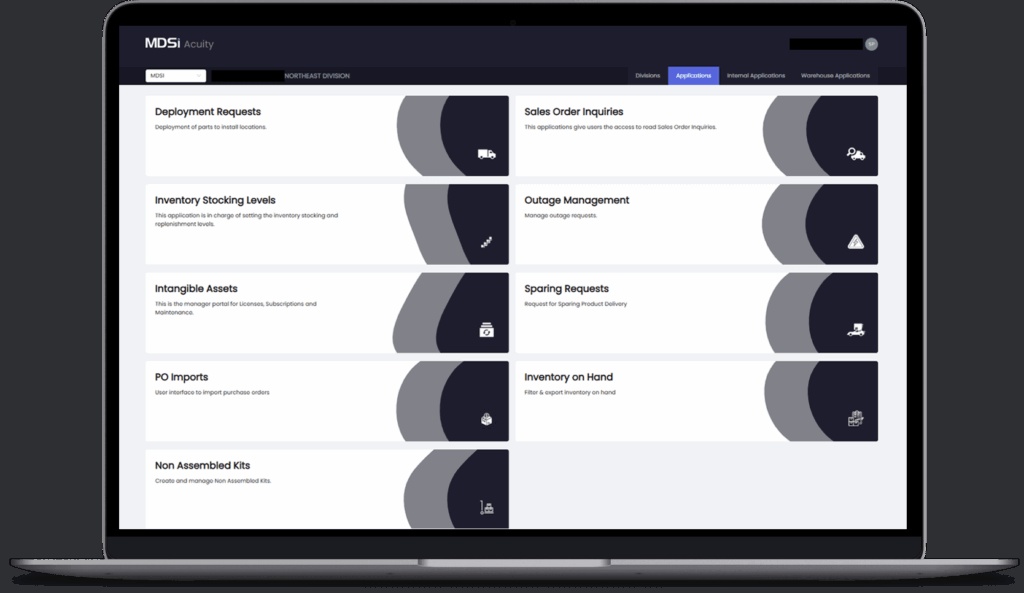
MDSi’s Acuity platform connects that physical operation to a shared record. Users can request deployments, examine inventory, track orders and arrange spare equipment. It also tracks less tangible possessions: maintenance agreements, licenses and subscriptions. Those renewals belong in the same conversation as hardware because forgotten commitments can consume budget long after a project changes.
Acuity offers an open API for integration with other systems. MDSi credits supply chain executive Shannon Payne with driving its creation. That detail explains something about the product: it grew within a business already handling assets and reverse logistics. Its screens lead to work someone must perform, from selecting a shipping destination to preparing a deployment.
The company’s history follows a similar expansion. Founded in 1990, MDSi initially supplied networking solutions to financial services companies. Customers in additional industries asked for engineering and broader manufacturer relationships. MDSi says it invested in facilities, people and automation to follow that demand. Today its work spans service providers, cable operators and enterprises, alongside sectors including retail and healthcare.
The unglamorous work before switch-on
Consider what happens between ordering a switch and using it. Firmware needs a baseline. Configurations must match the network. Accessories need to arrive together. Labels must make sense to the installer. MDSi provides staging, testing, equipment integration, custom cabling and installation, turning a shipment of components into something closer to a prepared deployment.
That is its position in the market: a value-added reseller and services operator combining technology sourcing with engineering and logistics. An equipment purchase directly from a manufacturer, an independent integration firm or an internal warehouse team can address pieces of the job. MDSi’s pitch is the coordination of those pieces through one provider, with Acuity connecting the records.
MDSi’s stated culture also reflects a services business: continuing education, career growth and employee tenure receive explicit attention. Its community commitments include support for veteran mentorship through the Travis Manion Foundation and local organizations such as Family Haven and CASA. For a buyer, the useful question is how that investment appears on a project: who understands the customer’s network, who checks the configuration and who takes responsibility when a shipment needs attention?
The physical footprint matters. Its integration page describes 500,000 square feet of multi-vendor technology facilities and more than 250,000 square feet dedicated to design, integration and configuration. Those figures describe capacity, rather than proof that every project runs smoothly. They do explain why the business extends well beyond selling access to a dashboard.
Sometimes the smartest new kit is used
During the global supply chain crisis, one service-provider customer faced equipment waits exceeding 200 days. MDSi describes working with Cisco Refresh and Cisco Capital to combine new equipment with certified remanufactured products. It reports reducing lead times by more than 150 days. The constraint that changed the buying decision was the calendar: an unavailable new device could not support a deployment.
A separate retail example makes the point at a smaller scale. A chain ordered almost $1 million in switches near its fiscal year-end, then watched two weeks pass without delivery. MDSi found stock through another distributor and collected it itself. The customer received the equipment in time. Here, the advantage was knowing another route to the same hardware.
The business earns its place through equipment resale and paid technical and logistics services; its recycling example also describes shared recovery proceeds. For buyers, the relevant comparison is total deployment cost: purchasing, preparation, transport, downtime exposure and eventual recovery. A low equipment price can leave plenty of expensive work unfinished.
Before buying something new, have you checked what is already yours?The question behind MDSi’s reuse model
The next owner wants the whole circle
In August 2025, MDSi announced it was joining PedalPoint Holdings, Korea Zinc’s US circular economy platform. Co-founder Lisa McDonald described the combination as “a highly complementary fit.” The stated benefits included expansion capital, warehouse capacity, integrated resale and IT asset disposition, and access to downstream recycling. For Korea Zinc, MDSi brought customer relationships and an entry into network infrastructure services.
The combination connects two ends of an equipment lifecycle: helping a company acquire and deploy technology, then recovering value when that technology leaves service. MDSi also offers decommissioning, data wiping and drive shredding. These services address a practical objection to reuse: retired equipment needs controlled handling before it can safely move on.
There are conditions attached to the savings logic. Reuse needs compatible equipment, accurate records, testing and a department willing to accept it. Transport and repair must cost less than the value recovered. Certified remanufactured stock must meet support and deployment requirements. For a buyer, the sensible first experiment is one inventory pool and one upcoming purchase list. Match them before approving the next order. Sometimes the upgrade begins with finding what you have.
Inside the operation
Explore MDSi, Acuity’s product tour and company news. Follow on LinkedIn, X or Facebook.
▶ Watch the Acuity overview ↗▶ See Acuity for deployment ↗