In 2013, at 48, Susan McPherson did not set out to become the sort of founder who gives interviews about becoming a founder. She opened an LLC because she was between jobs. The entity would hold a little consulting work while she searched for the next proper position. It was administrative scaffolding, not destiny. Then work kept arriving. The placeholder refused to leave.
That origin explains more about McPherson Strategies than a polished creation myth would. It is a firm built from demand observed at close range. Companies were making promises about responsibility. Foundations and nonprofits had ideas worth spreading. Social entrepreneurs needed allies, audiences and language. Between the ambition and the attention sat a messy middle: Who should be in the room? What should they build together? What can they honestly say? McPherson had spent decades in marketing, public relations and sustainability communications. She knew the people, and more importantly, she knew how to make an introduction carry weight.

The room before the press release
McPherson Strategies calls itself a social impact strategy and communications firm. Each half matters. A conventional public-relations agency may arrive when a program is ready to announce. A management consultant may depart after the recommendation deck. McPherson Strategies works across that seam. It designs impact programs, campaigns, employee engagement, strategic partnerships and coalitions, then handles media relations, content, events, social strategy and executive thought leadership.
The customer list crosses borders that most organization charts keep tidy: Nike and HP, Ford Fund and New Profit, Leadership Now Project and the Women’s Philanthropy Institute. Corporations, foundations, nonprofits and social enterprises all show up. They are not buying a mass-market product. They are hiring a boutique professional-services firm for custom projects or continuing support. There is no public rate card. The bill depends on the problem, the scope and how much implementation the client wants the agency to carry.
Strategy
Define the issue, the program and the useful action.
Partnerships
Find the organizations and people with missing pieces.
Communications
Turn the work into language, attention and participation.
This arrangement solves a familiar corporate problem. Purpose often lives in fragments. The sustainability group understands the issue. The foundation controls a program. Communications owns the narrative. Employees want a role. Legal sees risk. The public sees a slogan. McPherson Strategies can operate as the connective tissue, carrying an idea across departments and then beyond the company to NGOs, funders, experts, journalists and advocates.
“When I walk into rooms, I think about how can I be valuable? How can I be helpful?”Susan McPherson
Helpfulness, with a deadline
McPherson’s personal method is Gather, Ask, Do. Gather the relevant people. Ask what they need. Do something useful. It sounds almost suspiciously polite for a business framework. Its commercial logic is sharp, though. A network built only when an invoice is possible is brittle. A network built through repeated acts of help becomes a store of trust. The company says much of its work and many of its partnerships arrive inbound. Connection, in this model, is not a cocktail-party talent. It is patient business development.
The method becomes more interesting when the stakes rise. After the 2020 election, the firm supported Leadership Now Project as it urged business leaders to defend democratic institutions. Across the engagement, the work produced more than 100 mentions, features and opinion placements in national and international outlets. It also put leaders on stages and helped launch a Women’s and Democracy Initiative with Pivotal Ventures. The agency was not merely polishing a message. It was positioning people and organizations at moments when companies had to decide whether to speak.
Don’t Ban Equality made the mechanism visible at a different scale. The campaign brought more than 330 business leaders into public opposition to restrictions on reproductive rights and generated billions of media impressions. One organization could issue a statement. A coalition could create a business signal. The hard part was not composing one perfect sentence; it was aligning hundreds of institutions around a clear ask quickly enough for the intervention to matter.
A coaching tool, not a halo
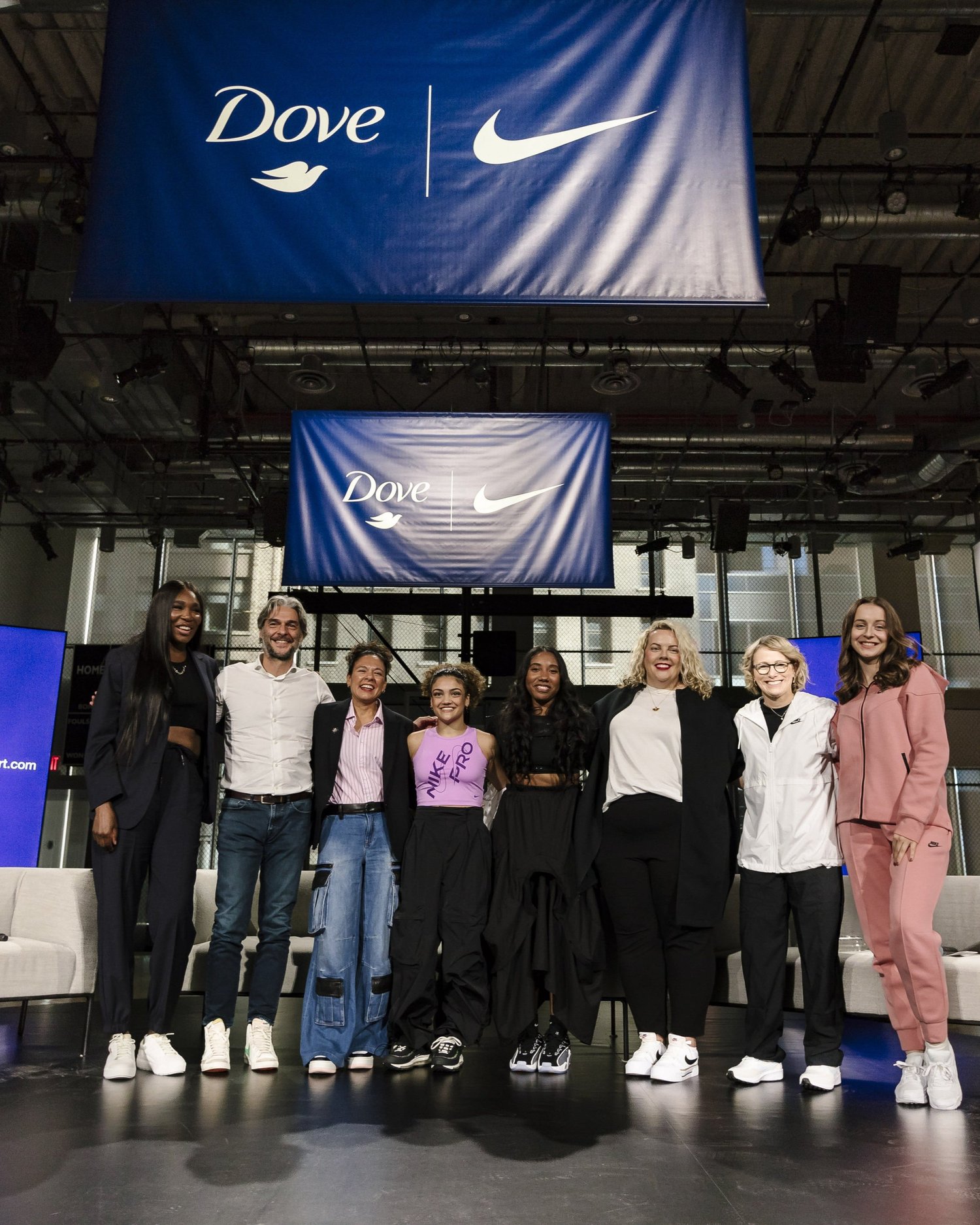
The Nike work shows the other side of the firm. Nike’s Made to Play commitment aimed to get children, especially girls, moving. McPherson Strategies helped craft press material and talking points, secure specialist coverage, and launch Body Confident Sport, a free coaching tool created through Nike and Dove’s partnership. The distinction is useful. A brand campaign tells people what a company believes. A tool gives someone something to do on Tuesday afternoon.
For New Profit’s Future of Work Grand Challenge, the agency again moved between layers. It helped develop the launch concept, produce an event with journalist Ali Velshi, coordinate relationships with XPRIZE, MIT Solve and funders, place thought leadership, grow executives’ social channels and secure speaking opportunities. This is why “communications” understates the product. The firm sells judgment about the sequence: build the initiative, assemble credible partners, make the idea legible, place its leaders where the conversation is already happening.
A score in a business full of adjectives
Impact consulting has an obvious credibility problem. The vocabulary is soft enough to accommodate almost anything. “Purpose-led” can describe a governance commitment or a tote bag. McPherson Strategies became a certified B Corporation in 2021. Its current public B Impact score is 101.9, compared with an 80-point certification threshold and a 50.9 median for ordinary businesses completing the assessment. It is not proof that every campaign works. It is an outside check on governance, workers, community, environment and customers.
The culture makes similar commitments in smaller ways. The firm is women-led and fully remote, with stated values of connection, action, optimism and curiosity. Its public description includes weekly brainstorms, shared newsletter writing, Slack gut checks and an annual retreat. A dog named Rosalie appears on the team page as Chief Happiness Officer, which may be the only corporate title improved by refusing to define its key performance indicators.

The failure was boring, which is why it mattered
The firm’s most instructive stumble did not involve a campaign. It involved the machinery underneath the company. McPherson has described its first people-operations provider as a disaster, with recurring problems and a platform the team found difficult to use. For two years, payroll, benefits and compliance created friction. In 2023, the firm switched to Justworks. The replacement handled financial administration, onboarding and the varying employment requirements of a distributed workforce.
Nothing about that decision would fit on an agency mood board. Yet it changed what leadership could pay attention to. McPherson compared the new administration to breathing air: present, essential and no longer demanding conscious thought. The episode also marked a larger change in her mind about the business. Contractors became full-time employees. A temporary vehicle needed durable systems. The company stopped behaving like an extended freelance practice and accepted the obligations of an institution.
What is worth copying
The portable idea is not “know everybody.” That advantage takes decades. The portable idea is to separate relationship-building from immediate extraction. Map the people around a problem. Ask specific questions about what they lack. Make one useful move before requesting attention. Then keep a record of who should meet whom. An organization can practice this with a modest contact list; the discipline matters more than the size.
- 01Begin with an action. A claim becomes easier to communicate when it points to a program, tool, policy or coalition.
- 02Design the room. Identify who brings authority, lived knowledge, reach, money and implementation capacity.
- 03Leave capability behind. One client praised the firm for supplying toolkits that let its own staff take more work in-house.
- 04Fix dull systems early. Benefits, compliance and onboarding can become strategy when their failure steals leadership attention.
The approach is less useful when an organization wants favorable language without changing behavior, when leaders cannot agree on an issue, or when a coalition has no specific action to request. It also depends on trust accumulated over time. A contact database cannot be purchased on Monday and converted into moral authority by Friday. McPherson Strategies works best for clients willing to let strategy complicate the story before communications simplifies it.
That may be the quiet lesson of the placeholder. McPherson did not begin with an abstract desire to own an agency. She began by being useful, noticed that people kept returning, and built structure around the behavior. The company now occupies the space between a good intention and a coordinated act. It is not glamorous territory. There are too many calendars, stakeholder calls and draft talking points. But it is where purpose either acquires verbs or remains a paragraph on a website.