At thirteen, McKeel Hagerty bought a Porsche for $500. There was, naturally, a catch. The 1967 911S was in pieces behind a barn in northern Michigan, with snow over the remains and plenty of rust beneath it. The body and engine were in separate places. This was an unusually thorough way of discouraging an impulse purchase.
His father, Frank, helped him put it back together. McKeel had earned money mowing lawns; an apple orchard was another early enterprise. The restoration took years. By the time he could drive, the Porsche could, too. He still owns it.
That last fact gives the story its weight. Hagerty has spent much of his adult life around vehicle values, collectible machinery and the business of protecting expensive possessions. Yet the car he bought as a boy remains bound up with something no valuation tool can supply: time spent working beside his father.
Today, he is CEO and chairman of the company bearing his family’s name. Hagerty sells insurance, publishes automotive journalism, runs events and offers membership services. Its reach extends far beyond Traverse City. The boy’s restoration project offers a more intimate starting point for understanding the executive: he knows how a car becomes part of a person’s life.
A 1967 Porsche 911S, bought at thirteen.
Restored with his father. Still in his garage.
A family business, with wooden hulls
Frank and Louise Hagerty founded their insurance agency in 1984, initially concentrating on collector wooden boats. The business began in their basement. It had an insight close to home: people who cherish old things tend to look after them.
McKeel was involved in the family enterprise early and earned an insurance licence at eighteen. His mother handled operations. His sisters, Kim and Tammy, would also help lead the business. The company’s later scale can obscure this beginning, when work and family were thoroughly entangled and the objects being insured were often someone’s absorbing hobby.
The lesson he carried away was straightforward: “Take good care of the people who take good care of their toys.” It is a cheerful way of describing a relationship that insurance paperwork can make seem impersonal. A customer has already invested care, money and effort. An insurer ought to understand what all that effort means.
For McKeel, however, joining the company permanently required a considerable detour through books. A succession plan involving ancient philosophy is an awkward thing to put on an organisational chart.
Plato in the margins
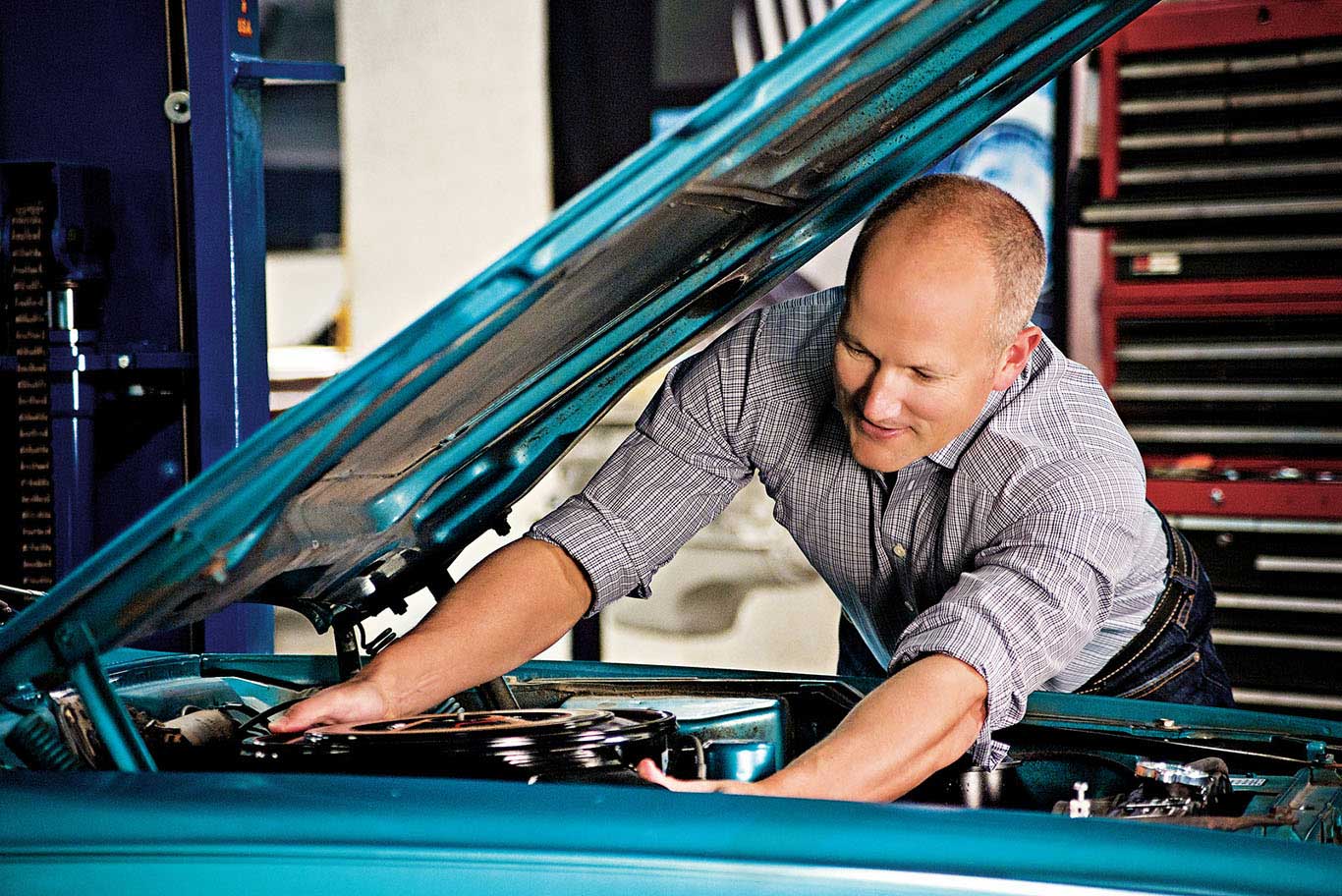
He studied English and philosophy at Pepperdine University, then earned a master’s in theology at Saint Vladimir’s Orthodox Theological Seminary. Doctoral work at Boston College followed. Becoming a professor was a serious possibility. The family business, meanwhile, remained part of his life.
In his 2026 conversation with Barry Ritholtz, Hagerty recalled a particular afternoon in 1995, reading Plato’s Republic in Greek. While considering the insurance agency from a distance, he put an idea in his notebook: approach the business as a club for car owners. It would change the conversation with customers. He described leaving his doctoral programme and heading home soon afterward.
By 1995 he was back in Traverse City as a vice president. The academic career ended without a doctorate; the questions about people, purpose and association travelled with him. Looking back, he has said that he draws on those studies daily.
A club gives its members reasons to return between transactions. They can trade advice, compare experiences and meet people who understand an enthusiasm that relatives may consider financially suspicious. That idea helps make sense of the publications, gatherings and membership services that later grew around Hagerty’s insurance business.
- 1995Returns from doctoral studies to the family business
- 2000Becomes co-CEO
- 2017Refocuses the mission on preserving driving
- 2021Hagerty lists on the NYSE as HGTY
- 2024Adds chairman of the board to his role
The invitation has to reach somebody new
Hagerty became co-CEO in 2000 and sole CEO in 2012. In 2017, he refocused the company’s purpose on preserving driving and car culture for future generations. The business became publicly traded in December 2021. Along the way, its activities spread into the places where people discover and enjoy cars.
That expansion has included concours events, touring experiences, automotive media and a marketplace. The question of corporate influence follows it. Enthusiasts have asked whether common ownership could flatten the distinctive character of individual events. Hagerty has argued for keeping those differences while improving practical matters such as ticketing and access.
His enthusiasm also extends to the informal Cars and Coffee gathering, where an ordinary vehicle and an expensive collector car can occupy neighbouring parking spaces. The attraction is recognisable: show up, have a look, ask a question. You need not arrive knowing the vocabulary.
The same thinking took him somewhere his teenage self could scarcely have anticipated: inside Gran Turismo 7. The company partnered with the game in 2022, and McKeel appeared as a guide to cars in the Hagerty Collection. Here was another way for someone to encounter automotive history before owning a vehicle.
Later that year, he recounted meeting Pixar’s Jay Ward and his wife, Trish, at Pebble Beach. Their seven-year-old son, Henry, wanted to meet him. Henry knew his face from the game. Among all the potential attractions at a concours, the child had picked the insurance executive. Corporate partnerships seldom produce a better family anecdote.
“There is nothing sadder than an undriven car.”
McKeel Hagerty
Keeping the knowledge on the road
Getting people interested is one task. Making sure they can keep old machinery working is another. Hagerty founded the Historic Vehicle Association in 2009. Its work included collaborating with the U.S. Department of the Interior on the National Historic Vehicle Register, a way to document significant vehicles as part of American history.
His preservation interests also include education. He has served on the advisory board for McPherson College’s automotive restoration programme and on the board of the Petersen Automotive Museum. America’s Car Museum recognised his contributions with its Nicola Bulgari Award in 2014.
There is a practical urgency underneath the ceremonies. In a 2025 column, he explored the loss of restoration expertise with heritage engineer Dominic Taylor-Lane. Experienced craftspeople retire; the skills they hold may leave with them. Parts become difficult to find. An old vehicle can become progressively harder to use even when its owner has every intention of maintaining it.
For someone whose first restoration involved a father teaching a son, that concern has a familiar shape. Someone has to stand beside the newcomer. The future of a collection depends partly on who will understand its difficult mechanisms, and whether that person has a chance to learn before the previous expert closes the workshop.
craftsperson→Shared
practice→Next
restorer
A car can be handed down in an afternoon. The knowledge to maintain it takes longer.
Who gets a chance to build?
Hagerty’s interests in leadership and entrepreneurship extend beyond cars. He chaired YPO’s international board in 2016-17, meeting business leaders and public figures around the world. He also co-founded the Michigan venture capital firm Grand Ventures in 2017, serving as a general partner through 2021.
During his YPO chairmanship, he described effective leaders as habitual learners who build trust, give people context and help others adapt. He urged them to examine their own performance and seek impartial feedback. These are demanding habits for anyone with a title: they require accepting that the useful answer may come from somebody else, and that yesterday’s certainty may need revising.
His writing returns to learning, asking for feedback and making room for other people. A 2025 leadership essay considered what happens when a leader lets go of the desire for personal credit. The former philosophy student is still occupied with how people ought to behave, though the setting now includes teams, organisations and the distribution of responsibility.
In 2023, McKeel and his wife, Soon, launched Boundless Futures Foundation to support women starting businesses that address social issues. Its approach combines grant funding with access to experienced entrepreneurs. Soon brought her own history of building businesses. McKeel had grown up watching Louise run the family company and later worked alongside his sisters.
That history matters. Accounts of entrepreneurship can crowd everyone else out of the photograph. In this family, the operational work, the ideas and the leadership were shared. The foundation carries that experience into a different setting, helping founders find money and people they can turn to while building something of their own.
Still a few roads to go
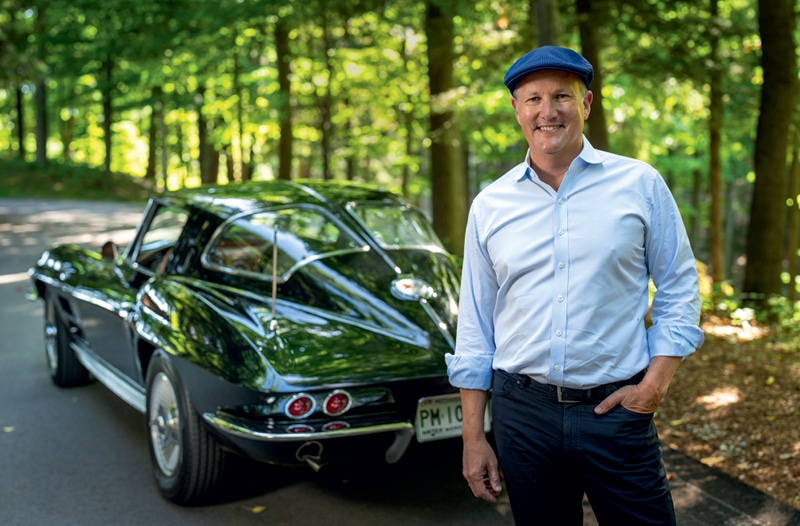
For all the discussion of future generations, Hagerty remains an active participant in the hobby he promotes. He has driven a 1903 Knox in the London to Brighton Veteran Car Run, describing a machine capable of about 26 mph with favourable terrain and wind. Progress, in that setting, allows plenty of time for conversation.
His original Porsche has climbed Pikes Peak and travelled the Pacific Coast Highway. In September 2026, he still had ambitions for family trips: the Targa Florio route in Sicily, the ALCAN Highway, Mount Haruna Pass in Japan and Stelvio Pass. He also wanted to drive the whole of Route 66, from Chicago to California.
There are other interests outside the garage. He has played guitar since he was eleven and enjoys reading and skiing. Even the family’s Boston Terrier, Hudson, gets a car reference in his biography. The details make the executive recognisable as someone with enthusiasms that overlap, rather than a life neatly divided into working hours and everything afterward.
Closer to home, Michigan’s M-22 remains a favourite. His personal biography describes the Porsche as the first car out each spring. There is something pleasingly consistent about that ritual after a career of acquisitions, public markets and international meetings.
The $500 purchase has become a vehicle for remembering his father, a means of getting out on familiar roads, and a story he keeps telling. Plenty has changed around it. He has kept finding reasons to turn the key.