Somewhere between running homeland security operations in Israel and managing $5M ARR in Silicon Valley travel tech, Maxim Melamedov noticed something that would become Zesty: enterprises were spending enormous sums on cloud infrastructure and using roughly two-thirds of it. The billing cycle didn't care. The servers kept running. The waste accumulated.
Melamedov grew up in the Soviet Union, moved to Israel at nine, served in the Israeli Air Force, built a career in homeland security, and then pivoted into tech. He studied Business Management and Marketing at the University of Derby alongside Practical Engineering in Electrical and Electronics Engineering at ORT Colleges - a combination that sits somewhere between operator and builder. When he arrived in Silicon Valley at 41, he wasn't a fresh graduate betting on a hunch. He had watched systems - military, government, corporate - spend resources they didn't need.
With Zesty, organizations dramatically reduce cloud costs and alleviate the burdensome task of managing cloud resources in a constantly shifting business environment. Because in a world that's always changing, Zesty enables the infrastructure to change right around with it.
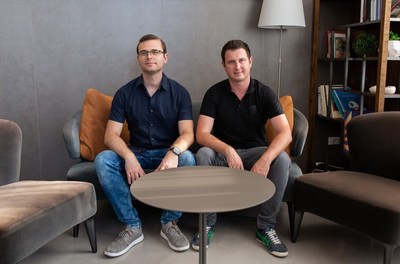
- Maxim MelamedovThe final clue came at Gimmonix, a travel technology company where Melamedov spent eight months as VP of Customer Success. He built three teams, managed $5M ARR, and watched cloud sprawl from the inside. The pattern was clear: engineering teams provisioned for peak load, but workloads rarely stayed at peak. The gap between allocated resources and actual usage wasn't an edge case - it was the default state of cloud infrastructure at scale. In 2019, he co-founded Zesty with Alexey Baikov (CTO) to fix it.
The pitch to early customers required a kind of trust that took careful engineering to earn. Melamedov's product philosophy centers on what he calls "fear reduction" - designing each feature so it adds value without touching anything that could break production. His framing: find the highest-ROI action with the lowest perceived risk, so users don't need to be convinced, they just ask "why not try it?" That philosophy scaled into a platform that enterprise security companies, logistics firms, and SaaS companies trust to automatically resize their cloud in real time.
By the time Zesty raised its $75M Series B in September 2022 - co-led by B Capital and Sapphire Ventures, with participation from Next47 and S Capital - the company had tripled revenue between funding rounds and grown its customer base by 127% in a single year. Enterprise names including Wiz, Armis, WalkMe, Yotpo, and Printify were on the roster. Zesty was no longer proving the concept. It was executing.
How can I build something that will reduce fear? I find a feature that will not break anything; it will add value to the user; it will be easy to implement, and it will create such a high return on investment that the user will ask "Why not try it?"
- Maxim Melamedov on product philosophyThe 2024 acquisition of Qubex brought HiberScale technology into the platform - a capability that hibernates Kubernetes nodes at scale and reactivates them in 30 seconds. Combined with Zesty's FastScaler (which reduces application startup times by up to 5x during scaling events) and Karpenter acceleration that runs 5x faster than baseline, the platform's Kompass product now delivers what Melamedov calls "multi-dimensional automation" across Kubernetes pods, nodes, storage, and cloud commitments simultaneously.
The company also frames its mission in terms that go beyond unit economics. Cloud infrastructure is projected to generate 14% of global greenhouse gas emissions by 2040. Melamedov recruits employees against that number. The efficiency pitch isn't just financial - it's environmental. For engineers who want to do meaningful work, Zesty offers a target that compounds: cut waste, cut carbon, keep SLAs intact.
If you zoom out and look forward, cloud infrastructure will generate 14 percent of greenhouse gasses by 2040. With the right products and technology, we can drive efficiency.
- Maxim Melamedov on Zesty's missionThe MarketsandMarkets recognition as a "Progressive Company" in the Cloud FinOps 360Quadrant in January 2026 confirmed what the funding trajectory had already suggested: Zesty isn't chasing the market, it's defining a category. Automated cloud optimization - where the infrastructure adjusts to the workload, not the other way around - is the direction cloud management is heading. Melamedov got there early and built defensively: AWS Advanced Technology Partner status, SOC 2 compliance, and a 150+ person team spread across Silicon Valley and Tel Aviv.
Moving countries twice - once at nine, once at forty-one - leaves a specific kind of scar tissue. You learn to build things that work when the environment shifts under you. That's also a cloud optimization platform. And it's also, in a way, the story of how Maxim Melamedov got here.