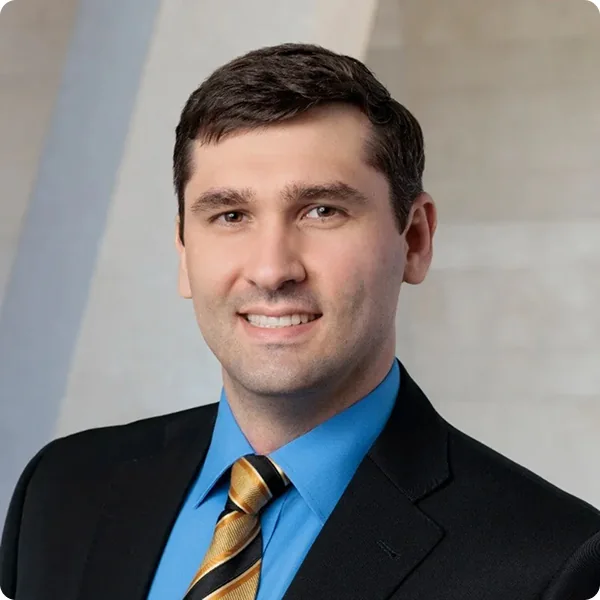
The Auditor Who Took Over the Tech Firm
Most people who run managed IT companies spent their twenties inside server rooms. Max Adams spent his inside spreadsheets. He made Senior Audit Manager at KPMG, one of the Big Four accounting firms, where he led teams auditing technology clients with revenues stretching from $50 million to well past $60 billion. He wasn't just reviewing numbers - he served as a National Audit Instructor, training the next wave of auditors in how to see through the complexity of large organizations.
From KPMG he moved to Reynolds Consumer Products as Senior Manager of Financial Reporting, steering the quarterly financial analysis and U.S. GAAP/SEC compliance apparatus for a publicly traded company. That's two very different organizations, two very different problems - and in both cases, the job was fundamentally the same: understand how a system works, find where it breaks, and build something better.
In 2023, Executech - one of the largest managed IT services providers in the western United States and a flagship within the Evergreen Services Group portfolio - brought Adams in as CFO. The company was already strong. 22 years of operations, 700 client organizations, a reputation for client satisfaction that most firms only put in their marketing copy. But Executech wanted a different kind of leadership for its next chapter. Adams was that bet.
Within a year, when his predecessor stepped down, Adams absorbed the President title alongside CFO. Then CEO. For someone who had never worked inside an IT company before 2023, the trajectory is sharp - but it makes a certain sense. Managed IT services is, underneath the hardware and helpdesk tickets, a systems and operations business. Adams has been solving systems problems his entire career. He just changed the domain.
"If my team succeeds, then I succeed. If my team fails, then I failed my team."- Max Adams, CEO · Executech
Servant Leadership, Systems Thinking
Adams leads the way engineers solve problems: understand the system before touching it. His first instinct when something goes wrong isn't to make a call - it's to ask why the system allowed the problem to exist in the first place. Quick fixes don't interest him. Scalable solutions do.
He describes his leadership philosophy as servant leadership with a systems-based framework. In practice, that means sitting with his team's pain points until he understands them well enough to build processes that eliminate them rather than workarounds that mask them. When he talks about success, he talks about his team's success. The mantra he uses - "if my team fails, I failed my team" - isn't a slogan. It's the decision filter he applies to everything from hiring to resource allocation.
Adams is also a self-described night owl. He routinely works past midnight, runs on 5-6 hours of sleep, and is back at it by 7 a.m. He is also a father, which means the hours between work and adventure are carefully allocated. That discipline shows up in how Executech operates: a 97.7% customer satisfaction rating across 700+ organizations is not an accident. It's the output of a system that was built deliberately, by someone who thinks in systems.
"Will I regret this in a year, five years, thirty years?"- Adams' decision filter for major choices
What Auditing Teaches You About Running a Company
There's a particular kind of X-ray vision that develops from years of auditing large organizations. You walk into a company, get handed a pile of documents, and have to quickly answer: is this real? Is this correct? Where are the risks hiding? You learn to read what a set of numbers says about the decisions that produced them - not just whether the accounting is clean, but whether the underlying business is healthy.
Adams spent his formative professional years developing exactly that vision at KPMG. By the time he became a Senior Audit Manager leading teams on multinational technology clients, he had seen what strong operational systems look like from the inside, and what dysfunction looks like when it's been papered over with clean quarterly filings. He then brought that perspective to Reynolds Consumer Products, where GAAP compliance and SEC reporting aren't theoretical exercises - they're obligations that come with legal and financial consequences if wrong.
The practical effect of this background, applied to an MSP, is unusual. Most managed IT service providers are run by technologists who learned business along the way. Adams came in knowing the business side with precision and learned the technology. That's a different org-chart conversation. When he looks at a service delivery model, he's not just asking whether it works technically - he's asking whether the margins hold, whether the cost structure scales, and whether the customer satisfaction numbers represent a defensible market position or a happy accident. In Executech's case, 97.7% CSAT across 700+ organizations is a number he would have scrutinized as an auditor. Now he's the one responsible for sustaining it.
Local Accountability at Enterprise Scale
Executech's positioning in the managed IT market is specific: local accountability, enterprise-grade capability. It's a phrase that captures a real tension in the industry. Large national IT firms can deliver breadth - they have the headcount, the tooling, the certifications. But their clients often feel like accounts rather than relationships. Regional MSPs deliver the relationship but sometimes can't match the technical depth that a growing organization actually needs.
Executech was built to solve that tension. With 22 years of operations, a 240-person team spread across the western United States, and a client base that covers healthcare, finance, government, manufacturing, education, and nonprofits, it can credibly claim both sides of that equation. Adams inherited that positioning. His job is to extend it - to ensure that as the company grows within the Evergreen Services Group portfolio, it doesn't lose the local texture that made it worth acquiring in the first place.
The Evergreen Services Group context matters here. Evergreen is a holding company that acquires and grows managed service providers, and Executech is described as one of its largest. That means Adams is running an operationally independent company that also needs to deliver within the expectations of a sophisticated private equity-adjacent ownership structure. The finance skills are not incidental. They're load-bearing.
The services Executech delivers reflect the complexity of its client base. Managed IT and helpdesk support are table stakes. The growth edge is in cybersecurity, CMMC advisory (the compliance framework for defense contractors working with the U.S. Department of Defense), cloud migration and management, and AI services. These are the categories where clients can't do it themselves and where the regulatory and reputational stakes are high enough that they can't afford to get it wrong. Executech's bet is that being trusted across the full stack - not just the helpdesk queue - is worth more to clients than any individual capability offered at a lower price.
Automate or Become Irrelevant
Adams doesn't hedge on AI. His read on the managed IT services industry is unambiguous: MSPs that fail to embrace AI and automation aren't falling behind - they're on a path to obsolescence. He treats AI not as a threat to his workforce but as the multiplier that lets a 240-person firm deliver at a quality level that previously required many more hands.
This view is unusual in an industry that has historically sold itself on human expertise and relationship management. But Adams arrived in IT from finance and accounting - two fields that have already been through the automation reckoning. He watched entire categories of junior accountant work disappear into software. He knows what happens to firms that wait for certainty before adapting. The Big Four accounting firms didn't wait - they invested heavily in audit automation, data analytics, and AI-assisted review tools precisely because they understood that scale requires leverage.
Executech's service stack - managed IT, cybersecurity, cloud services, CMMC advisory, AI services - reflects this direction. The company is not a break-fix shop that stumbled into cloud offerings. It's a firm that has systematically built the capability to manage its clients' entire technology environment, including the compliance frameworks that increasingly govern how organizations are allowed to handle data. In defense contractor compliance (CMMC), healthcare IT, and government services, that positioning commands real value - because the alternative is a client hiring a compliance consultant separately, a cybersecurity firm separately, and a cloud migration partner separately, then trying to make them talk to each other.
For Adams, the AI thesis is also personal. He is the kind of executive who asks "Will I regret this in a year, five years, thirty years?" before major decisions. On AI adoption, he appears to have already run the calculation. The regret of moving too slowly - of watching competitors use automation to undercut on price while improving on quality - is the one he's most focused on avoiding.
5 Hours of Sleep, 128-Mile Treks, and a Family to Get Home To
Adams regularly works past midnight. He is up by 7 a.m. The math on that leaves 5-6 hours, which is either impressive discipline or the kind of sleep schedule that only a certain type of person finds sustainable. He is, by his own description, a night owl - and the pattern tracks with the audit years at KPMG, where filing season doesn't particularly respect working hours.
What doesn't fit the standard executive portrait is the adventure athleticism. The Tour du Mont Blanc is a 128-mile loop through three countries - France, Italy, and Switzerland - that most hikers complete in 7-11 days. The Cordillera Huayhuash circuit in Peru is one of the more remote and physically demanding treks in the Andes, crossing multiple passes above 5,000 meters and requiring genuine acclimatization. Mt. Cotopaxi in Ecuador stands at 5,897 meters (19,347 feet) and is an active stratovolcano with glaciated slopes - a technical climb that requires crampons, ice axes, and a willingness to leave basecamp at 2 a.m. in the dark.
He does these things with his family. That detail, more than the summits themselves, reveals something about how Adams allocates what matters. He is not trading family time for adventure time - he's folding them together, which requires logistics that most people wouldn't attempt.
The Routeburn Track in New Zealand is 32 kilometers (about 20 miles) of alpine trail typically walked over two to three days. Adams completed it as a 30-mile day hike - a pace that suggests either a very early start or an unusual tolerance for suffering, and probably both. This is a man who, when faced with a trail that most people spread over multiple days, simply decides to finish it before dark.