The photographs were poor. Matthew Dornquast was quite clear about that. He had an early digital camera, a new daughter, and pictures that mattered considerably more than their resolution. He also had a music collection painstakingly transferred from CDs to MP3s. Losing either would mean losing something he could not casually replace. A hard drive seemed an answer, until he considered what might happen to the hard drive.
Extra disks could handle a failed disk. They would be less helpful if a flood or lightning reached the whole arrangement. A copy had to live somewhere else. The offsite service he investigated looked prohibitively expensive for his needs. His preferred arrangement was almost embarrassingly domestic: let his files stay at someone else’s house. There was a business hiding in that request, although first there was a father trying to keep his pictures.
A spare copy at a friend’s house
Dornquast took the problem to friends at work. They thought building the answer would be easy. Years of development corrected that impression. In 2007, the team brought CrashPlan to Macworld, invited people to try it, and began the less glamorous business of listening to what they wanted changed. The early certainty had been useful enough to get them started. Keeping at it required rather more than certainty.
There is a pleasing fit between the idea and its first users. Technologist Jamie Thingelstad used the peer-to-peer version so that he and a neighbor could hold one another’s offsite backups. The spare copy really could live next door. Friendship supplied the geography; software handled the arrangement. For a product concerned with the disappearance of things, its appeal was unusually easy to describe.
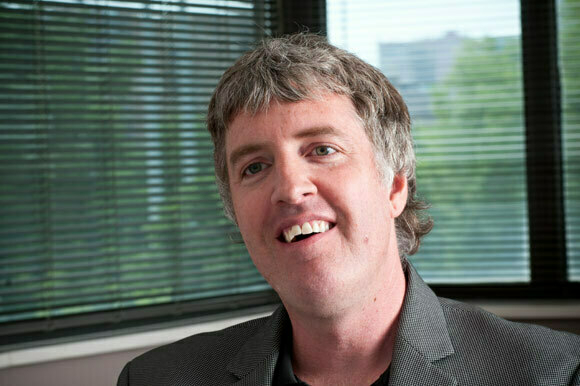
The consultancy that paid for its own experiment
By then Dornquast had spent years making computers useful to other people. Born in Massachusetts in 1966, he began his technology career before finishing Roosevelt High School in Minneapolis. He worked at Microworks and Control Data, studied computer science at the University of Minnesota, and became chief technology officer at the advertising agency Fallon. His working life reached back to the period when a company’s presence online still had to be invented piece by piece.
That background matters to the CrashPlan story. Dornquast knew the work of building for clients, with their deadlines and their ownership of the finished result. In 2001 he co-founded Code42 with Brian Bispala and Mitch Coopet. It began as an IT consultancy. Client revenue supported the company while it developed products of its own. The interval between founding the firm and launching CrashPlan lasted six years. A neat origin story can make that interval disappear. The payroll would have been less forgetful.
- 2001Code42 begins as an IT consultancy
- 2007CrashPlan launches
- 2012First venture round: $52.5 million
Consulting revenue helped fund the move into products.
The name allowed a little levity into the enterprise. Code42 was an homage to Douglas Adams, who died in the year the company was founded. Readers of The Hitchhiker’s Guide to the Galaxy would recognize the number. A business devoted to practical computing had borrowed its name from a joke about the answer to practically everything. The founders still had to work out which questions they could profitably answer.
When the household became the sales pitch
CrashPlan reached consumers in 2007; an enterprise version followed in 2008. That movement between the living room and the workplace became part of the company’s character. A person could appreciate uncomplicated backup at home, then want the same convenience for a company’s laptops and desktops. The enterprise version also had to satisfy organizations that wanted control over where their data lived. Ease of use had to coexist with some fairly demanding plumbing.
By January 2012, Code42’s lineup covered home users, small businesses, and enterprises. Its funding announcement described more than 100 petabytes under protection and 86 employees. The figures offer a useful correction to the picture of three friends agreeing something would be easy. Keeping files safe across platforms, destinations, and changing devices had become an operation with considerable weight. A product that worked quietly still needed people to make all that quiet possible.
A historical snapshot, five years after CrashPlan’s launch.
Then came $52.5 million from Accel Partners and Split Rock Partners. This was the company’s first venture round, more than a decade after its founding. Dornquast described a profitable, debt-free business choosing investment to accelerate growth. He compared investors to a personal trainer. The comparison left room for both ambition and the uncomfortable work required to achieve it. A cheque, like a gym membership, does not perform the exercises.
The new capital was intended to expand development, sales, and marketing. It also changed the circle of people with a stake in the company. Dornquast spoke about that change without pretending it was trivial. Building for the long term remained important to him. Split Rock’s Michael Gorman, already a CrashPlan user, described a leader who sought other perspectives and kept learning. The instinct to ask questions had acquired a boardroom as well as a workshop.
The ambition had a Minnesota address
Dornquast’s definition of success included the place where the company operated. In a 2014 discussion with other Twin Cities technology leaders, he imagined Code42 becoming a durable local force, invoking Control Data as a model. The aspiration was bigger than an individual payday: a company could create the setting in which more people got to do substantial technical work. He had worked inside that older Minnesota computing tradition himself.
He also understood that growth changed the job. In 2014, Code42 added Workday executive Mike Stankey to its board, following the recruitment of Amazon’s Jason Bristow as chief financial officer. Dornquast explained that hiring meant looking several years ahead. A founder’s calendar, in this account, had to include the organization that did not exist yet. The people needed for that organization might bring experience the founders themselves did not have.
“We’re trying to invent the next future.”
Matthew Dornquast · 2014
In 2015, Dornquast stepped down as CEO. Coopet served as interim chief executive before Joe Payne was appointed that July. The transition placed someone else in charge of the company Dornquast had helped start. It is an essential part of the chronology, especially when old profiles preserve titles long after the jobs have changed. His role in the story is Code42 co-founder and its original chief executive, during the years that produced CrashPlan.
Some advice that survived the meeting
Another founder carried a different version of Dornquast’s work forward. Marc Grabanski met him after a Bootstrapper’s Breakfast talk in Minneapolis in 2011. Grabanski described his ambitions for a software consultancy. Dornquast reduced the grand plan to its everyday substance: doing client projects with friends. Then he asked him to consider the consequences of ownership. Software built for someone else would ultimately belong to someone else.
Grabanski credited that conversation with helping redirect him toward the education business that became Frontend Masters. Dornquast accepted an advisory role. Their meetings were infrequent, but Grabanski remembered the attention he gave them, as well as tennis and messages about hobbies and children. Advice had turned into an ongoing relationship. The useful part had been his willingness to look closely at what another person was actually trying to build.
The coffee machine gets its turn
That habit appears in a rather smaller project Dornquast published in 2018: fixing his espresso machine. He had chosen a serviceable model after a previous machine proved difficult to repair. When the replacement stopped pouring properly, he documented the failed attempts as well as the solution. Eventually a replacement pump, costing about $30, restored the coffee. He put the procedure online so the next owner could spend less time discovering it.
The account is satisfyingly specific. There are symptoms, disassembly, parts, and the aggravation of an appliance that will not complete its cleaning cycle. His objection to disposable coffee pods and unrepairable equipment gives the episode another dimension. Keeping something working could mean choosing it carefully in the first place. It could also mean opening it up after the expensive purchase had stopped behaving like an expensive purchase.
That same year, he published tests of an internet-service upgrade at his New York apartment. The faster package had produced much slower downloads. He compared results, arranged a return to the cheaper service, and documented the improvement. There is a modest comedy in a backup-software founder having to argue with his own broadband connection. There is also a recognizable working method: measure the actual behavior, then question the label on the box.
What kept going
Dornquast died on February 4, 2022, aged 55. He left his wife, Colleen, and five daughters. His work continued along several separate paths. Later that year, Mill Point Capital acquired CrashPlan from Code42, establishing it as an independent backup and recovery business. Code42 itself was acquired by Mimecast in July 2024. Those later transactions belong to the companies’ histories, after his lifetime.
One earlier decision had a later consequence. Dornquast, Bispala, and Coopet collectively donated 1% of their company equity to establish the Code42 Foundation, created in 2016 under Payne. The 2024 sale turned pledged stock into money for the fund. In 2026, the foundation announced grants of $200,000 to Unidos MN and $42,000 each to the Immigrant Law Center of Minnesota and Tubman. The commitment had outlasted both a founder and the independent company.
The story began with the need for a second copy. It leaves behind several kinds of continuity: a product still doing its work, another founder pursuing an idea sharpened by his advice, and company equity reaching Minnesota organizations. Even the coffee repair remains available to somebody staring at an uncooperative machine. Dornquast spent years attending to the things people wanted to keep. Some of his own work found ways to keep going.
Keep reading
Conversations, practical notes, and the work that continued.