Paul Barber had encountered a peculiar kind of success. His software company had grown enough to have departments, managers and people who knew exactly how things should be done. Some of those experienced people were still at their desks at eight in the evening. Their junior colleagues were less occupied. The explanation was perfectly reasonable: doing the job oneself was quicker than teaching someone else. Perfectly reasonable explanations can keep a company stuck for years.
Barber later described how Prophix replaced that arrangement with written processes connecting sales, legal, finance and services. Work could travel across the business without waiting for a departmental gatekeeper. Training became easier. The interesting part of the story is his willingness to describe the problem at all. Here was a founder explaining that the habits which helped a small business function could become obstacles as it grew.
Across his career, that problem returned in different clothes. A distributor had to become a developer. A product needed a new name. A company proud of its independence eventually accepted an outside investor. And a founder who had occupied the chief executive’s chair for decades prepared another person to sit in it.
A future that had run out of date
Barber graduated in mathematics from Cambridge in 1974. He later earned an MBA at Western Ontario’s Richard Ivey School of Business. His professional biography spans sales, marketing, consulting services and general management, alongside several generations of software for helping executives understand their businesses. Those responsibilities put him on both sides of a familiar commercial argument: what a product can do, and what a customer will actually pay to have done.
In 1987, the business now called Prophix began as EPS Software Consultants, distributing financial software in Canada. Its first home-grown product reached customers in 1998 under the name Budget 2000. That name had a short shelf life. By 2002, the future printed on the box was already two years in the past. The company renamed the product Prophix, a word chosen for practical trademark reasons and associations with profit, prophecy and fixing things.
There is a pleasing modesty to that explanation. A company name can acquire a grand origin story after enough years of repetition. Barber’s account gave it a commercial job to do. The name needed to work. So did the software.
- 1987DistributeEPS Software Consultants
- 1998DevelopBudget 2000 reaches customers
- 2002RenameThe product becomes Prophix
The accountant and the endless string
His writing makes a useful companion to the career dates. In one essay, he asked readers to imagine pulling a piece of string whose far end remained out of sight. More string kept appearing. Financial consolidation, he suggested, behaved much the same way. Adding up the results of several businesses sounded straightforward until different accounting structures, adjustments and ownership arrangements began arriving.
The joke depended on recognizing the reader’s predicament. Someone had opened a spreadsheet to perform an apparently manageable task. A little later, the spreadsheet had developed ambitions. Barber used that image to explain why smaller companies, too, could need dedicated consolidation tools. Complexity did not wait politely for a business to become enormous.
He also argued for specialist applications that could coexist with broader enterprise systems. In his account, common integration standards made that arrangement more practical, while dependence on a single supplier could make changing course difficult. This was an interested argument from a specialist software seller, certainly. It was also a consistent one: customers should have room to choose the tools that fit their work.
At a San Francisco breakfast roundtable, he joined a discussion about moving finance beyond the production of conventional reports. The point was to help managers act on information, connect measures with strategy and understand what their decisions would change. For Barber, the numbers were part of a conversation. Their usefulness depended on what happened after someone read them.
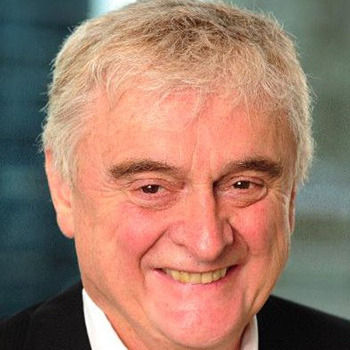
An interim job with a long future
In 2016, Barber asked Ryan Van Hatten to take temporary charge of finance after Prophix’s CFO departed. Van Hatten had already spent eleven years at the company. He knew the team and expected that, after stabilizing things, he would return to operations. The temporary assignment became his career.
Looking back, Van Hatten emphasized the relationships that made the move possible. Colleagues understood one another’s work and could learn from one another. He had moved through different responsibilities inside Prophix, accumulating knowledge that proved useful in the finance office. Barber and Alok Ajmera had repeatedly asked him to try something new.
This offers a concrete way to understand internal promotion. A familiar employee can arrive in an unfamiliar job with a considerable advantage: knowing whom to ask, which assumptions deserve scrutiny and where a problem might have begun. The risk of the appointment remains real. So does the value of the knowledge already in the building.
Barber’s earlier account of overworked managers gives the episode extra weight. Teaching someone, or trusting them with an unfamiliar responsibility, costs time before it saves time. A company that keeps choosing the quicker answer can eventually find itself with very few people qualified to give any other answer.
Independence, with a financing plan
Prophix moved into cloud software in 2016. In April 2019, it announced C$10 million in debt financing from BDC Capital and CIBC Innovation Banking. The announcement reported that annual recurring revenue had grown 42 percent in fiscal 2018. Barber said the borrowing would help the company expand and invest in technology, including artificial intelligence.
These details matter because independence is sometimes described as though it means refusing financial machinery altogether. Prophix was choosing among different ways to fund a business. Debt and an equity investment make different claims on a company’s future. A founder’s preference for one can be practical, principled and subject to revision all at once.
The revision became visible in January 2021, when Hg announced a majority investment. Contemporary reporting described a sharp fall in new bookings during the second quarter of 2020. Barber and Ajmera reconsidered the risks of continuing without a larger financial partner. The transaction brought a different ownership structure to a business that had long prized control over its own direction.
Barber addressed the decision publicly on LinkedIn. He said that he and colleagues would remain shareholders and that the choice of partner reflected both growth plans and the company’s culture. His explanation did not treat the investor’s nationality as the decisive issue. What mattered was what the partnership would allow the business to do.
“We chose a financial partner that supports our corporate culture and will help us grow.”
Paul Barber · public LinkedIn comment
A chair someone else could occupy
Before the Hg announcement came another change. On August 5, 2020, Prophix named Alok Ajmera president and CEO. Barber became executive chairman. Ajmera had been COO since 2014 and president since 2016; the succession announcement described a deliberate plan.
Barber connected that appointment to his original ambition for continued growth. Developing leaders belonged alongside investing in the product. The distinction matters in a founder’s career. Product work can feel safely close to the thing that made the company valuable. Preparing a successor asks the founder to make a judgment about who can change that thing next.
By then, Prophix had introduced its Virtual Financial Analyst, using natural language and machine learning in financial work. The business had accumulated products, customers, colleagues and responsibilities far beyond its original distribution role. Handing over the CEO position acknowledged that the organization needed a future with a different person making its daily decisions.
Barber remained involved as chairman. The handover was a change of responsibility inside the institution he had built. Read alongside Van Hatten’s unexpected route into finance, it suggests an enduring managerial question: who else should be given the chance to grow here?
Toys, turkeys and a place on the wall
Another answer had been taking shape since the beginning. Barber organized annual donations of toys and turkeys to the Salvation Army from 1987. The detail is wonderfully specific. Corporate generosity can become abstract when described entirely in the language of purpose. Toys and turkeys retain their stubborn connection to actual households.
In 2015, Phil Gravel proposed a formal corporate social responsibility charter and committee. Its principles gave employees a leading role in choosing causes, with support from management. The committee’s first year brought more than $100,000 in donations. An activity associated with the founder had acquired a structure through which other people could take responsibility for it.
Barber also painted. His company biography described works displayed at Prophix’s Mississauga headquarters. There is no need to turn that hobby into a theory of software management. It is enough to picture an office containing something its founder made without a financial application in mind. The person who helped companies organize their numbers also spent time deciding what belonged on a canvas.
The game continues
Barber died on May 2, 2022. He left his wife, Carol, two children, Adrian and Thea, and four grandchildren. The company’s remembrance emphasized the care he took with employees and the charitable habits he helped establish.
Those habits still have practical expression. Prophix’s published policy describes paid volunteering time, donation matching and a $50,000 charitable contribution for quarters when revenue goals are met, with employees choosing the recipient. His name also belongs to the Barber Cup, the company’s football tournament. Prophix describes him as a lifelong fan; participating teams get to direct money to charity.
A football match is a cheerful way for a software company to remember someone. It also leaves the afternoon in other people’s hands. There are teams to assemble, causes to choose and a game whose result has not yet been decided. After decades spent helping a business change, Barber has left his colleagues something familiar to do: take responsibility, make a decision and carry on.