In 2014, over huevos rancheros in New Mexico, Matt Van Buskirk suggested that Jo Ann Barefoot start a podcast. She had never listened to one. He pointed her toward Tim Ferriss, and an idea began to take shape. A breakfast conversation about a new way to listen would eventually help create a place where bankers, regulators and technology founders could hear one another think.
Barefoot Innovation launched in 2015. By May 2026, Barefoot was recording its 250th episode, with Van Buskirk among her guests. There are grander ways to announce an interest in changing financial regulation. Recommending a podcast over eggs has the advantage of being useful before anyone has convened a committee.
Van Buskirk’s larger undertaking is Hummingbird, the financial-crime software company he co-founded. His title is CEO, Regulatory. He brings experience from government bank examination, regulatory consulting and Circle’s compliance operation. The breakfast story offers a smaller introduction to the same career: put people in contact with something they might otherwise miss, then see what they can do with it.
Learning the other side of the desk
Before Hummingbird, Van Buskirk worked as a bank examiner at the Treasury Department’s Office of Thrift Supervision. He subsequently worked with Treliant Risk Advisors, a financial-services consulting firm. The roles gave him experience with the obligations financial institutions must meet and the practical business of assessing whether they meet them.
An examiner and a compliance officer can be looking at the same institution while facing different immediate questions. The examiner needs to assess the program. The officer has to keep it operating. Moving between those worlds makes the distance between a written requirement and a working process rather difficult to ignore.
At Circle, Van Buskirk led compliance from before the company’s launch through international expansion. This was a payments business using blockchain technology, requiring a compliance program to develop alongside a new product. His responsibilities brought him into the mechanics of sanctions screening, monitoring transactions and reporting suspicious activity.
His later reflections describe a change in perspective. Consumer protection had supplied much of his earlier regulatory frame. Cryptocurrency compliance brought the behavior of criminal networks into closer view. A rule could be specified; the people trying to evade it could change their behavior. That distinction would become central to his thinking about what software should do.
- TreasuryExamine the institution
- TreliantAdvise the institution
- CircleRun the program
- HummingbirdBuild the working tools
Career sequence; stages are not drawn to a time scale.
The engineer’s raised eyebrow
By October 2016, an FTC event biography identified Van Buskirk as Hummingbird’s co-founder and CEO. The company’s public launch followed in 2017. Its early ambition was to apply technology to compliance work, starting with anti-money laundering. The founding effort joined people who understood the rules with people who knew how to make products.
Barefoot, herself a Hummingbird co-founder, described brainstorming with Van Buskirk during that early period. He liked to recount the reaction of fintech engineers when they encountered regulatory requirements: first disbelief, then an attempt to design a sensible way to fulfil them. The raised eyebrow was part of the process.
There is affection in that account of professional culture shock. The regulatory expert knows why a requirement exists. The engineer asks why the work has to happen in that particular way. Put those questions together and an inherited procedure can become a design problem. The point of the conversation is to produce something a person can use.
Hummingbird’s team reflected that combination. Alongside Van Buskirk and Barefoot were Joe Robinson, Jesse Reiss and Ryan Gerard, whose backgrounds included product and technology work at Square. In 2018, Hummingbird announced a $3 million financing led by Homebrew, with Omidyar Network, TTV Capital and Designer Fund also investing.
The early product was designed for compliance teams that might lack ready access to engineers or IT support. That is a telling constraint. A tool intended to relieve operational friction loses some of its appeal if adopting it requires a long queue for scarce technical help. Getting started was part of the problem the company needed to solve.
A case needs somewhere to live
Van Buskirk’s explanation of Hummingbird becomes most concrete at the investigator’s desk. In a 2021 interview, he described a modular case-management platform: an interface where someone could work through an investigation, drawing on information from other systems. Transaction monitoring and customer checks could come from different providers. The investigator would still need a coherent place to bring the material together.
“We’re big believers in modularity and interoperability”
Matt Van Buskirk, 2021
His preference for interoperability follows from differences between institutions. A bank’s needs depend on its business model, the places it operates and the risks it faces. Giving it a choice of specialist tools makes sense only if those tools can communicate. Otherwise the investigator inherits the job of carrying the information between them.
He discussed that approach in connection with ING’s GRC Orchestrate initiative, which sought to make pre-validated regulatory technology available through a platform. The ambition was to let institutions assemble capabilities appropriate to their circumstances. Case management could sit above that collection, supplying a working interface rather than requiring every function to come from one vendor.
Hummingbird announced another $8.2 million in funding in 2020. Its customers then included Brex, Upgrade and Etsy. The company was also discussing expansion into Europe, beginning with Ireland and the United Kingdom. For Van Buskirk, bank-fintech partnerships raised a related issue: useful new services could come with considerable regulatory complexity.
The funding figures belong to the company, rather than to his personal balance sheet. Their relevance here is what they enabled: an attempt to turn the argument for better compliance tools into an operating business. A convincing diagram still has to survive implementation, customer requirements and the uneven realities of a financial institution.
The supervisor meets the agent
Van Buskirk has continued to work across the boundary between technology and policy. In a RegFi conversation with Jerry Buckley and Sherry Safchuk, he discussed equipping regulators and compliance teams with the tools and expertise to keep pace with change. Open-source and interoperable platforms could help connect technology used by institutions with technology used by their supervisors.
The goal he discussed was regulation focused on outcomes. That puts a demanding question behind any efficiency claim: what does a faster process achieve? A system can complete an administrative step more quickly while leaving the harder question of investigative usefulness unresolved. For someone who has examined institutions and helped run compliance, both questions belong in the conversation.
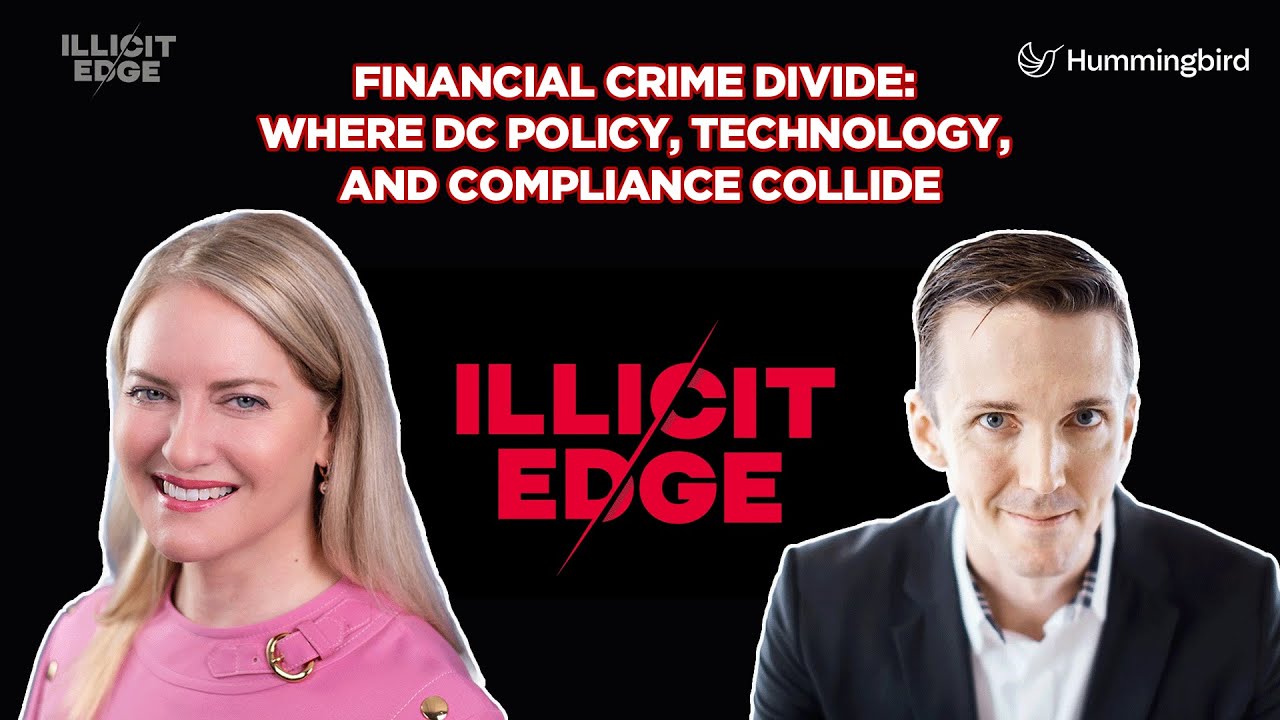
In March 2026, he joined Carole House and Ari Redbord for another Barefoot Innovation discussion about financial crime. House brought policy and national-security experience; Redbord brought law-enforcement and blockchain-intelligence experience. Those conversations place his software work alongside people whose responsibilities continue beyond the moment a financial institution files a report.
His July 2026 writing turned to the supervision of AI agents. He argued for looking at controls familiar from supervising people: limits on authority, escalation routes, surveillance and accountability. In his framing, the way an agent connects to other systems matters to supervision. Assessing a model alone leaves important operational questions open.
The idea fits the trajectory of his career. Technical capability invites a further set of questions about permission, responsibility and explanation. Who can act? When must the action be escalated? Who is accountable afterward? A new technology can make those old supervisory questions more urgent without making them disappear.
A longer exposure
There is another Matt Van Buskirk archive, with fewer acronyms. His personal website displays photographs from Iceland, Japan, Europe and several parts of the United States. The homepage gives considerable space to pictures. A visitor can arrive looking for regulatory commentary and find a landscape instead.

His photo captions can be agreeably technical. One describes testing a slower shutter speed at night in Jiyugaoka, Tokyo, and acknowledges that getting the movement sharp still needs work. Others identify lenses or study architectural lines around Singapore’s Marina Bay. The captions document experiments, including the ones still in progress.
His public record includes connections to the arts as well. His LinkedIn profile lists service on Boston Ballet’s Young Partner Board in 2017 and the Washington Ballet’s Jeté Society board from 2018 to 2020. These are small details alongside a career in financial regulation, but they give the person a little more room than his conference biography allows.
For the 250th Barefoot Innovation episode, Van Buskirk also described building a personalized AI assistant connected to ten years of notes and content highlights. The application is modestly personal: making accumulated reading and thinking available through a new tool. A decade of notes is a substantial companion to bring into a conversation.
By then, the breakfast suggestion had come full circle. He was back with Barefoot, this time alongside Kabir Kumar and Nick Cook, discussing technological change. The company, the writing and the photographs have different audiences. The conversations continue. Somewhere between an examiner’s questions and an engineer’s raised eyebrow, there is still work to be done.
Follow the conversation
Personal site & photography ↗ · Hummingbird ↗
LinkedIn ↗ · X / @govfuturist ↗ · Instagram ↗
Listen / May 2026Barefoot Innovation: My Favorite Thought Partners ↗Read / Matt’s writingWhy the Future of Compliance is Finally Here ↗Listen / RegFiThe Technological Path to Outcomes-Based Regulation ↗Watch / InterviewWhy Compliance is Fundamentally a Data Sciences Exercise ↗