He runs a company built on a near-heretical idea in banking: that rival institutions can teach each other to catch criminals without ever handing over a single record. The data stays put. Only the lesson travels.
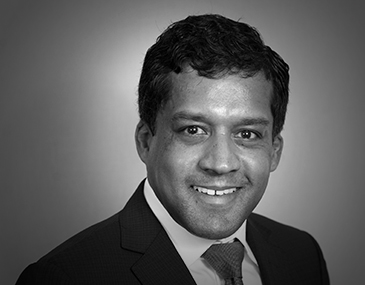
Picture a dozen banks that, by law and by instinct, will never show each other their customer ledgers. Now picture them collectively getting smarter at spotting money laundering every single week. That contradiction is the business Ajit Tharaken was hired to run. As CEO of Consilient, he leads what the company calls the first outfit to apply federated learning to financial crime, an approach where AI models are trained inside each institution's own walls and then merged into a shared "champion" model that keeps improving.
The pitch is unglamorous and enormous at once. Compliance teams today drown in alerts, most of them wrong. Tharaken's blunt diagnosis: the entire global framework for fighting dirty money is past its expiration date. His fix does not ask banks to trust each other with secrets. It asks them to trust math.
He arrives at the problem as a builder, not a banker. The Columbia computer scientist has spent his career at the seam where machine learning meets regulation, the place where most ambitious AI ideas go to die a slow death by audit. Consilient is his wager that the seam is exactly where the value is.
An AI model learns to spot suspicious patterns inside a single institution, on data that never moves an inch.
The trained models, not the raw records, combine into one federated champion model that has seen far more than any bank alone.
The champion learns from diverse datasets and adapts as criminals adapt, all while staying inside data-privacy law.
Tharaken's words for it: "Consilient enables cross-institutional intelligence-sharing without moving or exposing sensitive data." It is the rare AI sentence that a privacy regulator and a fraud investigator can both nod at.
Figures as stated publicly by Consilient.
"AI-powered financial crime detection is not just an innovation, it is a necessity."
"AI models are trained locally at each institution and then combined into a federated champion model which continuously improves."
"Consilient enables cross-institutional intelligence-sharing without moving or exposing sensitive data."
"Consilient is the first of its kind to utilize Federated Learning for financial crime."
Tharaken's aspiration is not subtle: retire a creaking global AML/CFT system and replace it with privacy-preserving AI that lets banks and regulators collaborate on catching crime without pooling a single byte. Every institution that joins makes the champion model sharper for everyone else.
It is a flywheel disguised as a compliance product. Criminals evolve their methods; the federated model evolves alongside them. The bet is that intelligence shared, while data stays sovereign, beats any single firm fighting alone. In Tharaken's framing, that is not a luxury feature. It is the only version that survives contact with both regulators and reality.
His core idea flips the usual playbook. Instead of moving data to the AI, the AI travels to the data. The records never get a passport.
He has sat on both sides of an acquisition: the founder who sold Alacra, and the big-company GM who absorbs startups. Few do both in one field.
Consilient itself is a mash-up — born in 2020 from K2 Integrity's compliance pedigree and Giant Oak's data science.