The message arrived at 5:45 on a Friday evening, an hour famous in computing for questions that are not really questions. A colleague asked Matt Simmons how often the primary database was backed up. Simmons did not answer. He opened remote terminals to the backup systems and shut them down.
Someone had accidentally deleted several thousand records. At six o'clock, the mistake would have traveled through log shipping from the primary database to its replicas. Simmons had stopped the machinery with roughly a quarter-hour to spare. Everyone around him admired the save. Simmons, who was then administering technology for a financial-services business, wrote a rather less flattering postmortem: “I got lucky.”
The line is a useful entrance to his career. Plenty of people turn narrow escapes into legends about their instincts. Simmons turned his into a training session. He explained the data flow to colleagues, praised the person who had spoken up quickly, and began reconsidering a recovery process that could otherwise have taken two days. The point was not that the operator had been clever. The point was that next time, cleverness might be asleep.
“I got lucky.”Matt Simmons, writing about a database rescue in 2010
Sixteen years later, his systems have acquired altitude. Simmons spent more than nine years in aerospace, first at SpaceX and Starlink, then at Varda Space Industries. He helped build critical infrastructure and founded Starlink's site reliability team. At Varda, he worked on the large-scale systems behind a company sending manufacturing capsules to orbit and bringing them home. In 2026 his public profiles use a different word: founder. The new concern is neither a database nor a spacecraft. It is the local weather report.
The useful art of worrying early
Simmons began working in systems administration in 2001, after an earlier customer-support job. His path ran through internet services, logistics, programming, and financial technology. These were small and medium infrastructures, places where the administrator knew both the machines and the people who depended on them. There was rarely an elegant division between architect, operator, help desk, and the person called when something emitted smoke.
He wrote about the work under the name Standalone SysAdmin. The title sounded solitary, but the project kept pulling him toward other people. His essays for Simple Talk covered change management, users, hiring, ego, and disaster recovery. On Server Fault, he supplied more than 500 answers. His most enduring subject was not a particular operating system. It was judgment: how people with considerable access and imperfect information make decisions without turning a bad afternoon into a historical event.
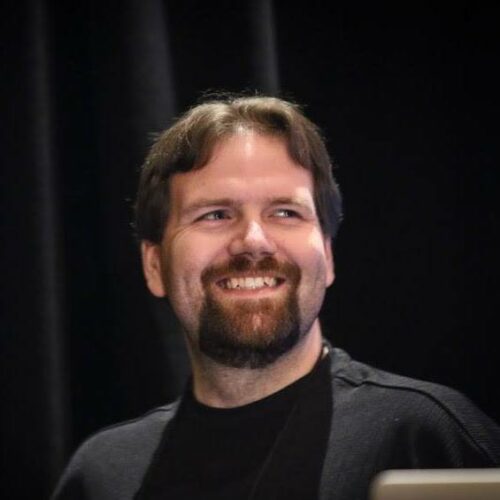
That concern made the Friday-night rescue interesting to him. The deletion was technical; the recovery was social. A colleague felt safe enough to raise a mistake immediately. Simmons knew the colleague well enough to hear alarm inside an innocent sentence. A backup topology provided a brief window. Experience connected the pieces. His response afterward was to make the knowledge less private.
Reliability, in this telling, is partly the design of machines and partly the design of candor. The first produces replicas. The second gets someone to say, before six o'clock, that the replicas may be about to copy the wrong thing.
One operating instinct, four kinds of system
A standalone administrator finds the room
In 2009, Simmons went to the USENIX LISA conference for the first time. He was nervous about walking into a gathering of a thousand people who seemed certain to know one another. He was also uneasy about spending a week away from the infrastructure he managed. This is the occupational comedy of the lone administrator: success means that nothing happens, yet absence makes nothing happening feel suspicious.
Nothing fell down. People were friendly. Simmons returned for years, first as a blogger and then as an organizer. He worked on tutorials, invited talks, program committees, and ultimately served as a conference co-chair in 2016. He also helped organize System Administrator Appreciation Day gatherings where practitioners could meet, compare stories, and find the colleague they might call during the next baffling incident.
His 2014 interview about LISA is exuberant in a way technical biographies rarely permit. He worried about introducing speakers correctly. He delighted in a schedule that combined statistics, R, monitoring, Docker, and PowerShell. He planned to reach Seattle aboard the Empire Builder, indulging a childhood wish to cross the Rocky Mountains by train. Curiosity, nervousness, and trains make a more persuasive portrait than a row of technology logos.
“I can contribute and receive.”On learning among other systems practitioners
The community also sharpened his writing. In a 2013 article, he ranked Vagrant with fire, the wheel, the Internet, and microwave cheese, then used the joke to explain why disposable virtual machines improved his testing workflow. The humor did a practical job. Infrastructure is full of abstractions that become expensive when nobody understands them. Simmons liked making the machinery legible.
When the server room acquires a horizon
After managing network, virtualization, and research-cluster systems at Northeastern University, Simmons joined SpaceX in 2015. He worked first in IT systems engineering and later in site reliability. His current biography says he founded the reliability team for Starlink, the satellite internet constellation. It was a larger stage for the same old discipline: observe complex machinery, prepare for failure, and make recovery routine enough that drama remains optional.
The scale changed the meaning of “user.” A financial database serves colleagues and clients. A university cluster serves researchers. Starlink's infrastructure supports a constellation and the people connecting through it. The operator's obligation expands with the system, but the basic questions are familiar. What is critical? What can fail together? Who receives the alert? What does the person on call know at 5:45 on Friday?
In 2023 Simmons moved to Varda Space Industries, the orbital-manufacturing company. Varda builds autonomous capsules intended to process materials in microgravity and return products to Earth. Simmons worked in site reliability there, eventually at principal level. The public description is brief, as descriptions of consequential infrastructure often are. The machinery is specific; the ethic is portable.
The expanding availability problem
Conceptual scale, not measured data: Simmons's career moved from organizational systems toward services with increasingly broad public consequences.
A weather desert looks like an uptime problem
In March 2024, tornadoes moved through the American Midwest. Four people died, and millions sought information and safety. Simmons was in Dublin, Ohio, frustrated by the scarcity of continuous local coverage late at night. His company's account of the moment is direct: the former SpaceX and Starlink engineer realized he had the skills to build an alternative.
Local Weather News Network is the result. It aims to provide localized, current weather presentations for communities that lack a television station, a dedicated meteorologist, or dependable round-the-clock coverage. Its premise is carefully bounded. Artificial intelligence is used to present weather, not predict it. The underlying information comes from real-world data, with professional meteorological involvement. During severe weather, the service directs viewers to authorities such as the National Weather Service.
That boundary matters. Weather is full of uncertainty before software adds any of its own. Simmons's venture does not claim that a language model has acquired atmospheric wisdom. It asks whether automation can translate authoritative data into a useful local presentation, repeatedly and at a scale that thinly staffed newsrooms cannot always match.
The team reflects his old instinct for community. Meteorology advisor Ben Cotton brings forecasting knowledge and experience as a storm chaser. Nicole Forsgren, whose research helped quantify high-performing technology organizations, advises alongside startup operator Clark Torgerson. Simmons's world has long included practitioners who are, in his phrase, both leading and learning. The company turns that network toward a civic information gap.
There is an obvious tension in automating any part of local news. A trustworthy weather presenter must resist false precision, keep provenance intact, and know when to yield to human experts and emergency authorities. LWNN's stated answer is architectural: automation handles presentation; approved data and meteorological expertise establish the ground beneath it. Whether that model earns local trust will depend on execution, especially when the forecast becomes a warning.
The career built in the postmortem
Simmons's résumé can be read as a sequence of impressive nouns: SpaceX, Starlink, Varda. It is more revealing as a sequence of verbs. He administered, wrote, organized, tested, listened, and built. He moved from keeping a modest infrastructure running to helping establish reliability for a satellite network. Then a storm exposed an information gap close to home, and he treated it as a system that could be designed.
The database story remains the miniature. A dangerous event begins. Information arrives in an ambiguous form. Someone must recognize its meaning before the next automatic process makes matters worse. The immediate intervention matters, but the deeper work begins afterward: teach the system, reduce dependence on intuition, and make the next response less lucky.
Local weather coverage is not a database replica or a spacecraft. It is messier because it is public, interpretive, and intimate. People want to see their town on the map. They want to know whether the warning applies to the road outside, not merely the county in a crawl. They want the system awake when they are.
That is the stubborn question waiting at the end of Simmons's long route from the server closet to orbit and back to Ohio. What must remain available? The answer keeps changing. His method has not: listen for the odd question, understand the dependency, and begin before six o'clock.