- What it does: tunes cloud resources for cost, performance and availability, then can execute the changes itself.
- What it costs: production contracts are quote-based; AWS Marketplace lists a 30-day proof-of-concept for a $1 activation fee.
- What failed first: Kubernetes optimizations could be reversed by the customer's own GitOps pipeline.
- What to copy: observe first, approve next, automate last - with explicit limits and a rollback path.
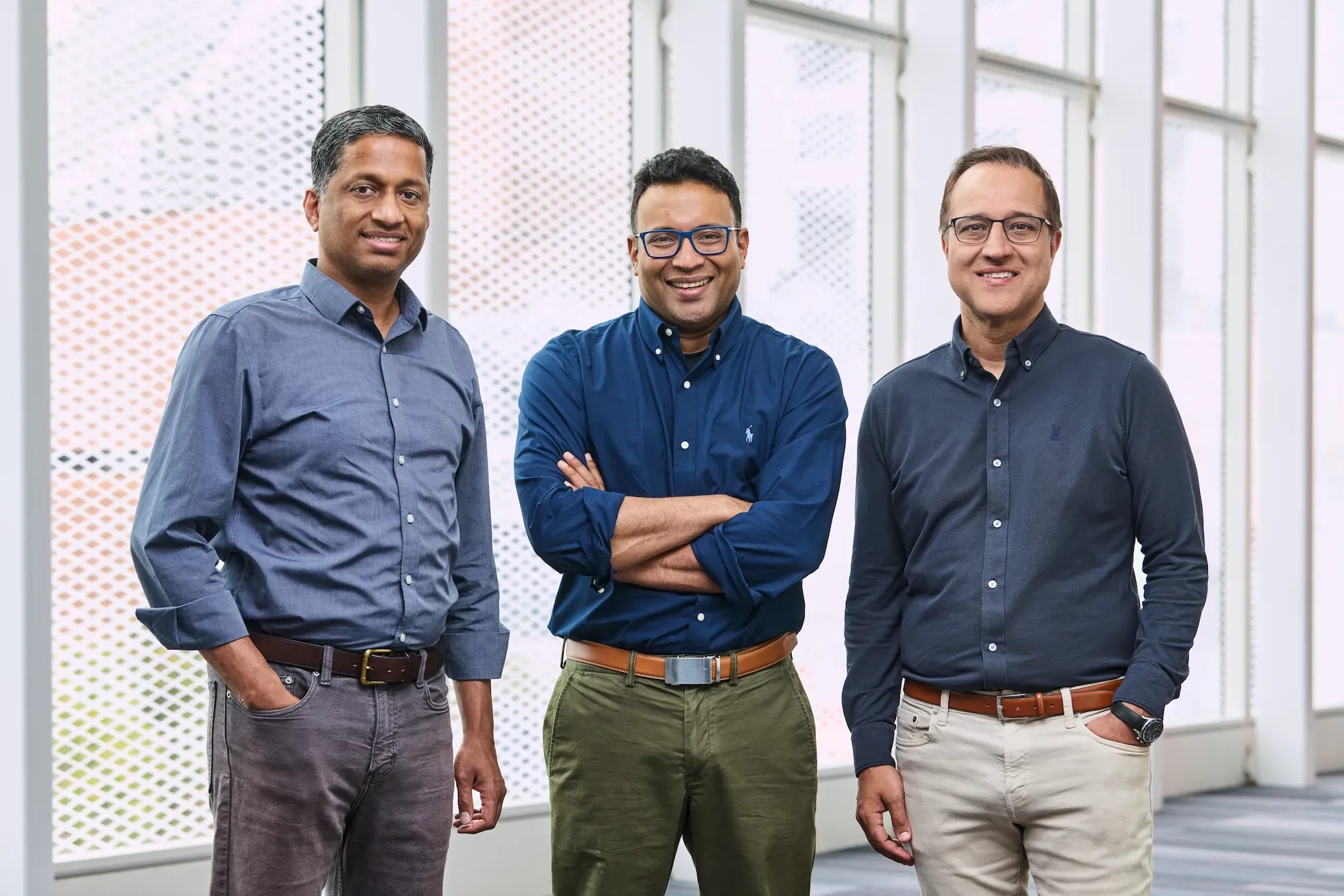
The most alarming button in enterprise software may be the one labeled Autopilot. It is one thing to let a program inspect the cloud bill. It is another to let it change the memory assigned to a live service, shrink a container or move work between machines while customers are clicking “buy.” The first is analysis. The second is authority. Sedai, founded in 2018 by former PayPal colleagues Suresh Mathew and Benjamin “Benji” Thomas, is built around that uncomfortable distinction.
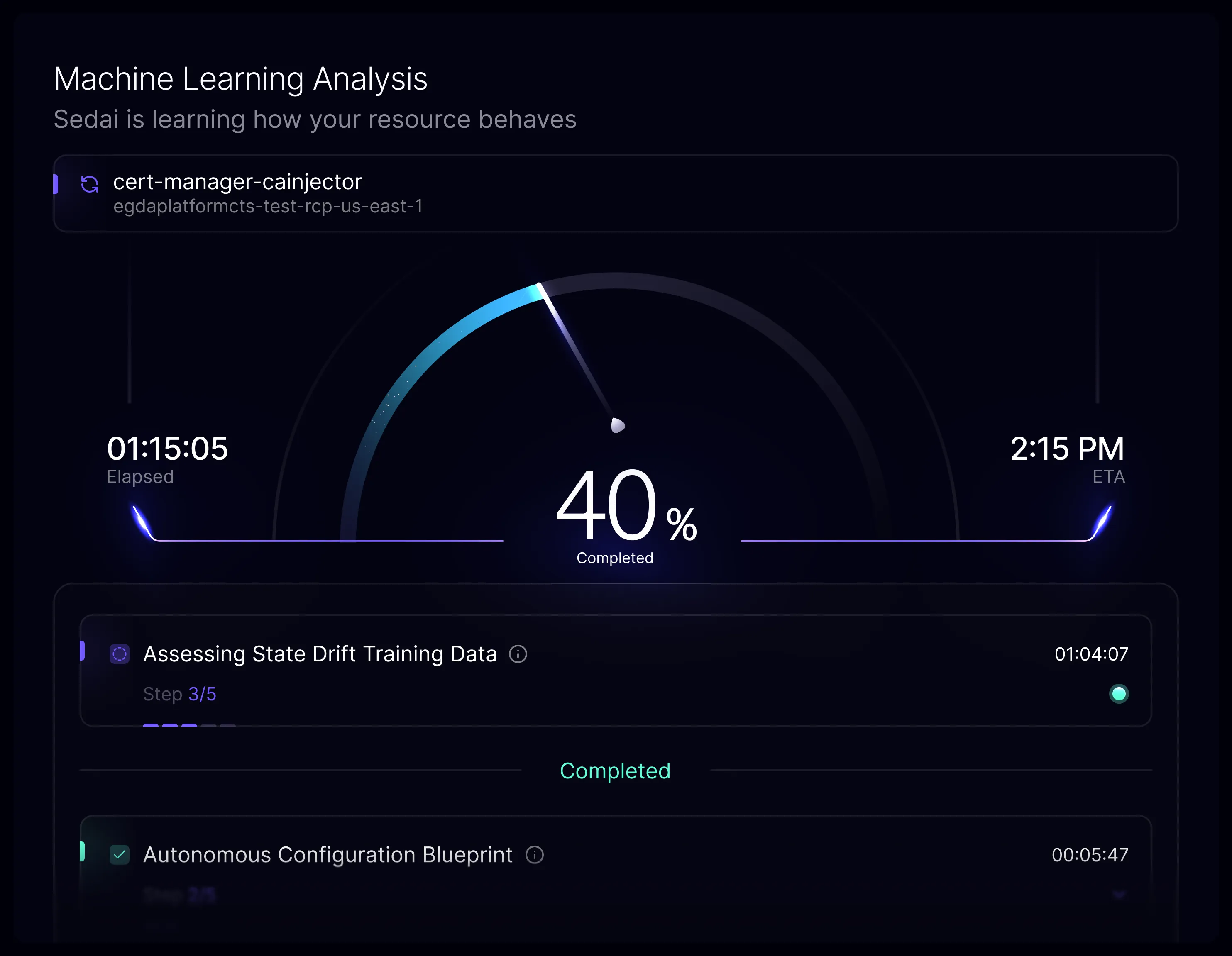
The company connects to AWS, Microsoft Azure, Google Cloud, Kubernetes and monitoring systems. It watches traffic, latency, errors, seasonality, dependencies and cost. Then it looks for a configuration that better matches the way an application actually behaves. Depending on the permission a customer grants, Sedai may merely show the opportunity, ask before acting, or make the change and keep learning. It sells to the people who live between a finance team's rising bill and an engineer's fear of breaking production: SRE, platform, DevOps, cloud infrastructure and FinOps teams.
The permission ladderA self-driving cloud begins by keeping its hands off
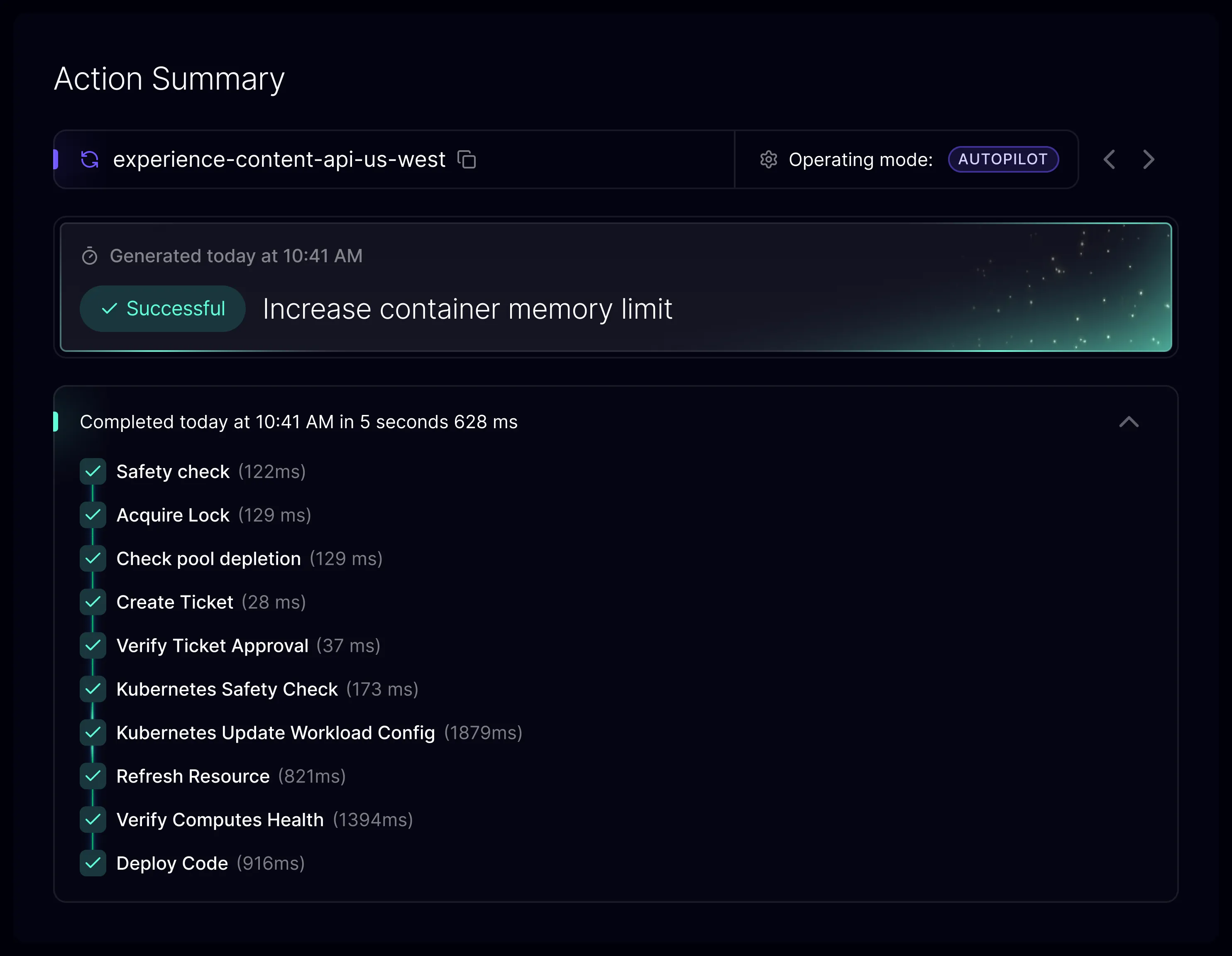
Sedai's neatest product decision is almost embarrassingly simple. It does not demand autonomy on day one. Datapilot observes and recommends. Copilot lets a human approve an action. Autopilot executes continuously inside preset boundaries. The names sound like aviation marketing, but the order solves a serious procurement problem: a cautious engineer can test the judgment of the system before testing its restraint.
The trust sequence
Informed, an AI loan-verification company, supplied the cleanest version of this story. Its serverless functions sometimes carried the maximum 10GB of Lambda memory because generous provisioning felt safer than a painstaking test program. The company considered building its own optimizer. That would have meant pulling engineers away from the product, then assigning someone to maintain the new internal tool. Sedai appeared just before that work began.
Informed was hesitant. Its infrastructure supports loan decisions, not a hobby app. So the team watched recommendations in Datapilot, moved to approvals in Copilot, and only then enabled full autonomy. Informed says it eliminated more than 900 hours of toil in three months, put all eligible production compute on Autopilot and saw no Sedai-caused production incident. The line that matters is not futuristic at all. Chief architect Robert Berger said they set it up and largely ignored it.
“The most interesting outcome of autonomy is not that the machine looks clever. It is that the engineer stops thinking about the chore.”The Sedai proposition, in plain English
Receipts, with caveatsThe savings are large; the method is the product
Sedai says it has performed more than 25 million autonomous production actions across $3 billion in managed cloud spend, with zero incidents caused by its platform. Those are company-reported figures, and “action” can describe changes of many sizes. More revealing are the customer accounts. KnowBe4 reports a 27 percent reduction in overall cloud compute cost, more than $1.2 million in cumulative savings and payback in five months. Palo Alto Networks reports $3.5 million in cloud cost reduction. Relay Network reports a 40 percent cut to ECS container costs and 3,868 engineering hours saved in 2026.
Cloud cost tools often produce a queue of sensible recommendations. The queue then waits for an engineer who is paid to ship features or prevent outages. Sedai's competitive claim is that recommendations are not savings. Its software closes the loop: change a configuration in a small increment, observe the service-level signals and expand only if the system remains healthy. Sometimes the correct answer is more capacity, not less. A faster function can complete sooner and cost less even after receiving more memory. Cost and performance are not opposing sliders; they are properties of the same running application.
The first collisionWhen the robot met the pipeline
Autonomous optimization has an enemy that is also a best practice: infrastructure as code. A GitOps pipeline wants the running system to match the blueprint stored in Git. If Sedai edits a Kubernetes deployment to right-size it, the pipeline can detect drift and helpfully change it back. The optimizer and the safety system become two polite robots rearranging the same chair.
Sedai first handled this with Sync, which noticed an overwritten optimization and reapplied it. It worked, but the underlying argument remained. In September 2026, the company introduced Pod Interceptor. Instead of editing the deployment specification watched by GitOps, Sedai intercepts a pod as it is created and rightsizes the live instance. The blueprint remains untouched. A companion Smart Scheduler packs compatible workloads more densely and clears stranded pods so rightsizing can become an actual reduction in nodes.
The change contains a useful lesson for any automation company. Do not ask a customer to dismantle a trusted workflow merely because your new tool is clever. Find the layer where both can coexist. Sedai still offers its older model for teams that insist the live pod must mirror code exactly. Pod Interceptor is a trade-off, not a universal truth.
The buyer's mathA dollar to test, then a private contract
Sedai is enterprise SaaS. Its public AWS Marketplace listing offers full-feature access for a 30-day proof-of-concept with a $1 activation fee. After that, buyers contact sales for a production contract, with usage overages possible. Public production list prices are not disclosed. That makes the proof period less a free sample than an evidence factory: connect meaningful workloads, allow two or three weeks for behavior models to form, and compare measured savings with the private offer.
The conditions matter. Read-only access can produce advice but cannot produce autonomous savings. Sparse or erratic traffic may not give a model enough evidence to act confidently. Unsupported resources remain unsupported, and bare-metal estates are outside the core pitch. Stateful systems are harder to automate than stateless ones. A company unwilling to connect telemetry, define service objectives or grant controlled write access can still buy a dashboard, but it cannot buy the full result.
From containers to tokensWhere Sedai is trying to go
The company has expanded beyond its original cloud compute territory. Its platform now covers Kubernetes, ECS, Lambda, virtual machines, storage and some data workloads. In 2026 it made GPU Optimization generally available, launched an open-source Terraform provider, and introduced Sed, a conversational assistant that can answer questions about spend and change settings. The same tools are exposed through Model Context Protocol, allowing outside agents to query or act through Sedai.
This puts Sedai in competition with CAST AI, Kubecost, Spot, Harness, StormForge, ProsperOps, the cloud providers' own tools and whatever a platform team builds internally. The dividing line is execution. Many alternatives are excellent at visibility, purchasing or a specific slice of Kubernetes. Sedai wants to be the application-aware control layer across clouds - one that connects financial intent to live performance and then takes the last mile of action.
The founders arrived at this idea after building autonomous infrastructure at PayPal, where their system earned permission to make production changes during peak hours. That origin explains Sedai's fixation on safety and its slightly rebellious culture line: “We built Sedai because toil sucks.” The sentiment is playful, but the business is conservative. The company raised $15 million in 2022 and another $20 million in 2025. It reported sevenfold revenue growth in 2024 and a 92 percent conversion rate from proof-of-concept to customer.
Sedai is not really selling a robot that knows more than an engineer. It is selling a sequence by which the engineer can safely care less. First the system earns the right to watch. Then the right to suggest. Finally, under the right conditions, the right to act. The self-driving cloud turns out to be less like a moonshot and more like a carefully negotiated driver's license.