DevZero found its second company hiding in the server bill of its first. The Seattle startup launched in 2022 with a familiar developer-tools promise: stop making programmers nurse temperamental laptops and let them open powerful, reproducible workspaces in the cloud. It was a useful idea, backed with a useful amount of money - a $5 million seed round and a $21 million Series A announced together in January 2023. Then the company ran the product and noticed an awkward detail. The Kubernetes infrastructure underneath those workspaces was consuming its margins.
CPU, memory and GPU capacity were overprovisioned by more than 50 percent, according to co-founder and CEO Debo Ray. The waste was not a side issue. It was the bill for making the original experience feel safe and fast. Teams pad their resource requests because a little idle capacity is cheaper than an outage, a missed service-level objective or a 3 a.m. call. DevZero calls that reflex “uptime anxiety.” The phrase is marketing, but the behavior is real enough: nobody gets promoted for shaving memory from a pod; plenty of people get blamed when that pod falls over.
The first thing that failed was the margin
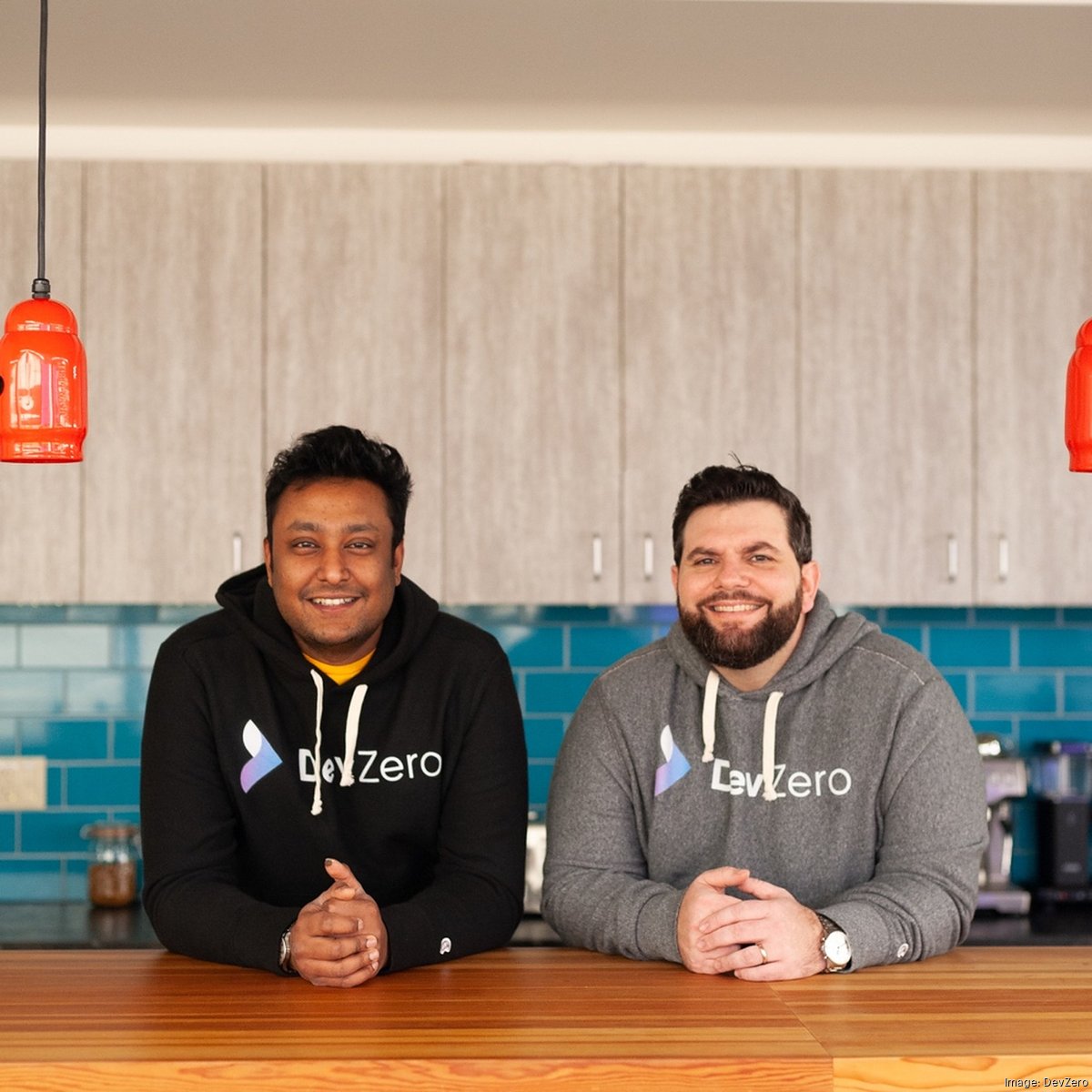
Ray and co-founder Rob Fletcher knew the old problem personally. At Uber, they had seen large engineering organizations build internal systems that pushed development away from constrained laptops and into managed infrastructure. DevZero packaged that big-company capability for ordinary engineering teams: configurable cloud workspaces, production-like testing, centralized tooling and fewer “works on my machine” rituals.
But a cloud development environment is also a tiny landlord. It promises tenants enough capacity whenever they arrive, even if much of that capacity sits quiet. DevZero used Kubernetes to provision the workspaces and found conventional autoscalers unsatisfying. The tools could add and remove replicas or nodes, but aggressive vertical changes often meant evicting or restarting pods. Saving money could introduce the very reliability problem customers had paid the platform to remove.
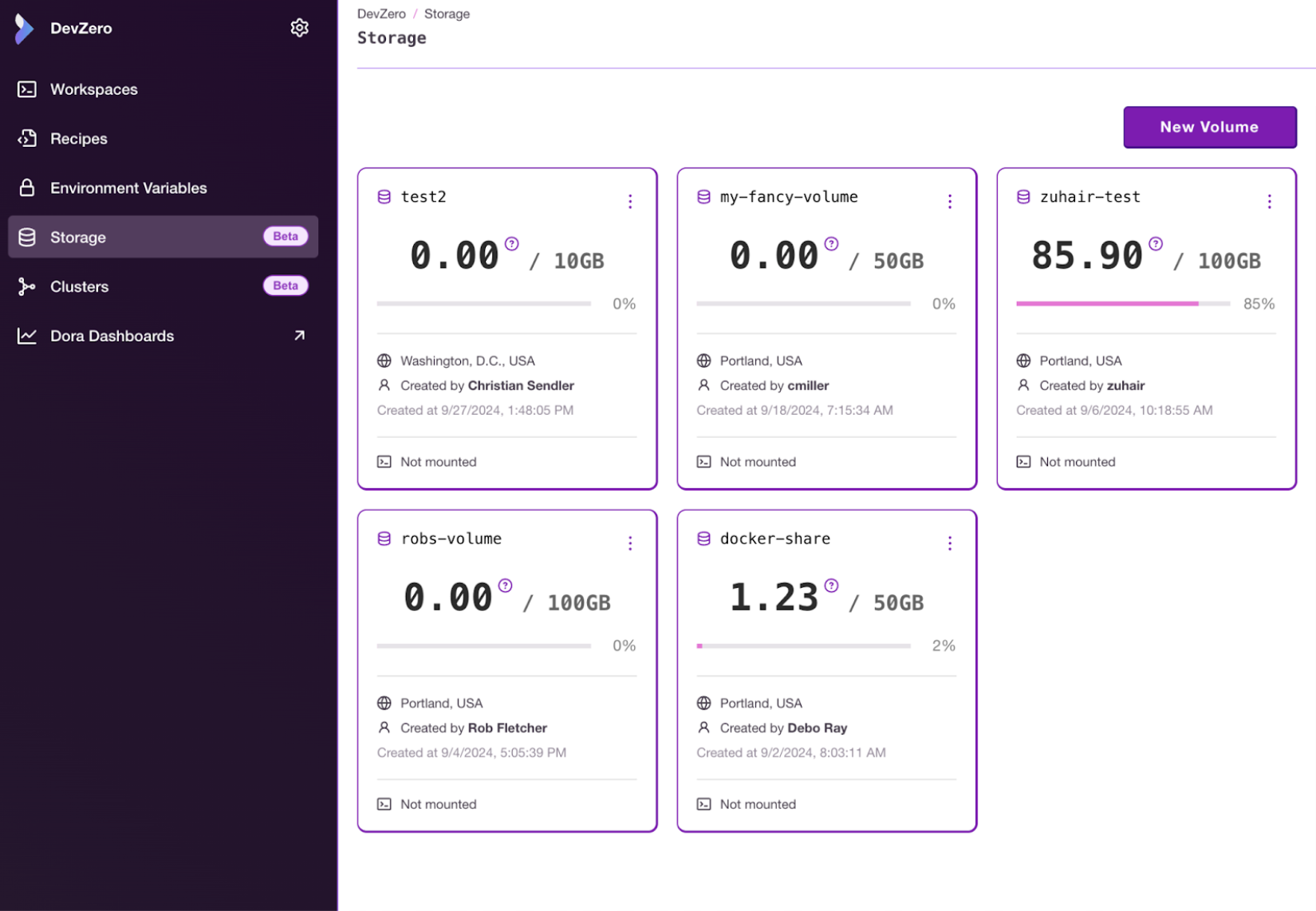
That was what changed management's mind. DevZero built an internal optimization system to make its developer environments economical. It profiled workload demand, matched applications to cheaper capacity and worked on checkpointing live processes so they could move without starting over. By 2025, the team had concluded that this infrastructure layer addressed a larger problem than the workspace product itself. Coding agents were also changing the original market: programmer productivity was improving quickly, while the cost of the compute behind AI was getting louder.
“The infrastructure tech we built to deliver our product proved more valuable than the original product.”Debo Ray, co-founder and CEO
In June 2026, after a quiet customer-validation period, DevZero formally launched its autonomous Kubernetes and AI optimization platform. This was not a logo swap over the same pitch. The buyer shifted from the developer waiting on a build to the platform engineer, SRE or FinOps leader staring at idle capacity and a production system nobody wants to disturb.
What the new machine actually does
The front door is deliberately unthreatening. A team can install a read-only operator, collect utilization and cost data, and inspect recommendations before giving DevZero permission to change anything. The company says installation takes less than 45 seconds and initial savings insights appear within 24 hours. There is also a local command that analyzes a cluster without signup or sending the scan away from the machine. In infrastructure sales, “look first, touch later” is not courtesy. It is the product adoption strategy.
Behind that door, DevZero works at several levels. Its profiler builds demand models for clusters, nodes and individual workloads. A scheduling layer compares thousands of instance types and price points across AWS, Azure, Google Cloud, Oracle Cloud, OpenShift and on-premises deployments. Workload policies adjust CPU and memory requests, while node automation provisions, consolidates and selects capacity. GPU features aim at idle accelerators and fragmented AI workloads. Cost dashboards break spending down by cluster, namespace, workload and team.
The technical differentiator is actuation without the usual restart ceremony. On newer Kubernetes versions, some CPU and memory changes can happen in place. When they cannot - because a workload must change quality-of-service class, needs a different node, uses a GPU or cannot fit where it is - DevZero says it can use CRIU checkpoint-restore to capture process state and live-migrate the workload. The ambition is to turn optimization from a quarterly recommendation deck into a continuous control loop.
selected cluster
UAT costs
30 days
pre-production
The reported outcomes are attention-grabbing but specific, not universal. DataBahn says one AWS cluster fell by roughly 75 percent and its Azure environments by about 60 percent. Fi Money reported a 67 percent reduction in a UAT cluster after finding workloads that requested far more than they used. Personality Pool began at 15 percent utilization and reported a 60 percent cloud-cost reduction after 30 days. OpenObserve consolidated seven environments and cut pre-production infrastructure spending by 42 percent.
Read the bars correctly: these are company-published customer results from particular clusters or environments. They are not a promised average. The starting point matters as much as the software.
The business model is pleasantly legible
DevZero has a free tier with unlimited clusters, resource and network monitoring, departmental cost attribution, governance, audit logs and 30 days of data retention. Pro costs $5 per CPU per month, billed monthly without an annual commitment. It adds workload and infrastructure optimization, live migration, spot-instance management, GPU optimization, forecast-driven scaling, alerts and 180-day retention. Enterprise pricing is custom and adds security scanning, SSO, chargeback exports, longer retention and custom support.
That per-CPU price is a useful choice. Some optimization vendors take a share of modeled savings, which requires everybody to agree on a counterfactual bill. DevZero charges against the optimized fleet. If it removes waste, the billable CPU base can shrink. Procurement is also available through AWS Marketplace, and the company runs a channel program for resellers, integrators and managed-platform operators.
Where it wins - and where it does not
The market is crowded. Kubecost made Kubernetes cost allocation familiar. CAST AI, ScaleOps, StormForge, PerfectScale, Spot by NetApp and Sedai approach optimization from different angles. A sophisticated team can also assemble vertical and horizontal pod autoscalers, KEDA, Karpenter, Prometheus and cloud billing tools. DevZero's argument is that visibility is a thermometer, while policy-controlled automation is the thermostat. Its sharper claim is that live migration makes the thermostat safe to leave on.
The product fits best where three conditions overlap: Kubernetes spending is material, utilization is poor or volatile, and the team has been too cautious or too busy to automate corrections. Stateful services, spiky SaaS traffic, multi-cloud estates and GPU-backed AI work create the sort of expensive slack DevZero wants to reclaim. The public customer stories share a revealing trait: they began with obvious structural waste - static requests, too many node pools, low utilization or duplicated non-production clusters.
It will not work the same magic everywhere. A small cluster with high utilization has little fat to cut. A company without Kubernetes is outside the core compute product, though the inference gateway is broader. Older Kubernetes versions and unusual runtimes can narrow in-place resizing options. Memory-limit decreases require care because an ordinary spike can trigger an out-of-memory kill. Security policies may prohibit third-party operators, and teams unwilling to grant write access will remain in recommendation mode. Even flawless rightsizing cannot repair an inefficient application, a bad data-transfer architecture or an expensive database license.
Turn internal pain into a four-step product test
- Measure the ugly economics. DevZero's pivot began with its own 50-percent-plus overprovisioning, not a trend report.
- Build the fix for yourself. Internal use exposed reliability constraints that a dashboard-only product could miss.
- Offer a read-only wedge. Let buyers see their waste before asking them to trust automation.
- Expand by proof. Apply policies cluster by cluster, preserve a human approval path, and publish outcomes with the starting conditions attached.
A second act with sharper stakes
DevZero remains a small, private company. LinkedIn shows roughly 25 employee profiles, and the last publicly detailed financing remains the $26 million announced in 2023. It has more to prove than its customer percentages: live migration must behave across messy production fleets; automated changes must earn lasting operator trust; and the new inference gateway places it in another busy market populated by observability, routing and model-management vendors.
Still, the pivot has an appealing honesty. DevZero did not discover Kubernetes waste in a spreadsheet prepared for investors. It paid the waste itself. The first product did not explode; its economics simply pointed toward a more urgent customer. That is a less cinematic failure than a shutdown and a more reusable one. Watch where your product leaks money. The patch may be the business.