On a clear morning over the Koonibba Test Range in South Australia, a capsule the size of a beer keg came screaming back through the atmosphere and settled into the outback dirt. Inside it: data, hardware, and the quiet proof of a thesis Will Bruey has been chasing for years - that the most interesting thing about gravity is what you can build without it.
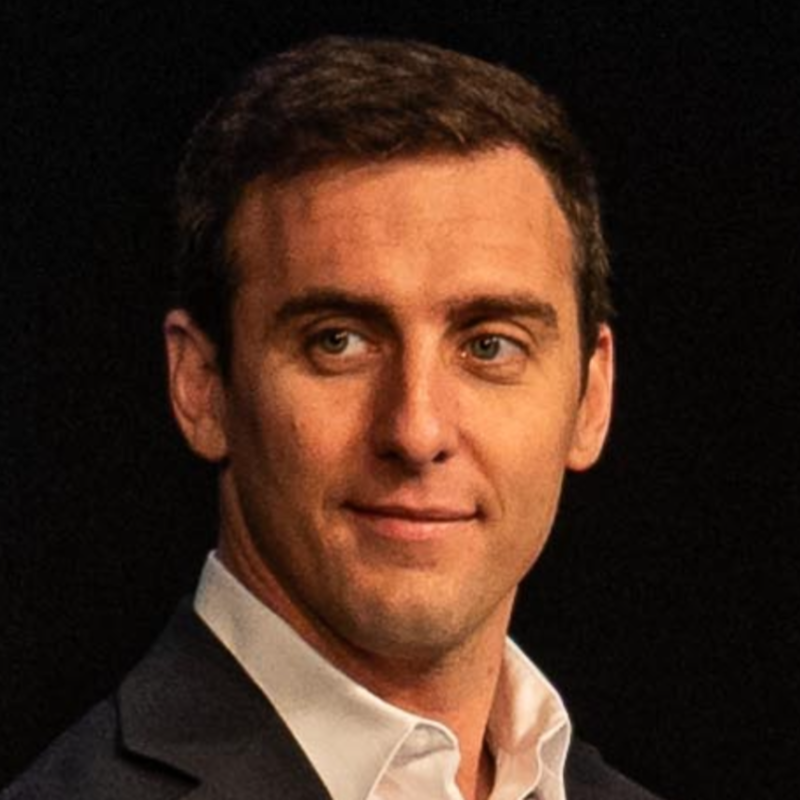
Bruey is the co-founder and chief executive of Varda Space Industries, a company that does something that still sounds like a pitch from a science fiction paperback: it manufactures pharmaceuticals in orbit, then flies them home. The first time Varda pulled it off, the cargo was crystals of ritonavir, an antiretroviral drug, grown in the strange stillness of microgravity. The capsule was called Winnebago-1. It came down on US soil in February 2024, and it made Varda the first company to manufacture a drug in space and bring it back to Earth.
That is the headline. Bruey is more interested in the part nobody tweets about. Ask him what makes Varda matter and he does not reach for the romance of the cosmos. He reaches for a spreadsheet word: cadence. "The key metric of success at Varda is cadence," he has said. "The more we fly, the more money we make." The dream is not a single heroic mission. The dream is a schedule.
We're building an armada, not a Death Star.
- Will BrueyThe factory leaves the ground
Varda's machines are autonomous. A capsule launches as a rideshare passenger on a SpaceX Falcon 9, processes its material in orbit with nobody aboard, then fires itself back through hypersonic reentry and lands under parachute. There are no astronauts, no fragile human schedules, no return tickets to negotiate. The W-series spacecraft - W-1 through W-6 and counting - are less spaceships than orbital appliances. By March 2026, the sixth had flown.
Why bother going to space to make medicine? Because some molecules behave differently when nothing is pulling them down. Crystals grow more uniformly. Particles settle differently, or refuse to settle at all. For certain drugs, the difference between a compound that works and one that does not can come down to its physical form - and microgravity is a manufacturing environment you simply cannot rent on the ground. Bruey's bet is that the long-term moat is not the rocket. It is the application layer - the drugs themselves - because microgravity, once you can reach it on a schedule, becomes a commodity.
Cadence is the strategy
Before Varda, eight rides on Dragon
Bruey did not arrive at this from the outside. He spent roughly six years at SpaceX, joining in June 2012 as a hardware development engineer on Falcon 9 and rising to lead avionics engineer across the Dragon 1 and Dragon 2 programs. He designed communication protocols for avionics, led the integration of the first Falcon cameras, and sat as the primary mission control operator for eight missions to the International Space Station. In 2014, NASA gave him an Achievement Award for the video system that lets operators see what they are doing during robotics work on the station - a deeply practical contribution from someone who clearly enjoys the unglamorous wiring behind the spectacle.
Then he did something unexpected. In 2018 he left aerospace for Wall Street, joining Merrill Lynch as a director in global equities technology in New York. It is a swerve that tells you something about how he thinks: the engineer who wanted to understand how capital and markets actually move, not just how to bolt a camera to a rocket. He had already co-founded the engineering consultancy Second Order Effects in 2016 with fellow SpaceX avionics engineer Dennis Fong, and in 2019 he co-founded Also Capital, a venture fund backing early-stage hardware companies. By the time Varda came together in late 2020, Bruey had been a builder, an operator, a financier, and an investor. He had seen the rocket from every seat.
The thing that makes Varda most unique is that we have flown vehicles.
- Will BrueyThe boy who built an airplane
The clearest window into Bruey is not on a resume. As a teenager, he started building a Cozy MK IV - a real, four-seat experimental aircraft - and kept at it for years. He holds a private pilot's license. He is a PADI-certified diver, which means he is comfortable going both up and down. At Cornell, where he earned a bachelor's in engineering physics in 2011 and a master's in systems engineering in 2012, he built a power controller for the campus synchrotron particle accelerator and worked on a satellite's data handling system. The pattern is consistent across two decades: he likes machines that have to actually work, in environments that do not forgive sloppiness.
He grew up in Lancaster, Pennsylvania, with a childhood ambition that should surprise no one: he wanted to be an astronaut. He never strapped into a NASA seat. Instead he built the company that sends the payloads - and gets them home. There is something fitting about that. The kid who wanted to go to space ended up running the logistics of space, which turns out to be the harder and more durable problem.
Making the impossible boring
The most counterintuitive thing about Bruey is his ambition for tedium. He has said, more or less, that he will know Varda has won when orbital manufacturing stops being a story and starts being infrastructure - when space feels as ordinary in daily economic life as the ocean does now. Cargo ships are not magic; they are just how things get from there to here. Bruey wants the same for the trip to orbit and back. "Boring" is the goal, because boring means routine, and routine means scale.
That framing reaches all the way to the patient. Varda signed a partnership with United Therapeutics, and Bruey has said he expects to fly that company's first drug around 2027. He frames adding space to a drug's development as a marginal cost: pharmaceutical timelines already run more than a decade from concept to market, so a detour to orbit is a rounding error if it produces a better molecule. The long-horizon goal he has voiced is blunt and human - get a drug manufactured in space into a human body before the decade is out.
In 2025, Varda raised a $187 million Series C from a roster including Founders Fund, Khosla Ventures, Lux Capital, and Also Capital, crossing into unicorn territory and moving its operations into El Segundo, California - the dense aerospace corridor where so much of American spaceflight quietly gets engineered. The capsules keep flying. The cadence keeps climbing. And Bruey keeps insisting, against every instinct of a frontier industry that loves its own mythology, that the future of space is supposed to look unremarkable.
It is a strange thing to root for - a man trying to drain the drama out of one of the most dramatic things humans do. But that is the tell. The people who change an industry are rarely selling the rocket. They are selling the schedule behind it.
In his own words
The key metric of success at Varda is cadence. The more we fly, the more money we make.
The thing that makes Varda most unique is that we have flown vehicles.
We're building an armada, not a Death Star.