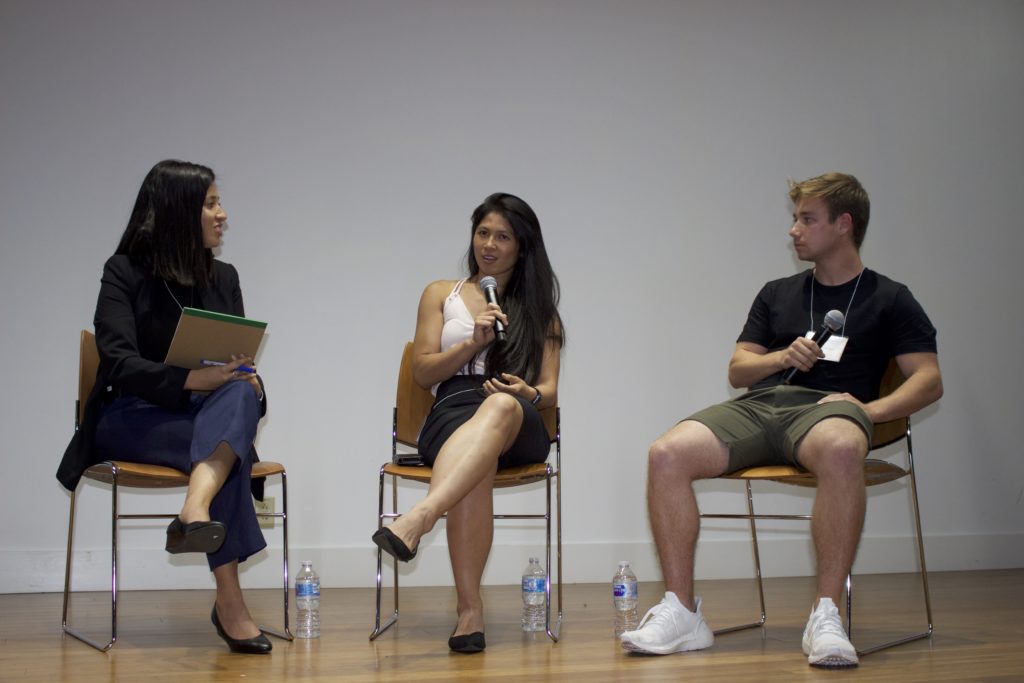
In the photograph, Matt Milford has a microphone, a black T-shirt and shorts. He is sitting beside two other panel participants at Berkeley, listening. It is 2019, and the former student has returned with a company behind him and something less easily displayed: experience managing people. The university can supply a room, an audience and a chair. What he has learned since leaving it requires a conversation.
Milford’s career is often introduced with the departure: he and Doug Hapeman left UC Berkeley to build Foresight. The dropout detail is convenient. It fits in a sentence and gives a biography a little cinematic speed. It also leaves out much of the education. Before leaving, he attended entrepreneurship programs. After leaving, he learned to run a team. Later came an operating reset and a different set of responsibilities, helping other founders.
The more interesting story follows the questions that kept changing as his work changed. Who should you build with? How do you manage people who have more years behind them? What happens when expansion outruns the machinery supporting it? Today, as the founder and CEO of Arche and an operating partner at Evio, Milford works close to those questions again.
The youngest person in the room
In the summer of 2016, Milford went to Nice for the European Innovation Academy through Berkeley’s Sutardja Center for Entrepreneurship & Technology. He later recalled being among the youngest participants. Other students were further along, already directing their attention toward internships and jobs after graduation. He was getting an early introduction to entrepreneurship while those alternatives were still some distance away.
That timing makes a modest but useful point. A person can begin learning how companies work before deciding exactly where a company will fit into a life. An entrepreneurship program offers contact with people who are trying to turn ideas into decisions. The calendar is shorter than a career; the questions arrive sooner.
Milford also participated in the Berkeley Method of Entrepreneurship Bootcamp and a challenge lab course. His early story therefore includes organized practice, alongside the familiar account of students deciding to start something. There were programs, peers and opportunities to try the work while still in college.
“The earlier you start the better.”
Matt Milford, at Berkeley, 2019
Starting early buys time to encounter what you do poorly. It also means that some lessons arrive before there is much professional experience to cushion them. An early start is an opportunity with homework attached.
A classmate becomes a co-founder
Milford and Hapeman met through computer science classes at Berkeley. Their friendship grew around shared coursework and discussions of problems they might tackle. Long study sessions in the campus library were part of those beginnings. Milford has also recalled the time they spent in front of a whiteboard.
A whiteboard is an obliging business partner. It accepts revisions without protest and never asks about payroll. A human collaborator has rather more to contribute. The consequential fact here is that the two students already had a working relationship before becoming co-founders. They had seen each other approach assignments, ask questions and keep working.
The venture’s predecessor, Genetic Foresight, dates to 2016. By October 2019, Milford and Hapeman had left university to build Foresight Mental Health. They would serve as co-CEOs, sharing the title at the top of the organization they had started together.

The college connection remained visible. Building the business had become their work, but Berkeley was still part of the account they gave of how they got there. The departure had changed their daily responsibilities without erasing the place or the partnership.
The job no syllabus could cover
On returning to the entrepreneurship bootcamp in 2019, Milford joined Mai Nguyen on a panel moderated by Danielle Vivo. He discussed an awkward transition familiar to young founders: becoming responsible for employees who may be considerably older than you. His technical education had prepared him for some work. Managing people required trial and error.
That distinction is easy to underestimate from outside a company. An assignment has a deadline and an answer someone can grade. A manager has to make expectations understood, decide when to intervene and work with people whose experience differs from his own. Authority arrives with the role; judgment takes longer.
There is a small, attributed glimpse of his early working style in a recommendation from Aidan Goltra, a former marketing and sales intern at Genetic Foresight. Goltra recalled opening shared documents on Monday mornings and finding that Milford and Hapeman had been working until three on Sunday night. He also described Milford’s patience as a manager and his critical thinking.
A document history is an unusually unglamorous place for an entrepreneurial anecdote. It contains no launch party and requires no dramatic soundtrack. It records work. Goltra’s recollection gives the early company a human scale: an intern arriving, files waiting, founders still making changes after the weekend should have ended.
Late hours alone cannot explain a company. The recommendation matters because it also describes how a young founder worked with someone learning under him. Effort and management sit beside each other in that account, as they must in an actual organization.
When growth sent the bill
By 2022, Foresight faced a much harder lesson in operations. Expenses had outpaced revenue. The company cut administrative positions, secured a new financing round and changed leadership. Greg Serrao became CEO in May; Milford and Hapeman moved into other executive roles reporting to him.
In an April staff email, Milford acknowledged the operating problem. His description was direct: “The speed of growth came at the expense of optimizing the overall business operations.” It is a sentence that belongs beside the expansion milestones, because both describe the company he helped build.
Administrative positions affected in two announced rounds of layoffs. A combined 200 roles, with the rounds announced in April and July.
The figures give the episode its weight. A restructuring reaches people whose work helped make expansion possible. A leadership change also alters the founders’ relationship to their own company. The title they once shared was now held by someone else.
The new CEO described the business as having been close to exhausting its cash. He reported revenue of just over $40 million for 2021. Revenue and available cash answer different questions, and this chapter makes the distinction tangible. Money earned over a year does not settle every bill arriving during it.
That is part of Milford’s operating experience. A fair account of his career includes the company’s scale and the decisions required when its costs became unsustainable. The reset complicates the attractive shorthand of a young founder leaving university and building quickly. It also makes the later work of advising founders a more substantial subject.
From building a team to backing one
In 2023, Milford partnered with Saki Georgiadis as Arche was launching. Georgiadis’s account describes Evio becoming Arche’s sole external backer, with priority access to deals. The arrangement connected a venture studio with an investor, and put Milford’s company-building experience into a new setting.
Georgiadis also describes the early group working on a founder assessment process, with Alex Auerbach involved. It is a telling subject for the next chapter. A studio and a fund must decide which people to spend time and resources with. Their decisions depend partly on the individuals who will carry an idea into working life.
- 2016Nice
Entrepreneurship program - 2019Berkeley
Founder returns as panelist - 2022Foresight
Operating reset - 2023Arche + Evio
Studio and investor partnership
Evio lists Milford as an operating partner responsible for deal and founder assessment, as well as mentoring founders after investment. The second responsibility makes the first more interesting. Assessment leads to a decision; mentoring continues after the decision, when the company has work to do.
The role brings practical experience into conversations where ambition is already plentiful. A founder can describe an intended organization. An operator has lived with an organization that needed hiring, coordination and money to keep moving. Those are different kinds of knowledge, and a young company has uses for both.
Arche’s venture studio model also extends the career beyond a single chief executive’s chair. Milford now leads an organization concerned with building new companies, while his Evio role includes helping their founders. The work reaches into more than one team’s decisions.
Experience gets another assignment
In March 2026, Zeal Capital Partners announced its investment in Third Space and identified Milford as part of the founding team alongside brothers Abhi and Akash Ghavalkar. Its account emphasized the operating experience he brought from taking Foresight through its financing stages.
The new connection is useful evidence of where his career has gone. He remains involved in company formation, while also holding roles in a studio and a venture firm. The Berkeley partnership was an early instance of working alongside other founders. It was followed by a larger organization, a difficult transition and new collaborations.
Look again at the panel photograph. There is no elaborate set, just chairs, microphones and people talking about what happened after university. The scene suits this story. Milford left campus to build, returned to discuss the work, and now has a job that includes helping others as they build. The location changes. The education keeps finding another room.
Continue the conversation
Profiles, interviews and the people behind the next chapter.