The Projectworks founders had a reasonable worry. Their consulting company, Provoke Solutions, had been bought by an American investment group. Inside it, they had been developing a software business after hours. Now they were going to meet Masood Tayebi, the investor whose firm had acquired their employer. The little venture had reached the awkward stage at which a promising idea can also look like an expensive distraction.
They went into the encounter wondering whether they would be “fired or funded,” as co-founder Matt Hayter later recalled. Tayebi was visiting Auckland. A weekend together brought questions, revisions and work on their business plan. Once the plan was finished, he wanted them to move faster. Finishing the homework brought a request for more speed. Entrepreneurs have paid tuition for less useful lessons.
That episode offers a way into Tayebi’s life in business. The founding partner and CEO of Bridgewest Group brings an engineer’s experience to the work of financing companies. The dates, titles and investments tell part of his story. A roomful of founders refining a plan tells another: he is willing to get involved in the machinery of a business, where a good idea must acquire customers, a team and a workable set of numbers.
Before the investment, the engineering
Tayebi trained in the United Kingdom, earning a master’s degree in electronics engineering at the University of Southampton and a doctorate in mobile radio propagation at the University of Liverpool. His speciality concerned the behaviour of radio signals. It was an education in a technology whose usefulness depends on reaching people wherever they happen to be.
By 1992 he was consulting for LCC/TSI, a provider of network design services and products. From 1993 to 1994, he served as its senior engineering manager and headed its technology and special projects department. In 1994, he and his brother Massih co-founded Wireless Facilities, Inc. Masood became president and a director; Massih was chief executive. The family relationship came with distinct responsibilities.
Their business belonged to the working side of the wireless expansion: the planning and engineering needed to make networks function. Wireless Facilities went public in 1999. Its later corporate identity became Kratos Defense & Security Solutions in 2007. The company’s changing name can obscure the original enterprise, which began with two brothers and the practical business of connecting people.
This background matters when considering Tayebi as an investor. An engineer running a services company encounters constraints that cannot be wished away by a persuasive presentation. Work has to arrive in the right sequence. People have to know what they are responsible for. A customer eventually expects the thing to work. These are ordinary requirements with an extraordinary capacity to spoil a lovely forecast.
co-founded
Bridgewest founded
venture launch
Four hundred projects, one picture
By April 2004, Tayebi was writing about what Wireless Facilities had learned as it grew. He described an early arrangement in which employees managed their respective pieces of a project. A 1998 acquisition of a project management company helped change the approach as customers increasingly sought turnkey services. The business needed a view of the whole undertaking.
The resulting system included a web tool covering roughly 400 projects, weekly reviews, monthly forecasts and sessions in which managers shared lessons. Tayebi’s account linked execution to time, cost and quality. It is an unusually concrete glimpse of his managerial interests: data that people can reach, knowledge that travels between teams, and performance that can be checked.
There is a useful connection here to the Projectworks encounter years later. The software founders were addressing the administrative problems of consulting businesses. Tayebi had already lived with the difficulty of coordinating professional work at scale. His response to their plan makes more sense against that experience. He could recognise the customer’s problem from inside the customer’s chair.
A software business hiding in a services business
Bridgewest’s 2019 acquisition of Provoke opened a new chapter in New Zealand. At the time, Tayebi said the group had spent between twelve and eighteen months looking for a software services business. Capability, culture and innovation all figured in the search. Provoke’s enterprise software work, including cloud computing and artificial intelligence, fitted that brief.
Projectworks had grown out of an internal tool for running a consulting firm. Its origins were modest in the useful sense: people doing the work had a recurring problem and built something to help. Billing, time recording and resources are hardly glamorous subjects. Yet a firm that sells its employees’ time has excellent reasons to care about all three.
The Auckland weekend became part of the company’s account of its beginnings. Hayter remembered repeated questions and revisions before Tayebi urged faster execution. Bridgewest went on to invest further. The encounter is interesting because it shows the transition from an acquisition to a relationship with another business taking shape inside it. Ownership created an occasion for attention.
The connection to Provoke has continued to evolve. In February 2026, Provoke named Ankit Gupta CEO for Asia Pacific. By then it was part of Ponteva, a multinational technology company formed through the merger of Provoke and Pontis Technology. The appointment concerned regional growth and AI services. For Tayebi’s wider investment group, the original New Zealand purchase had become part of a larger operating structure.
“great, now do it faster”
Masood Tayebi, as recalled by Projectworks co-founder Matt Hayter
The country that changed the calculation
Tayebi’s connection with New Zealand also has a personal dimension. He and Massih initially assessed possible locations outside the United States through political stability, legal institutions, banking and democratic values. New Zealand emerged from that comparison as a place where they could establish a presence. The first attraction was institutional reliability; meeting people gave the decision another meaning.
When explaining the choice in December 2025, Tayebi spoke about openness and honesty. He wanted to become “part of the fabric of the community.” That phrase is revealing because it describes participation rather than an address. His account joins a decision about jurisdiction to an intention to contribute through business experience and international connections.
The commitment developed over several years. Plans for a New Zealand venture investment operation were discussed from 2017 and firmed up at a 2019 executive retreat in Lake Tahoe hosted by the Tayebi brothers. Bridgewest Ventures began operations in early 2020, with an official launch set for April 1. The geographical distance was substantial; the planning was deliberate.
Today, the venture operation describes its work in terms of helping founders with strategy, recruitment, intellectual property and entry into international markets. These are specific forms of assistance. They address the stage when an invention has to become an organisation capable of selling, hiring and negotiating. A plane ticket can cross an ocean rather more easily than a young company can.
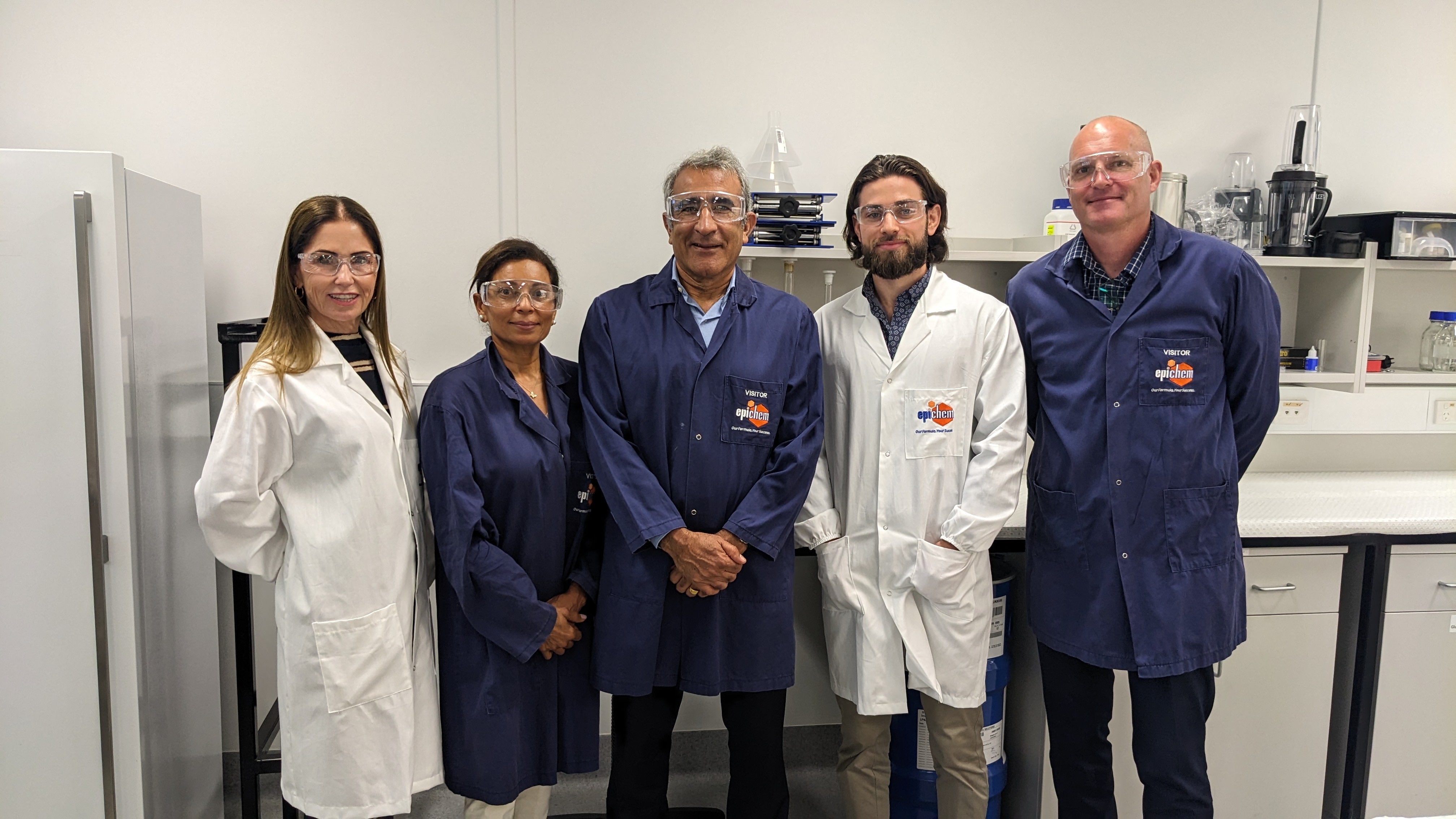
The infrastructure around the idea
Bridgewest was founded in 1999 and now combines private equity, venture activity, lending and real estate. The group reports more than $3 billion in private capital. Across those businesses, Tayebi’s job extends beyond selecting a promising technology. The group also maintains resources that portfolio companies can draw on while building their own operations.
In May 2024, it announced a Global Capability Center in India and appointed Laxman Settipalli to lead it. The purpose was to support worldwide operations through India’s talent pool. Tayebi singled out the combination of operational, technology and people management skills in the appointment. The emphasis was consistent with a business that expects ideas to need practical support.
In May 2025, Chandima Mendis became global head of fixed income and Evan Wilson global head of real estate. Those appointments show the breadth of the organisation around Tayebi. Finance and property sit alongside technology investments, with their own experienced managers. The structure makes the point more persuasively than a slogan: building companies takes several kinds of competence.
The portfolio’s technical work remains tangible. In December 2025, Endura Technologies introduced a voltage regulator designed for demanding AI and computing systems; Massih serves as its CEO and a board member. In July 2026, The TestMart launched Horizon for Microsoft Dynamics 365 validation, combining AI-assisted test creation with repeatable execution. These businesses work on the details beneath broad promises about technology. Someone still has to deliver power to the processor and check that the software behaves.
A larger circle, with the work still inside it
The New Zealand venture business entered 2026 with a new fundraising effort. In March, Bridgewest Venture Fund I reported NZ$55.3 million in first-close commitments from more than twenty investors. Bridgewest Ventures committed NZ$5.5 million as a limited partner on the same terms as the others. In May, the reported raise had reached approximately NZ$60.2 million.
A subsequent fund update, with figures dated August 15, reported $78.5 million in committed capital from 47 investors and capital deployed across 13 New Zealand companies. Those figures belong to the venture fund, rather than Tayebi personally. They show how a presence that began with the brothers’ assessment of a country has developed into an investment operation supported by a wider circle.
The NZD raise, then an August update
Away from company building, Tayebi and his wife Surinder founded the Lotus Children Foundation. Their charitable interests include education, housing, first responders and service member families. He also spends time advising entrepreneurs individually and speaking at events. His career has brought recognition including the Ernst & Young Entrepreneur of the Year Award and the Ellis Island Medal of Honor.
The awards mark milestones. The Auckland weekend supplies a more intimate measure of his involvement: founders arrived with an uncertain proposition and left with a plan that had survived questions. That is the part of Tayebi’s story that connects most clearly to the earlier engineer. Across networks, software and investments, coordination keeps returning as a practical concern. The next task is already waiting inside the achievement. There is usually more homework.
Keep the conversation going
- Bridgewest Group ↗
- Masood Tayebi on LinkedIn ↗
- Watch: why New Zealand? ↗
- The Projectworks weekend ↗
- Tayebi’s 2004 management essay ↗
- Bridgewest Ventures interview ↗
- Venture fund: March 2026 ↗
- Venture fund: May 2026 ↗
- Venture fund: August update ↗
- Bridgewest’s India operations ↗
- Leadership appointments ↗
- Provoke’s APAC appointment ↗
- Endura’s computing announcement ↗
- The TestMart’s Horizon launch ↗
- Wireless Facilities history ↗
- Bridgewest Ventures 2020 report ↗
- Perth visit photographs ↗