The person who helped Mark Vergnano become a chemical engineer had a useful credential that never appeared on a university business card: a hook shot. Vergnano encountered him playing lunchtime basketball at UConn, while his academic life was going rather less smoothly than his eventual résumé might suggest.
He had entered the university in liberal arts and sciences. Engineering interested him, but his early grades made transferring seem doubtful. One of the regular players was G. Michael Howard, an associate dean of engineering and a chemical engineering professor. Howard heard him out, then offered a proposition: take the engineering curriculum, earn a 3.5 GPA for the semester, and the transfer could follow.
There was a condition, a number and someone willing to give him a chance. The arrangement suited the engineer he would become. It also left him with a memory that makes his later career easier to understand. Before he ran a company, someone had looked past an unpromising start and considered what might happen next.
The associate dean with a hook shot
Vergnano was born in Hartford, Connecticut. He graduated from UConn in chemical engineering in 1980. Looking back, he described the small groups within a large university that made it feel personal: classmates who knew one another, study partners who became lasting friends, and a community in which a student could find his footing.
He also met Betsy Reddington at a football game. She would graduate from UConn in 1981; they would marry and raise two daughters. His university years supplied a profession, friendships and a family connection. For an institution ostensibly concerned with coursework, that is a fairly extensive service.
His gratitude toward Howard endured. So did his belief that engineering taught a way of approaching problems that remained useful far from a classroom. When he spoke about the degree years later, he emphasized logic and the habits required to get through difficult work.
“Engineering to me is a discipline about discipline.”
Mark Vergnano, 2017
The basketball story supplies the lucky opening. The academic condition supplies the less glamorous remainder: having been offered a chance, he still had to do the work. His later support for students carries both parts of that experience, the opening and the sustained effort afterward.
Thirty-five years before the first day
Vergnano joined DuPont in 1980 as a process engineer in the fibers business in Richmond, Virginia. His early assignments included manufacturing and technical work involving Kevlar and Tyvek. He earned an MBA through Virginia Commonwealth University while continuing his career. Engineering gave him a vocabulary for production; business study added another for the decisions around it.
The jobs broadened. He moved into marketing and business management, including an assignment in Geneva. There, carpet backings and industrial materials came with an education in the differences among European markets. He later recalled the period warmly, both for the family experience and for what it taught him about conducting business across countries.
Europe required attention to individual cultures. A regional label could disguise differences in how customers and colleagues worked. His account gives the international posting a practical texture: understanding a product was only part of understanding the business around it.
After returning to the United States in 1996, he continued through larger responsibilities. He led DuPont Nonwovens, then Surfaces and Building Innovations, then the Safety & Protection group. In October 2009, he became an executive vice president. The movement from process engineering to senior management took decades, with commercial and technical experience accumulating along the way.
Then, after 35 years inside DuPont, he took charge of a company leaving it. Chemours became independent in July 2015, with Vergnano as its founding president and CEO. A long corporate apprenticeship had delivered him to a peculiar first day: leading familiar businesses under a name the market was only beginning to learn.
DuPont
DuPont
Chemours
Johnson Controls
A new name, an old balance sheet
At launch, Chemours carried $4 billion in debt. Its titanium dioxide business was near the bottom of its cycle. The products had customers and histories; the independent leadership team had yet to establish its own record. Corporate independence arrived with obligations already attached.
Titanium dioxide, the white pigment used in many everyday materials, was central to the business. Fluorochemicals brought recognizable names such as Teflon and refrigerants. These were substantial operations, with factories and capital requirements. A change in stationery could hardly settle the questions facing them.
Vergnano’s response involved a transformation plan, portfolio decisions and cost reductions. In his 2017 account, he described selling three businesses, closing facilities and cutting roughly 15 percent of the workforce. Those decisions belong in any account of the early turnaround. The language of a fresh start was accompanied by employees losing jobs.
He also wanted a company that could make decisions more quickly and deal with customers more directly. The values he discussed included “collective entrepreneurship” and “refreshing simplicity.” The executive team was small, mixing DuPont experience with leaders recruited from outside.
There is something revealing in that combination. He knew what the inherited organization could do. He also wanted room for other habits. The practical test was whether the team could execute its plan and earn confidence over successive quarters, while the market cycle remained beyond its command.
His tenure as CEO ended in July 2021, when Mark Newman succeeded him. Vergnano moved to non-executive chairman and retired from that chair in April 2022. The six years at the operating helm had given his career its most visible chapter, though the next one was already taking shape back at UConn.
The opportunity after admission
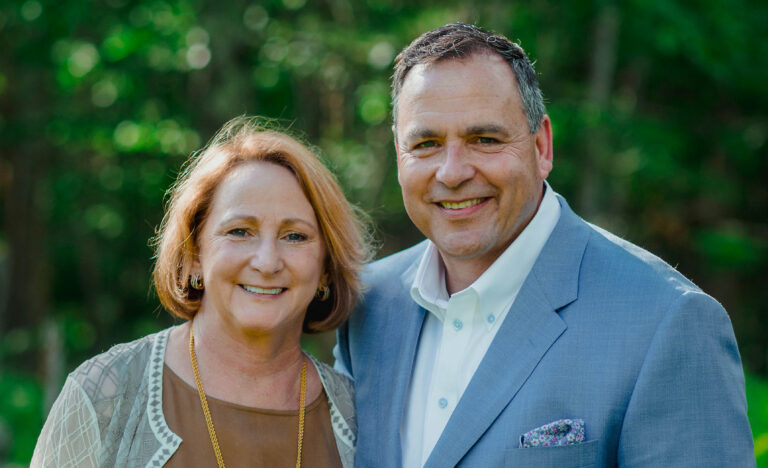
In 2021, Mark and Betsy donated $3 million to establish the Vergnano Institute for Inclusion at UConn Engineering. They gave another $3 million in 2024, supporting an endowed chair, institute programming and staff development. The gifts connected their university history with work intended to change other students’ experiences.
$6 million combined, from Mark and Betsy Vergnano
One useful example is Sophomore Summer, a program for students completing their first year. At that stage, enthusiasm can arrive before an internship offer does. The program gives students space to strengthen foundations, practice technical skills and work on projects before they have the experience employers often request.
Stephany Santos, the institute’s executive director and holder of the endowed chair, had herself participated in UConn’s BRIDGE program before her first undergraduate semester. Her connection to the work predates the title. Under her leadership, the institute’s activities include mentoring, scholarships and professional development, alongside outreach to younger students.
The distinction between arriving and staying matters. A student can receive an opportunity and still need guidance through unfamiliar courses, professional expectations and decisions about the future. The institute’s work gives those intermediate stages attention. In 2026, it adopted the name Vergnano Institute for Impact, extending the emphasis to what students eventually do with their education.
A scholarship with company
Vergnano’s education work also reaches beyond his alma mater. He was the founding chair of the Future of STEM Scholars Initiative, or FOSSI, established in 2020. The program supports students pursuing selected STEM degrees at historically Black colleges and universities.
Its model combines $40,000 scholarships with mentoring, leadership development, internship opportunities and corporate sponsors. The money addresses one barrier. The other elements help students make connections between studying a subject and finding a place to practice it.
By February 2023, FOSSI reported more than 60 organizations had pledged over $30 million in scholarship funding. It also announced Dow’s Jim Fitterling as incoming chair and Eastman’s Mark Costa as vice chair, with Vergnano supporting the transition as past chair. The coalition gave companies a direct role in developing the talent they hoped to employ.
Recognition followed his industrial and education work. He received AIChE’s AGILE Award in 2018 and the SCI Chemical Industry Medal in 2022. The awards mark different moments, but the education programs offer a more concrete way to understand his present interests: students, sponsors and the work of keeping them connected.
Back on campus, with a different question
He remains active in corporate governance. Vergnano became chairman of Johnson Controls following George Oliver’s July 31, 2025 retirement from the board. He also serves as an independent director of Waters. The work draws on the operating and financial experience accumulated through DuPont and Chemours. He had already served on Johnson Controls, Inc.’s board since 2011, before joining the merged Johnson Controls International board in 2016.
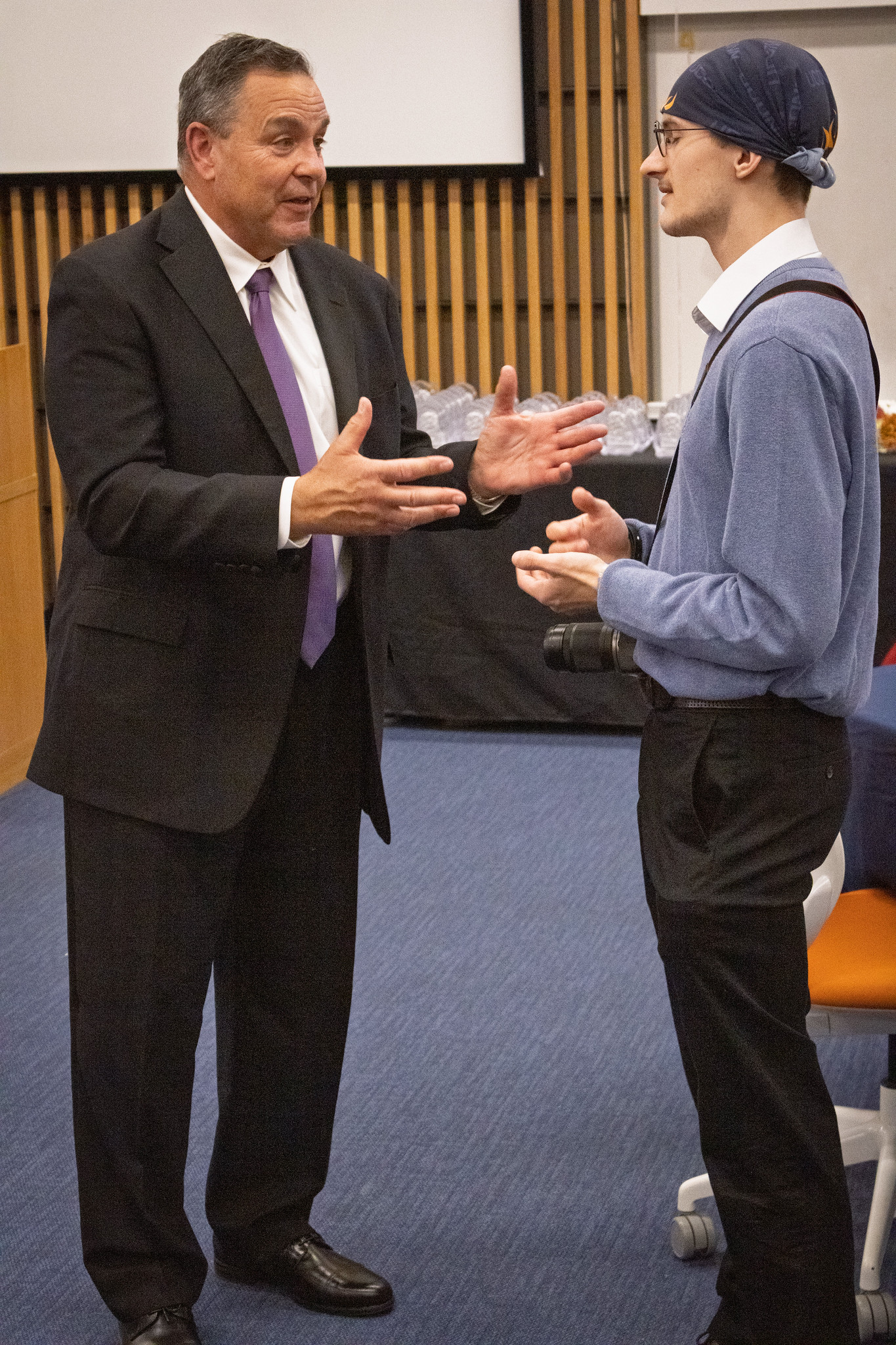
Yet the photograph from UConn’s April 2026 institute showcase catches a different setting: Vergnano talking with a student, hands open in conversation. There is no need to imagine what they said. The documented occasion is enough. The former executive was back among people preparing to begin.
In May 2026, his stated priority for the institute was greater participation by students and sponsors. He wanted students to use leadership opportunities and companies to take an active part in shaping the talent coming through. His interest extended from helping students succeed to the contributions they would make in their own careers.
“I really want to see active involvement.”
Mark Vergnano, 2026
That is a longer view of a second chance. Howard’s offer had once been specific to a young student on a basketball court. Vergnano and Betsy have put resources behind programs that can support many students, across more stages of their education. A fortunate encounter has become something with staff, scholarships and a summer schedule. Even serendipity, it seems, can benefit from a little administration.