The California brand that turned one lost vintage T-shirt into a science of "absurdly soft" - and a Certified B Corp business.
It started with something small enough to fit in a laundry basket. Mike Natenshon had moved from Maine to San Francisco, homesick for a California he'd first seen in the surf film Endless Summer. Then his girlfriend accidentally threw out his favorite vintage T-shirt. He spent nearly a year trying to recreate the exact worn-in softness of that shirt.
That single-minded pursuit, launched in 2009 with co-founder Adam Lynch, is Marine Layer. The two began by selling tees - some from a 1969 Volkswagen bus - and building fabrics that felt lived-in from the first wear. Fifteen years on, Marine Layer is a direct-to-consumer apparel company with 55-plus retail stores, an estimated $67-73 million in annual revenue, roughly 300 employees, and a Certified B Corporation stamp that ties its comfort-first product to a genuine environmental program.
What Marine Layer makes is deceptively simple: soft, casual, vintage-inspired basics for men and women - tees, shirts, sweaters, sweatshirts, outerwear, denim, dresses, loungewear and accessories. What sets it apart is less the silhouette than the substance. The brand has developed more than 40 proprietary fabrics in-house, most built around MicroModal, a fiber spun from beechwood pulp that uses roughly 20 times less water than cotton and drapes softer than it.
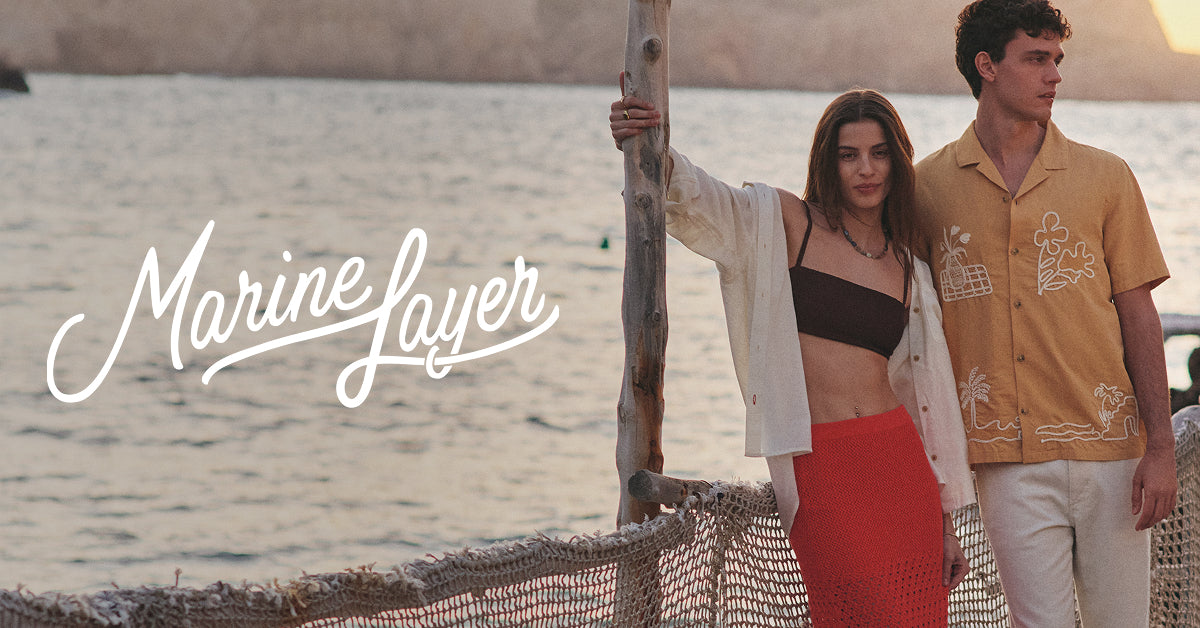
We make absurdly soft clothes that are good for people and the planet.- Marine Layer, brand mission
Marine Layer's customer is a style-aware adult who wants everyday clothing that feels good and lasts - and who is increasingly uneasy about where fast fashion ends up. These are shoppers willing to pay above mass-market prices for comfort they can feel, sold both online and in physical stores where the fabric can be touched before it's bought.
The problem Marine Layer set out to solve is ordinary and universal: most casual basics either feel great and fall apart, or last but never soften. By developing fabrics in-house rather than buying off-the-shelf textiles, the brand engineers softness and durability into the same garment. The second problem it took on - textile waste - is bigger than any one closet, and it answered that with a recycling program built directly into the business.
Signature blend, made in California.
Colored by blending shirts - no dye water used.
MicroModal is the quiet workhorse. Because it comes from beechwood pulp and uses roughly a twentieth of the water cotton demands, it lets Marine Layer chase softness and a lighter footprint at the same time. The company has spun that single fiber into more than 40 custom fabrics.
The flagship shirt in a 50% Supima cotton / 50% MicroModal blend - the garment that started it all, made in California.
Vintage-inspired shirts, sweaters, sweatshirts, outerwear, pants, denim, dresses, matching sets, loungewear and accessories.
Textile take-back and recycling - return used clothing for credit; fibers become new recycled garments with no dye water.
40+ custom fabrics developed in-house around MicroModal, Supima cotton and recycled fibers - the brand's core moat.
Marine Layer sits in the premium-casual, California-lifestyle segment of apparel, alongside brands like Faherty, Vuori, Buck Mason, Outerknown and Everlane. Its differentiation runs on three tracks: in-house fabric development that rivals can't simply copy, a sustainability program woven into operations rather than bolted on for marketing, and a deliberate omnichannel bet on physical stores at a moment when much of retail has fled online.
While many DTC peers stayed digital-first, Marine Layer kept opening stores - reaching about 55 locations by 2025 with plans for roughly six new ones a year. The payoff has shown up in the numbers: reported ~25% year-over-year growth and ~15% comparable-store sales growth. In a business where the product's whole promise is how it feels, letting people touch the fabric turns out to be a strategy, not a nostalgia.
Comfort is not a discount you'll forget - it's a feeling you buy again.- The brand's premium-basics thesis, in short
Mike Natenshon and Adam Lynch launch the brand in San Francisco, obsessed with recreating a lost vintage tee.
The T-shirt line debuts with a proprietary Supima cotton and MicroModal blend, sold in part from a 1969 VW bus.
A first-of-its-kind apparel recycling program turns old tees into new ones.
The company earns B Corporation certification, formalizing its environmental and social commitments.
Re-Spun scales into a full textile take-back system accepting any clothing for reward credit.
The brand reaches roughly 55 locations with ~25% growth and plans for about six new stores per year.
Absurdly soft, California-inspired casual clothing built on proprietary fabrics like a Supima cotton and MicroModal blend, plus a strong sustainability program.
Mike Natenshon and Adam Lynch founded it in San Francisco in 2009, inspired by Natenshon's quest to recreate a favorite lost vintage T-shirt.
A textile take-back initiative where customers mail in used clothing for store credit; the recovered fibers are recycled into new Re-Spun garments made without dye water.
Yes. Marine Layer became a Certified B Corporation in 2022 and uses recycled fibers, beechwood-derived MicroModal, and a clothing take-back program.
Through its website at marinelayer.com and at 55+ retail stores across the United States, plus corporate and custom apparel channels.