A startup map can tell you more about a place than a skyline. In April 2025, Marin Sonoma Impact Ventures published one covering Marin and Sonoma counties. It plotted 100 startups and 15 shared working spaces. Some companies occupied offices. Others worked from garages, backyard sheds, and coffee shops. The dots were approximate. The ambition was specific: make the North Bay’s scattered entrepreneurs visible to one another.
- MSIV backs early-stage companies building in Marin and Sonoma.
- Its founder network extends beyond the companies it funds.
- The practical offer: capital, experienced mentors, and useful local introductions.
The map captures the firm’s central idea. A region can contain plenty of money and experience while leaving its founders poorly connected. Put those people into repeated contact, MSIV’s approach suggests, and a neighborhood might become a useful place to build a company. That proposition is now being tested with real investment capital.
A map with backyard sheds
Zachary Kushel founded MSIV in April 2020, at the start of the pandemic. His background crossed institutions that rarely appear together in a small venture firm’s origin story: Citi, the U.S. Senate, Cisco, Glassdoor, and pharmacy-benefits startup SmithRx. At Mill Valley’s Glassdoor, he led business development. He had seen a substantial technology business operate in the North Bay.
His career helps explain the choice of problem. MSIV addresses the connections around a company: who can advise it, who might invest, and who can open a door. Kushel’s stated aim is regional economic development through startups. In that view, where a business hires and grows matters alongside what it sells.
The check has company
MSIV operates two connected arms. Its venture funds invest in early-stage businesses. Its community operation brings founders together through networking, mentorship, and skill-building. The distinction matters. A founder can seek peers and guidance through the network; receiving a venture investment requires a separate selection process.
The Founder Network page lists more than 200 active participants. Alongside it, the Executive Network recruits experienced operators who volunteer to mentor founders and assist the fund’s portfolio support and operations. The program describes a collective commitment of nearly 1,000 service hours annually. Someone who has hired a sales team or handled a difficult board meeting may be more useful than another inspirational panel.
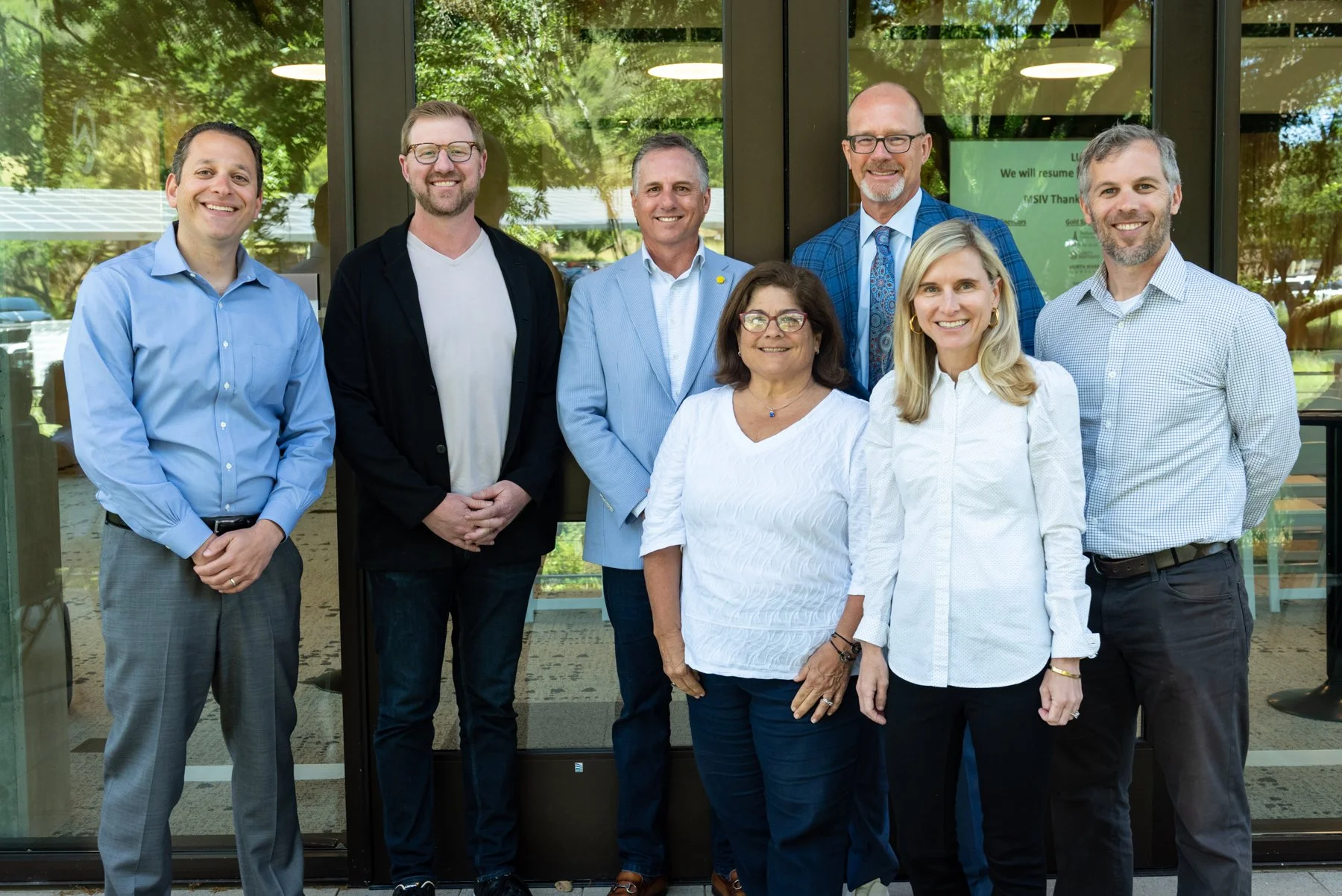
There is an operating team behind the gatherings. VP Community Elizabeth Murphy brings sales and partner-marketing experience. Startup Advisor in Residence Mike Lewis has founded and exited three companies. Their roles make MSIV’s proposition concrete: capital arrives with access to people who have done some of the work before.
One address, many markets
Look through the portfolio and the sector boundaries disappear quickly. Jump Aero is developing electric aircraft for emergency response. Finalis builds technology for dealmaking. Fire Aside helps communities adapt to wildfire. The shared constraint is geography: MSIV says it backs companies growing a physical presence across Marin and Sonoma.
That gives it a different organizing principle from a fund devoted to one technology. A local company can address an international market. Equally, a nearby business still has to make sense as a venture investment. In a 2024 interview, Kushel described looking for an existing product, customers, and revenue, with a seed investment around $350,000. That dated description is a useful guide to the approach, rather than a universal current offer.
“It’s team, market and traction.”
Zachary Kushel, NorthBay biz, September 2024
Consider Lumo, the Santa Rosa irrigation startup. Co-founder Devon Wright told MSIV that he accidentally ran his own well dry while watering a small orchard. He initially assumed commercial growers already had the equipment he needed. Following growers around their properties changed his understanding: irrigation involved a difficult measurement problem. Lumo’s smart valves combine flow meters, automation, and remote monitoring. Sonoma supplied both the problem and people willing to help test a solution.
A customer beats a business card
The clearest account of MSIV’s usefulness comes from Stackpack founder Sara Wyman. In the firm’s May 2025 interview, she said its investment led straight to a customer introduction. That contact became an important partner and reference customer. She also described portfolio CEO dinners where neighboring founders shared fundraising help and marketing strategies.
It is a modest example with practical weight. A reference customer gives a young company something another reception cannot: evidence for the next sales conversation. The lesson another community could copy is to judge networking by the work it enables. Introductions have consequences; attendance counts capture only the gathering.
The money comes back around
The October 2026 fund announcement adds scale to the experiment. Fund II closed above $11 million, taking assets under management beyond $17.7 million. MSIV reported 22 startups backed. Those figures describe investment activity and managed capital. They do not establish revenue, investment returns, or how many permanent jobs the effort has produced.
Capital raised by the funds. Fund II shown at its reported lower bound.
Redwood Credit Union Community Fund committed $1 million to the second vehicle. That is an institutional expression of the local thesis. A separate milestone arrived in February 2026, when Practicing Excellence acquired portfolio company Sageful AI. MSIV says it was Sageful’s first backer and led its initial capitalization. An acquisition is a concrete event; the announcement alone cannot tell a reader the fund’s return.
Start with the room
For founders, the entry points are straightforward: the portfolio page links to an investment-consideration form, and the Founder Network has a participation form. Experienced executives can explore mentorship. The annual North Bay NEXT conference offers another view of the community, with recorded founder interviews and startup presentations available afterward.
The model depends on willing investors, capable volunteers, and founders building suitable businesses locally. A postal address cannot manufacture customer demand. But a region can make useful people easier to find. MSIV’s most transferable move is the one its startup map made visible: locate the people already building, then give them reasons to meet again.