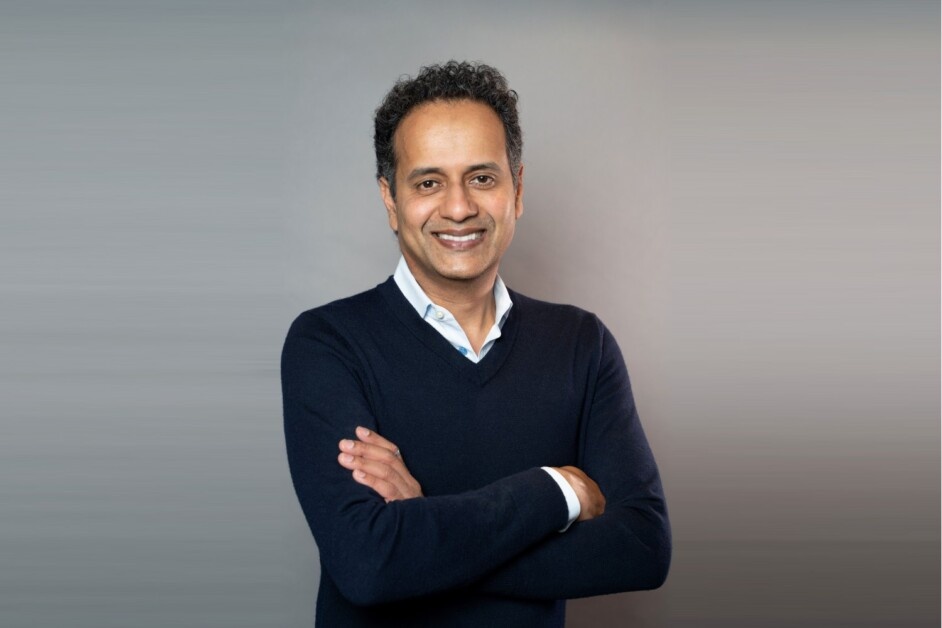
At eighteen, Ven Raju wanted to be a lawyer. He liked the idea of speaking up for the underdog, although he later admitted that he had little understanding of the actual job. His working life took him into investment instead. The underdog remained. It now arrived with a company to build, a product to test, and the familiar inconvenience of needing money before anyone was quite convinced.
“I think of the entrepreneur as the quintessential underdog,” he said in 2021. That description offers a useful entrance to Raju’s career. He has spent years evaluating companies, arranging investments, and helping businesses grow. He also talks about the entrepreneur’s position in the contest: short of resources, dependent on persistence, trying to persuade people who have plenty of other places to put their attention.
Today, as president and CEO of Pittsburgh’s Innovation Works, he works where those interests meet. The organization backs young technology companies and helps them with the practical business of getting started. Raju’s assignment includes investment, but it also includes the conditions around an investment. A founder needs a customer. A hardware team needs somewhere to make its next version. A region needs enough opportunities for its talent to stay.
The long way to a local brief
Raju grew up outside Atlanta and went north to study engineering at George Washington University. His education later included Oxford and the University of Pennsylvania, where he earned an MBA at Wharton and a master’s degree in systems engineering. Those subjects sit comfortably together in his present work: understanding the technology, then asking what sort of business can be built around it.
His early professional experience included strategy consulting on mergers and acquisitions. Investment took him through Choate Capital and Chestnut Street Ventures. At Choate, a European expansion became a substantial personal assignment. He led the London office and spent seven years building its European growth-equity practice, which was subsequently sold to a British investment management firm.
That chapter gave him experience of building an investment operation, rather than simply joining one. His public career biography also credits him with helping companies including Domo, Bloom Energy, Freshly, and Relayr reach public or strategic exits. By the time Pittsburgh entered the picture, he had worked with businesses at several stages and across several markets. The local brief came with a considerably wider map in his head.
Fifteen months, then the top job
He joined Innovation Works as chief investment officer in July 2021, also becoming managing director of Riverfront Ventures. In October 2022, he succeeded Rich Lunak as president and CEO. A national search had brought more than 130 applicants into consideration. Raju had entered the organization to make investment decisions; a little over a year later, he was responsible for leading it.
“I decided to throw my hat in the ring and see where the process goes,” he recalled. It is a pleasingly modest description of a consequential career turn. His candidacy combined outside investment experience with recent knowledge of the organization. Working under Lunak had given him a view of the job and of the initiatives already underway.
At his appointment, Raju pointed to Pittsburgh’s research institutions, technical talent, and interconnected companies as reasons for its progress. He also identified inclusion as an operating priority. He said that 60 percent of Innovation Works’ portfolio companies had founders or leaders who were women and/or minorities. That was a description of the portfolio at the time, rather than a claim about the whole venture industry.
The distinction matters to his brief. Innovation Works serves Southwestern Pennsylvania within the Ben Franklin Technology Partners network. Its responsibilities include helping companies develop and supporting regional economic growth. A promising investment and a useful local employer can be the same company, but those two outcomes ask the investor to pay attention to different things.
“I think of the entrepreneur as the quintessential underdog.”
Ven Raju, December 2021
The unglamorous question: who will buy it?
Raju’s sympathy for founders comes with a practical test. In his January 2026 discussion of AI and robotics, he emphasized a defined need, a customer who receives value, and a business model that can endure. Pilots and early revenue can provide evidence. A team’s experience matters, as does its ability to carry an idea into execution and adapt as it learns.
“Avoiding overexuberance and focusing on fundamentals is key,” he said. There is a small comedy in an AI investment conversation returning to the old question of whether anybody wants the thing. But that question has acquired no expiration date. A sophisticated product still has to enter someone’s working day, improve it enough to justify adoption, and support the company supplying it.
This is where advocacy becomes demanding. Helping an entrepreneur can mean creating the opportunity for an uncomfortable discovery: the customer’s problem is different, the buyer is elsewhere, or the proposed use case needs revision. Money buys some time to learn. Experienced advice can help make that time count. In Raju’s account, technical ambition and business discipline have to travel together.
- 01Customer needWho has the problem?
- 02Working productCan the team deliver?
- 03Market evidenceWhat does a pilot show?
- 04Room to growCan this become a business?
Editorial synthesis of Raju’s published investment criteria, not a formal scoring model.
A robot cannot live in a slide deck
For a robotics founder, the distance between a good explanation and a working product includes equipment, parts, fabrication, and repeated testing. The Robotics Factory gives Raju’s argument for practical support a physical address. Its Lawrenceville location was selected with operational requirements and budget in mind, and its work includes prototyping, supply chains, and designing products with manufacturing considered early.
The Accelerate program’s second-cohort announcement in January 2024 offered selected companies up to $100,000 and a six-month engagement. Companies could work in its shared space and access a production-grade prototype shop, alongside coaching and connections. Funding and facilities address related constraints. Buying time is useful; having somewhere to use it productively is useful too.
Aquatonomy, from the inaugural cohort, provides a concrete example. The underwater robotics team conducted customer interviews, visited sites, and researched its market while building and testing hardware and software. Its product demonstration collected information from a lake floor. The story is recognizably about engineering, but the customer work runs through it. Finding out what to build belongs beside learning how to build it.
Raju has also discussed agricultural applications of robotics, including pressures from labor, energy, water, and growing demand for food. The attraction is a job that needs doing. An automation proposal becomes more intelligible when attached to a grower’s constraints or a factory’s actual workflow. The technology gets a task; the founder gets a much more useful conversation.
Billions arriving, a thin pool close to home
The regional capital question has stayed with Raju since his arrival. In 2021, he identified increasing locally available capital as a particular concern. By March 2026, Pittsburgh’s investment picture illustrated why the distinction deserves attention: substantial money was reaching companies, while the estimated supply of uncommitted local venture capital had fallen to a ten-year low.
Raised by 124 regional companies in 2025
Estimated uncommitted local venture capital in the March 2026 report
Different measures: annual company funding and available local fund capital. They are not shares of the same total.
A company ready for a large round and a founder seeking early support are asking different questions of the market. A region can succeed at attracting outside investment while still needing more money available to make local early bets. The two figures above should never be treated as a simple pie chart. They describe different pools, at different points in the company-building process.
The March report placed Pittsburgh seventh nationally for AI and autonomous-vehicle venture funding per capita in 2025. Raju’s comments connected that progress to decades of research and talent development, while stressing commercial outcomes and returns. Recognition has a practical consequence in this account: it should help companies earn the next opportunity. A reputation eventually needs results to keep it company.
The people a company leaves behind
The organization’s 2024 community report recorded support for 116 companies. Its surveyed portfolio companies commercialized 66 products and received 64 patents. These are institutional figures, accumulated through founders, staff, investors, and partners. They help explain the scale of the operation Raju leads without turning the output of many people into one executive’s personal tally.
The longer-term ambition involves people as much as products. Innovation Works’ September 2026 portfolio commentary described a regional cycle in which experienced employees become founders and successful entrepreneurs become mentors or investors. One company can leave expertise behind for the next. Raju was again part of that public conversation in September, opening Venture Expo and appearing on the listed AI & Robotics Venture Day panel at Carnegie Mellon.
Teaching supplies a personal connection to that circulation of experience. His background includes adjunct teaching at Drexel and guest lecturing at Wharton. He has also described mentoring and interviewing for his alma mater. An investment career gives someone lessons acquired at considerable expense; a classroom offers a way for other people to encounter them before receiving the bill.
Saturday has a different investment committee
There is room in this story for a smaller scale. Asked about an average Saturday in 2021, Raju said he spent it with his two daughters. “They drive the Saturday agenda.” The London years had included European travel with his wife, Carolyn. A later portrait found him closer to home, enjoying tennis, biographies, and Pittsburgh’s restaurants.
Those details bring an international investment career back to ordinary proportions. A city is also somewhere to eat, raise a family, and find a tennis court. For Raju, Pittsburgh has become the place where those personal routines sit alongside a professional argument about keeping opportunity within reach of local entrepreneurs.
The eighteen-year-old’s interest in advocacy has acquired an investor’s vocabulary and an operator’s list of tasks. Capital. Customers. Equipment. Experienced people. Each can remove a particular obstacle in a founder’s path. The underdog still has to make the business work. Raju’s chosen role is to help give that attempt somewhere to begin.