Consider the career move that usually ends a relationship: leaving your employer. At Bain & Company, it can begin a different one. A former consultant builds a business, approaches investors and finds the old firm on the other side of the table. Future Back Ventures, launched in 2023, gives that reunion a financial structure. Its wager is that people who once shared an employer can become useful partners years after their company email addresses expire.
- The offer: startup capital plus access to Bain’s people and resources.
- The focus: primarily alumni-led companies, across sectors and countries.
- The role: usually a co-investor alongside a separate lead fund.
01 The return trip
The person leading the fund has made the trip herself. Ann Scott-Plante worked at Bain in New York, left for business school and co-founded Wello, a fitness technology company. She ran engineering, product and operations as co-CEO, helped raise capital and subsequently spent four years at Weight Watchers after it acquired the business.
That sequence matters. An investor offering help to founders is making a claim about understanding their work. Scott-Plante has had responsibility for the product as well as the pitch. Her later work included advising startups and companies such as Fitbit and Samsung Next before returning to Bain to lead Future Back.

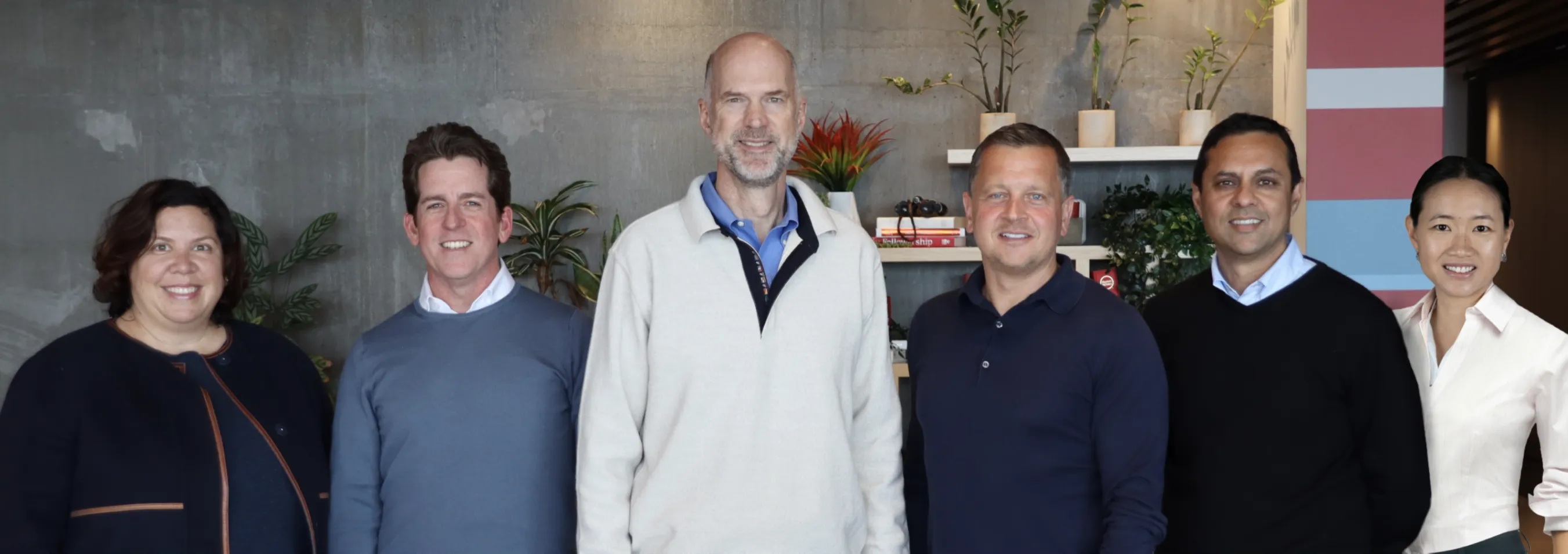
There is institutional memory here, too. Investment committee chair Miles Cook championed the fund’s launch after years of backing and advising entrepreneurs. Principal Cameron Ramsay previously built businesses inside Bain. The proposition brings together people who have tried entrepreneurship from several directions.
02 An address book with an operating system
Plenty of investors promise a network. The useful question is how a founder gets something done with it. Future Back’s resource page offers a concrete starting point: an externship guide for short-term hiring, an alumni job board, founder communities and access to Bain’s intellectual property resources.
Its broader team includes Bain partners acting as investors, advisers and connectors. The intended benefit is relevance: someone who understands a market, knows an industry contact or can help a team think through an operating problem. A founder needs a person who can answer a particular question. A directory alone cannot supply that answer.
Illustration of the stated model. Support is tailored to the company.
The fund’s FAQ makes its position in a financing round clear. Another venture firm typically leads; Future Back participates. First checks usually range from pre-seed through Series B. For a founder, the practical distinction is consequential: this can be a complementary investor while the search for a lead remains a separate job.
Its invitation also arrives earlier than a term sheet. The same FAQ welcomes conversations before fundraising, even while a founder is developing an idea. It allows selected investments beyond Bain alumni when the firm can contribute meaningfully. Those provisions make the relationship worth understanding before a financing deadline. Founders can use an early conversation to test relevance: does this investor understand the business, and is there a practical reason to keep talking? Alumni status starts a discussion; it does not finish the assessment.
03 The cookie dough test
In April 2024, Bain announced the fund’s first five investments: Vendelux, Common Sense Privacy, Duckbill, HIVED and Qube. Three were AI-focused. Event marketing, privacy, personal assistance, parcel delivery and emissions monitoring made an eclectic opening list.
“When I’m connected to Bain, good things happen.”Alex Reynolds, Vendelux CEO · April 2024
Then came the freezer aisle. In November 2025, Doughlicious announced an investment from Future Back, its first in consumer packaged goods. The London brand makes cookie dough and gelato treats. Its CFO and co-founder, Dan Bricken, is a Bain alumnus. The capital would support US and international expansion.
The deal makes the strategy easier to understand. An alumni connection can span completely different markets. Cookie dough belongs beside software because the fund’s organizing principle includes who is building the business. The portfolio also lists health-plan administrator Yuzu Health, autonomous vehicle developer AeroVect and revenue automation company Zenskar.
Total syndicate rounds. These figures are not FBV’s individual checks or fund size.
The international reach is tangible. HIVED’s July 2025 financing supported expansion of its electric UK parcel network. In April 2026, Future Back joined Clarasight’s financing for enterprise travel and expense software. These are different operating problems, each with a use for industry knowledge.
04 The next chapter is in a job posting
A revealing update appears in Bain’s current managing-partner vacancy. It says the first fund launched in 2023 and a follow-on fund was raised in 2026. Funding to date came from Bain itself and personal commitments by partners and other senior leaders.
The posting also describes plans for a third fund admitting external limited partners. That is an ambition, rather than a completed fundraising announcement. It points toward a broader capital base and a more substantial investment operation. The same description says the significant majority of deals and deployed capital are at seed and Series A.
This is an investment business, with a responsibility to generate returns for its capital providers. Alumni engagement sits alongside that financial purpose. In the market, Future Back can be both an alternative to other early-stage investors and a participant beside them. Its case to founders rests on the usefulness of Bain access; its case to investors must ultimately rest on company outcomes. A familiar background may help people find one another. The operating work begins once they have met.
05 Ask for Tuesday’s help
For founders considering Future Back, the useful exercise is specific: identify the task, then ask how the proposed support would reach it. A pricing question needs relevant expertise. A hiring problem needs access to candidates. An introduction needs someone willing to make it. This is an editorial test of the proposition, rather than a promise that every request will be filled.
The fit has boundaries. Teams outside the alumni community enter through a selective exception. A company seeking its lead investor must account for the usual co-investment role. And an excellent network cannot settle whether customers want the product.
Readers can borrow the underlying discipline without a Bain connection: evaluate an investor’s network by the work it can help accomplish. The interesting conversation starts with what needs doing on Tuesday.