In 2019, venture investor Todd Graham sat down with three founders at an airport hotel restaurant in San Mateo. They were building Evisort, software that could read contracts and pull out the obligations buried inside them. Graham later remembered the food as subpar. The company looked considerably more appetizing: lawyers and procurement teams were drowning in documents, and Microsoft had spent years helping businesses store those documents in SharePoint. Here was a startup that might make the contents useful.
- M12 buys equity in early-stage technology companies.
- Its distinctive offer is help reaching Microsoft's people, products and enterprise customers.
- The useful question for founders: which specific business obstacle can that relationship remove?
That dinner captures the proposition behind M12, Microsoft's Venture Fund. A startup brings a product. Microsoft brings an enormous installed base and the people who understand how it works. M12 tries to arrange a productive meeting between the two. The check pays for building the company; the relationship can help it find somewhere to sell.
01 First, fix the front door
Microsoft established this venture operation in 2016 under founding leader Nagraj Kashyap. It initially used the name Microsoft Ventures, which had also belonged to Microsoft's accelerator organization. Founders were understandably confused. Were they approaching an accelerator, asking for platform support, or selling a stake in their company?
The 2018 change to M12 clarified the transaction: capital in exchange for equity. The name contained its own tiny riddle. M stood for Microsoft; 12 counted the letters in “entrepreneur.” The fund could lead rounds or invest alongside other venture firms, while a separate group helped portfolio companies work with Microsoft.
Its current focus runs from seed through Series B across AI applications, security for AI, AI cloud infrastructure, AI data operations and models, and deep technology and systems. The founders it serves are building businesses for which enterprise adoption matters. M12 itself sells no software subscription. Its economic stake is ownership in the companies it backs.
02 Sixty conversations changed the pitch
Michelle Gonzalez became global head in 2021, bringing experience from Google's Area 120 incubator, Apple and corporate investing. She then spoke with about 60 portfolio founders. A recurring request emerged: they wanted deeper relationships with Microsoft. The parent company's name on the cap table was only the beginning.
In January 2023, Gonzalez announced a tighter alignment with Microsoft's priorities. The backdrop was the reversal of the startup boom: investors had moved from rewarding growth toward scrutinizing efficiency. Before making an investment, M12 would ask what particular help it could provide. More than half its team was then devoted to helping existing portfolio companies grow.
“We've leaned into the M of M12.”
Michelle Gonzalez, global head of M12
For a founder comparing investors, that creates a concrete distinction. An independent venture firm may offer broader networks across competing technology platforms. A corporate investor brings a particular company's resources and priorities. M12's case rests on how useful Microsoft's engineering expertise, commercial relationships and distribution can be to the startup in question.
- 01BuildEquity capital
- 02ConnectTechnical partners
- 03Reach buyersCommercial channels
At a Berkeley Haas talk published in December 2025, managing partner Michael Stewart explained the gap M12 tries to bridge. A company with only a few million dollars in revenue can struggle to secure a large technology partner's full attention. Investors who can explain the strategic reason for working together may bring that partnership forward. His own background includes a chemistry doctorate and semiconductor engineering: useful preparation for testing a technical claim before introducing its author to Microsoft.
03 A contract, a character, a customer
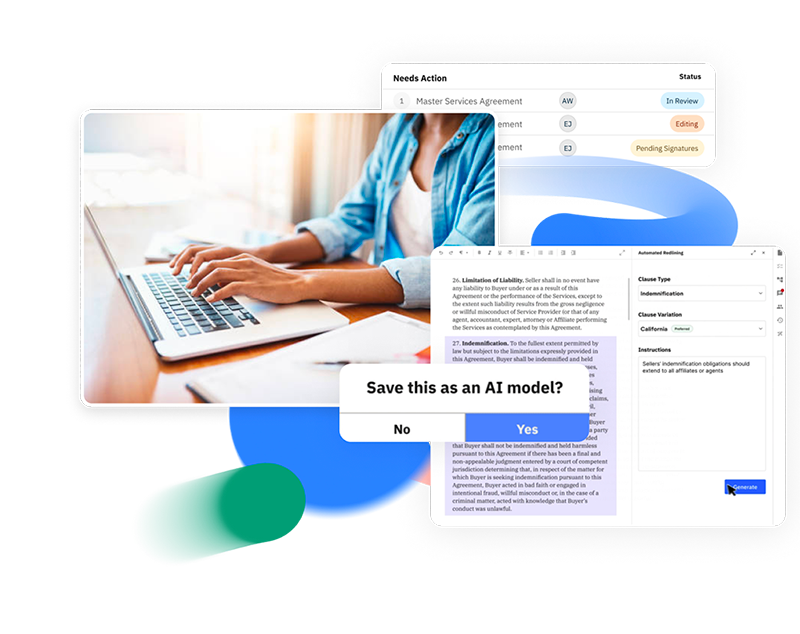
Return to Evisort. M12 co-led its Series A in December 2019. By May 2024, Evisort was demonstrating an integration with Microsoft Copilot and Teams at Microsoft Build. The intended experience was straightforward: ask about a contract inside software people already used. Workday acquired Evisort later in 2024. Microsoft's venture investment had coexisted with a commercial relationship and an eventual sale to another enterprise software company.
Inworld supplies another version of the idea. In November 2023, Xbox announced a multiyear partnership with the M12 portfolio company to develop AI dialogue and narrative tools. Inworld contributed character technology; Microsoft brought cloud services, research and Xbox's developer experience. A game character with something new to say also needed a route to the people making games.
HiddenLayer, which protects AI systems, illustrates the credibility problem. M12 co-led its $50 million Series A in 2023. In M12's published case study, CEO Christopher Sestito described how the relationship helped a young company get meetings in a crowded market. His caveat deserves equal billing: “Once there, it was up to us to showcase our technology and ability to deliver.”
04 The price is a piece of the company
M12's capital requires founders to give up equity on negotiated terms. A useful public price marker is the $10 million GitHub Fund announced in 2022: a dedicated pool for seed-stage open-source developer tools. That figure describes the pool, rather than a standard check or a fee for accessing Microsoft.
The commercial plumbing remains visible in newer deals. In September 2026, Stuut paired an M12 investment with Microsoft Marketplace availability and entry into the separate Microsoft for Startups Pegasus Program. Its order-to-cash software integrates with Dynamics 365. Eligible buyers could use existing Microsoft procurement arrangements. In October, M12 also participated in Reach Security's Series B of more than $50 million.
05 Ask for the obstacle, then the introduction
The lesson founders can copy is to make the promised help testable. Identify the integration, buyer or purchasing hurdle. Ask who will work on it and what progress would look like. M12's examples suggest that distribution deserves attention alongside product development.
The history also supplies a check on the sales pitch. In a March 2026 interview, Gonzalez said companies backed during 2021 and 2022 had faced difficult decisions after capital became harder to obtain. Some needed to adapt their businesses and work toward sustaining themselves. Corporate backing had not removed the ordinary pressure to survive. That makes the operating relationship worth examining closely: a founder needs to know what help remains useful when another fundraising round is no longer easy.
The fit weakens when those Microsoft connections have little bearing on the business. A consumer startup needing retail distribution, or a founder needing capital without a relevant enterprise partnership, may find another investor more useful. Even inside the target market, access cannot supply customer demand. The restaurant meeting starts the relationship. Someone still has to build something customers consider worth buying.