Before Malik Yacoubi was asking banks to reconsider how they made mortgages, he was trying to persuade employers to give him a job. In an account he later shared at C2 Montréal, applications to dozens of businesses went nowhere. He ended up washing dishes in a restaurant in Old Quebec. He decided to become an entrepreneur. The eventual chief executive had begun with a fairly direct lesson in how little control an applicant possesses.
Years later, he would leave a senior job of his own accord. Between those two departures lies much of what makes Yacoubi interesting: a desire to choose his work, a willingness to learn inside a larger organization, and a partnership that has lasted through several changes of industry. Starting over, in his case, has involved bringing familiar people along.
Today he is co-founder and CEO of Montreal-based Nesto Group. Its mortgages, servicing operations and software reach across Canada. Getting there required more than discovering that people disliked paperwork. Yacoubi had to learn which parts of a complicated transaction his company needed to handle itself, and which institutions it needed beside it.
An office, a loan and the Yellow Pages
Yacoubi and Karim Benabdallah were students at Université Laval when they began building businesses together. Their early projects included a portal and web hosting. They borrowed $100,000, rented an office and advertised in the Yellow Pages. Then came the technology crash. It is a wonderfully period-specific inventory: the internet business, advertised in the enormous book beside the telephone.
They sold the hosting business and launched Mobilito in 2004, before the iPhone. The company helped brands and media businesses work in mobile. Yacoubi’s later recollection of that period carries the advantage of hindsight, but the timing remains instructive. Mobile was already a business opportunity before smartphones made it an everyday reflex.
Daniel Robichaud entered their orbit through the payments business that became PaymentPin. The relationships continued as the ventures changed. In 2010, Cossette acquired Mobilito. Yacoubi went into the agency; Benabdallah remained with PaymentPin. Their careers temporarily occupied different organizations without ending the possibility of working together again.
Eight years inside someone else’s company
At Cossette, Yacoubi moved from mobile work into responsibility for the agency’s digital activity nationally, ultimately becoming chief digital officer. His work included established brands such as Telus, McDonald’s, Aeroplan and the SAQ. A founder accustomed to making a business exist was now working with organizations that already occupied substantial space in their customers’ lives.
He stayed eight years. That interval complicates the familiar picture of the entrepreneur who cannot tolerate employment for an afternoon. Cossette offered room to operate, and the work gave him experience in brand strategy and leading larger teams. He nevertheless wanted to create something of his own again. Having a senior title did not settle that question.
In 2024, he described himself in French with a short sentence: “Je suis un fondateur dans l’âme.” A founder at heart. His explanation was practical: he wanted to understand the details of the business, the reality of daily operations and the experience customers were having. It is a description of where he wants his attention to go, rather than a romantic account of inspiration arriving.
“Je suis un fondateur dans l’âme.”
Malik Yacoubi, 2024
Four founders, two kinds of trust
Nesto began in May 2018. Yacoubi and Benabdallah joined forces with Damien Charbonneau and Chase Belair, with backing from Diagram. The team combined technology, operations and mortgage knowledge. Belair understood the lending and brokerage business; Benabdallah led technology; Charbonneau handled operations. Yacoubi’s job included finding the people who could turn those complementary abilities into an organization.
Early on, recruiting consumed most of his time. That is a useful corrective to the picture of a founder spending every waking hour polishing a product. A mortgage business needs people who understand what happens after a customer expresses interest. Software can make an application look simple. Someone still has to know whether the application makes sense.
Yacoubi had originally envisaged a global business serving other businesses. Discussions with Diagram led instead to a Canadian consumer proposition. The team developed wireframes and secured a brokerage licence. Banks on Bay Street were prospective partners, and some told him they were already working on similar technology. He kept building while looking for evidence that customers would actually use the service.
Trust had two audiences. Borrowers had to hand over sensitive financial information to a new name. Financial institutions needed confidence in the business sending them applications. Speed might win attention; reliable execution would have to earn the relationship. Yacoubi’s advertising experience gave that problem a familiar outline, with considerably more documentation attached.
One application. More responsibility.
- 2018BrokerArrange mortgages with other lenders.
- 2020Build furtherTake control of more of the process.
- 2022Supply the systemOffer technology and operations to institutions.
- 2024Add CMLSBring experienced teams and new channels together.
Following the application all the way through
The original brokerage model placed loans with third-party lenders. In 2020, Nesto decided to expand its control over the experience. It built underwriting and servicing capabilities alongside the tools people used to apply. By 2022, Yacoubi described a platform covering origination, advice, underwriting and servicing, working in the cloud with a shared set of data.
The distinction matters to a borrower even if the technical architecture never crosses their mind. Finding an offer, getting a decision and making payments are connected parts of one commitment. Improving the first interaction leaves plenty of room for frustration later. The company was extending its responsibility further into the transaction.
It could also sell those capabilities. In December 2022, IG Wealth Management announced an agreement to use Nesto’s Mortgage Cloud for white-label mortgage services. The proposed experience included online applications, status tracking and mobile document uploads. IGM Financial invested in Nesto, and IG’s Damon Murchison joined its board.
For Yacoubi, a career spent around brands had led to a business willing to work behind someone else’s. An institution could retain its customer relationship while using Nesto’s infrastructure. His earlier interest in serving businesses had found a route back into the company, after the consumer operation had given it something concrete to offer.
A young company buys an older education
In June 2024, Nesto acquired CMLS Group, a mortgage business founded in 1974. The transaction brought commercial and multifamily lending expertise, broker distribution and Intellifi’s technology and services. For a company founded six years earlier, buying an organization with half a century behind it was a substantial change in the size of the management assignment.
The channels complemented one another. Nesto had been overwhelmingly direct to consumer; CMLS brought a residential broker business. The acquisition also brought experienced colleagues, some of whom took leadership positions in the combined organization. An acquisition announcement can fit into a morning. Integrating the people and their systems takes rather longer.
Yacoubi said in 2025 that the company had spent the year integrating teams and technology. The demands on him had changed again: recruitment, product development and institutional persuasion now sat alongside the work of combining organizations. The longstanding founding team offered continuity while the business around it grew more complicated.
His connections widened too. In October 2024, Yacoubi, Benabdallah and Charbonneau were selected as Endeavor Entrepreneurs. The network brought them into conversations with other founders and investors. It also gave their own experience another audience: people still trying to make an early business work.
The joke about a thousand times faster
Yacoubi’s public manner combines urgency with an occasional joke at his own ambition’s expense. Discussing automation in 2025, he said he had initially asked for a thousandfold productivity improvement and had agreed to reduce the target to a hundredfold. The joke conveys the temperature of his expectations. It supplies no evidence that either target has been achieved.
He has argued that banks need a modern technology foundation before they can readily experiment with AI in mortgages. Nesto’s proposition is to provide that foundation and the specialized expertise alongside it. Its own use of automation includes repetitive operational work, leaving employees more time for tasks requiring their attention.
The practical test remains the quality of the work. A quicker process has to produce decisions and records that institutions can use. Yacoubi’s interest in details becomes particularly relevant here: the promise of speed eventually meets an individual file, an exception or a question someone has to answer.
Announced Series E round, combining primary and secondary capital, at a C$1.47 billion valuation.
These are company transaction figures.In June 2026, Nesto announced that financing round to help expand its lending technology. The mix of primary and secondary capital matters: the headline total represents more than fresh cash for operations. It marked another stage in the company’s development, alongside the less photogenic work of delivering what partners had bought.
A trophy with another date attached
On October 13, 2026, Yacoubi was honoured at EY’s Eastern awards celebration in Montreal. The following day, EY announced him as its Entrepreneur Of The Year Eastern Overall Award winner. The recognition covered a career in building companies and Nesto’s evolution into mortgage financing and technology.
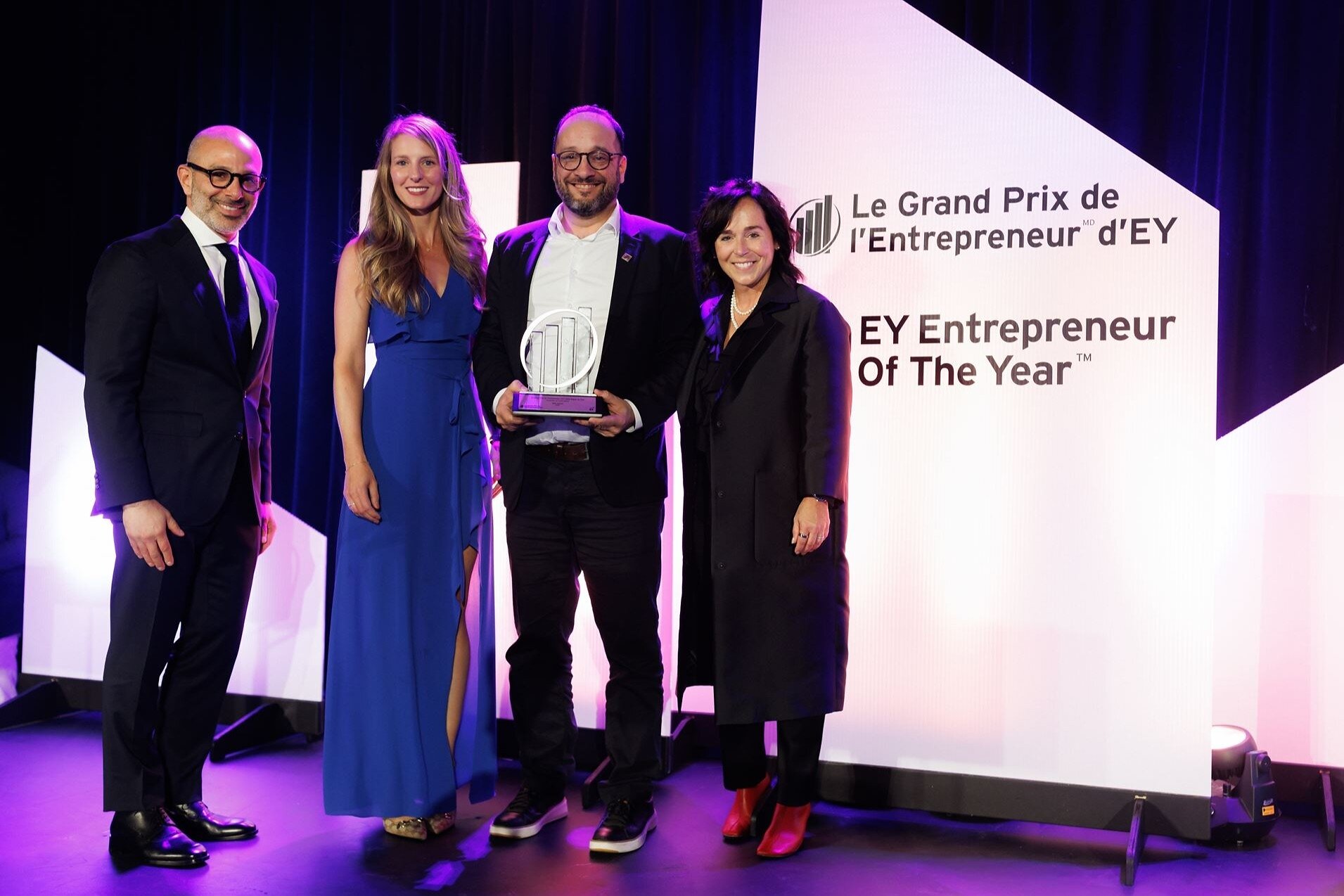
Another date follows: November 24, when the national award is scheduled to be presented in Toronto. As of this profile’s publication, that result remains ahead. The regional trophy is a milestone with a next appointment attached, which seems appropriate for someone who talks so insistently about moving.
His career has used two very different clocks. Products and business models have changed quickly. The partnership with Benabdallah has lasted from university into the management of a national mortgage group. Eight years at Cossette also sit between one founding chapter and the next. The pace of a decision and the duration of a relationship can be quite different things.
The young job seeker wanted more control over his future. The executive now carries responsibility for a business whose work extends through other institutions and into borrowers’ homes. Starting again has repeatedly enlarged the circle of people depending on the result. The independence he wanted has come with plenty of company.