At thirteen, Francois Lafortune was assembling and selling personal computers. It is an agreeable detail in a venture investor’s biography: before the funds and board seats, there were components that had to fit together and a customer who expected the thing to work. The business came first. The language of business would arrive later.
Today, Lafortune’s work involves another kind of assembly. He co-founded Diagram, the Montreal venture builder, with Paul Desmarais III in 2016. The firm helps turn ideas into companies by finding founders, supplying capital, and taking on some of the chores that can swallow a young business whole. A startup may eventually get a polished origin story. Diagram spends its time on the untidy period before that story is ready to tell.
That makes Lafortune an unusual subject for a founder profile. His signature undertaking is an organization that helps other people become founders. The question running through his career is practical enough to survive without a slogan: what does someone need around them to get a business off the ground?
A computer business before the credentials
His early working life had little of venture capital’s usual glamour. From 1999 to 2002, he was a franchisee and owner at Qualité Étudiants. From 2002 to 2005, he founded and led Vitres.net, a window-cleaning business. There is no elegant software demo to hide behind when the windows remain dirty. A service business makes the distance between a promise and its delivery rather visible.
The academic route ran alongside those ventures. Lafortune completed his engineering degree at McGill in 2005 and an MBA at Stanford in 2011. At McGill, he earned the J.W. McConnell Scholarship and the John D. Thompson Prize for Entrepreneurship in Engineering. The combination is telling: technical study and business creation were already sharing space in his life.
McKinsey supplied a different view of how organizations work. He joined in 2006, returned after business school, and became an associate partner and co-leader of the Canadian technology practice before leaving in 2015. Consulting put him inside established institutions, where technology decisions came with existing systems, customers, and layers of responsibility. His later interviews would return to the possibilities and limits of changing a business from within.
Those experiences give his career a less tidy shape than the familiar leap from a university dormitory to a venture round. Selling computers, running services, studying engineering, and advising institutions ask for different kinds of competence. Each places the person building the business in a different relationship with the person buying from it.
Five companies, and room to build
After McKinsey, an entrepreneur-in-residence period at Power Corporation brought Lafortune into conversations with Desmarais. They developed a structure for launching independent technology businesses with access to capital and established financial networks. In January 2017, after operating quietly, Diagram publicly announced a C$25 million fund backed by Portag3 and more than fifty angel investors.
The founding ambition had a geographical anchor. Lafortune wanted companies that would employ Canadian talent while reaching customers internationally. The early backers included entrepreneurs such as Hootsuite’s Ryan Holmes and Quora’s Adam D’Angelo. Their involvement offered the young companies connections beyond a local investor meeting. Canada could be the starting place without becoming the outer boundary.
The first fund’s concentration was part of the experiment. Diagram planned around five companies, with substantial support for each, rather than a long list of smaller bets. Recruitment, finance, accounting, and other early tasks could be handled around the founders. Capital would arrive in stages as the companies reached agreed milestones.
“We tried to remove as much noise as possible”
Francois Lafortune, on Diagram’s launch model, 2017
His phrase has the virtue of sounding like an actual complaint. Startup noise is seldom one spectacular interruption. It is the accumulation of obligations, all insisting they cannot wait. Hiring someone. Preparing numbers. Finding the next cheque. The day has acquired a full itinerary before the product has acquired a customer.
Diagram’s answer was to make some of that work shareable. Its current model describes vetted ideas, founder matching, seed financing, introductions, and continuing access to specialist teams. That arrangement still leaves the entrepreneur with a company to build. It changes the equipment available at the starting line.
- 01Validate the problemResearch the market and test the idea.
- 02Find the foundersMatch the opportunity with a team.
- 03Build the companyBring capital, support, and connections.
By 2019, Diagram had helped build five companies employing more than 250 people. That year, Lafortune was named to Canada’s Top 40 Under 40. The recognition marked an early checkpoint for the venture-building experiment. The more consequential test would be what those businesses became after the first rounds of hiring and financing.
The mortgage company grows up
nesto provides a concrete example of the distance a venture can travel. Lafortune chairs its board. Diagram is one of its investors. In June 2024, nesto announced the acquisition of CMLS, an established mortgage finance group whose history stretched back to 1974.
At the announcement, the combined business counted more than 1,000 employees across ten offices and over C$60 billion in mortgages under administration. Diagram joined several other investors in supporting the transaction. Those figures belong to the combined mortgage business at that moment; they are a measure of its operating scale, rather than a valuation of Lafortune or Diagram.
There is a useful change of perspective here. Discussions of venture studios tend to linger on the moment of invention. A mortgage company acquiring a fifty-year-old finance group takes the story into another room: integration, established customers, employees, and an institution’s continuing obligations. The early idea has become an organization that must work every morning.
The credit is distributed accordingly. nesto’s chief executive, Malik Yacoubi, led the combined entity. Lafortune’s board role and Diagram’s investment sit alongside the work of the operating team and other backers. A business grown through partnerships deserves a story with more than one person in it.
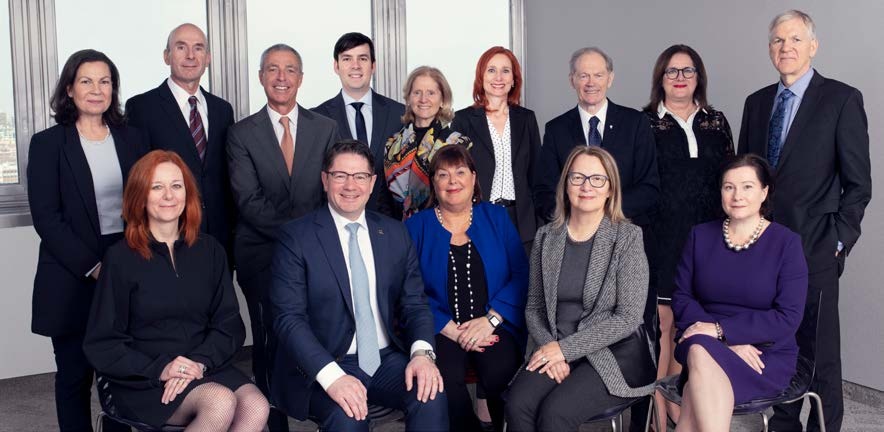
His own roles have crossed those institutional boundaries. He served on Hydro-Québec’s board from 2017 to 2021 and participated in the federal finance minister’s open-banking advisory committee. He is also a managing partner at Sagard. Entrepreneur, investor, and director are adjacent jobs, but they carry different responsibilities. His career has required him to move among them.
A new set of problems, the same starting line
In October 2024, Diagram announced the final close of its first dedicated ClimateTech Fund at C$80 million, above a C$60 million target. The fund is jointly led by Amélie Foz-Couture and Paul Manias. Its premise extended company creation into businesses developing digital tools for environmental problems.
The early examples were specific. ReliON worked on operations and maintenance software for electric vehicle charging infrastructure. Lyteflo developed tools to help dealers sell electric vehicles. In each case, a broad transition met an identifiable working problem. Equipment needs attention. Sales teams need information they can use. Software has to earn its place in someone’s day.
Commitments to one fund. Each bar uses the same scale.
The expansion also brought a broader investment approach. Diagram could back existing early-stage companies alongside ventures created inside its own process. That matters for Lafortune’s story: a method can remain central without requiring every entrepreneur to enter through the same door.
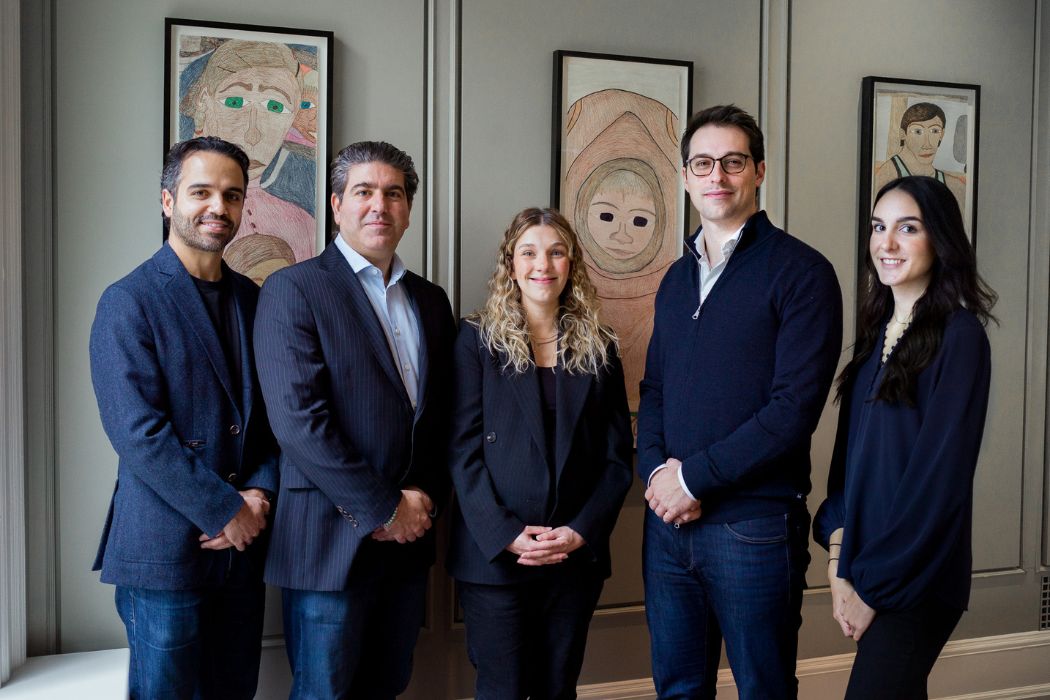
His public founder searches have since reached into cloud optimization and preserving experienced tradespeople’s knowledge for newer workers. They reveal where the attention goes: a named bottleneck, a possible product, and a search for people equipped to build it. The aspiration becomes easier to assess when it has a job description attached.
The competitors get a vote
Preparation has limits, and Lafortune has been unusually concrete about one of them. In an October 2025 appearance on The Hard Part, he discussed how an attractive opportunity can become a late arrival. A competitor that seems manageable while a new company is being conceived may raise more money and advance while that company is still getting ready.
He described the temptation to make a comparison table in which the proposed product does everything and the existing companies leave convenient gaps. The table flatters the proposal. It also compares an imagined future with everyone else’s present. Customers will eventually meet the actual products, at the actual time they become available.
“You need to assume they’re smart”
Francois Lafortune, discussing competitors, 2025
That warning changes the nature of validation. Checking that a problem exists is only part of the job. A founder must also consider what rivals will build, how quickly the technology will move, and which first product can establish a useful position. The spreadsheet’s occupants decline to remain obediently in their cells.
Lafortune acknowledged mistakes in judging that movement. The admission gives his method some texture. Someone who builds a business around investigating opportunities still has to revise his judgment. A head start helps; timing can spend it.
A head start is still a start
There is another beginning in his public life. His 4Ukraine profile describes an ambition to help displaced Ukrainians settle in Canada and support the next generation building lives there. The circumstances differ sharply from launching a venture. The practical concern with making a start possible appears again.
Lafortune’s working life now contains the familiar markers of an investment career: funds, board seats, an entrepreneurial award, companies with substantial operations. Yet the more revealing detail remains the work before those markers appear. A PC has to be assembled. A service has to be delivered. An idea has to find both a customer and a person willing to build it.
Diagram gives that early work a structure. The structure cannot choose a customer’s response or hold a competitor still. It can put more of what a founder needs within reach. For someone whose first business began at thirteen, that is a recognizable occupation: preparing the parts, finding the people, and seeing whether the thing will work.