The least glamorous object in a store is often the most powerful: the old point-of-sale system nobody dares unplug. It knows the prices, the inventory, the customer, the tax rules and, on a Friday night, exactly how much chaos the staff can absorb. Mad Mobile built a 15-year business by accepting that inconvenient truth. Instead of demanding that retailers throw out the core, the Tampa company made the core behave as if it had been born in the mobile era.
That sounds modest. It was not. Mad Mobile's software let an associate check out a shopper in the aisle, find an out-of-stock item online, schedule an appointment, fulfill a pickup and remember a good customer's taste. In restaurants, its CAKE system handles orders, payments, reports, loyalty, waitlists and online sales. The company's newer Neo platform promises to harvest data and functions from legacy systems, generate modern interfaces and orchestrate AI agents across the mess.
The company sits in an awkward, valuable middle: above decades-old enterprise plumbing, below the experience a guest or shopper actually sees. Its competitors range from Toast and Square in restaurants to Oracle, Aptos, Salesforce, NewStore and Shopify in retail. Its real alternative, however, is often inertia - another year of terminals bolted to counters and customer data marooned in separate systems.
The first thing that failed was the counter
Bruce Bennett and Greg Schmitzer founded Mad Mobile in 2010. The origin story includes a sketch on a bar napkin, which is almost too neat, but the early product was practical: mobile commerce sites for more than 90 retailers, including Office Depot, Claire's, Lenovo and ASUS. Smartphones had changed what shoppers expected. Store systems had not.
By 2013, MICROS - later acquired by Oracle - engaged Mad Mobile to build a mobile tool for store associates. Sysco followed with mobile ordering for restaurant customers. Talbots became the first user of a Concierge mobile POS and clienteling solution offered with Oracle. Apple, Salesforce and Samsung later joined the partner list. The pattern was clear: Mad Mobile entered through a workflow the incumbent stack handled badly, then connected back to the stack rather than declaring war on it.
“There is an enormous opportunity to modernize the restaurant experience with mobile.”Bruce Bennett, announcing the CAKE acquisition in 2020
What changed the company's mind about its scope was not a failed product so much as a crisis that exposed the product's limits. In 2020, restaurants urgently needed mobile ordering, contactless payment and curbside pickup. Mad Mobile bought CAKE, a restaurant technology business owned by Sysco, for an undisclosed price. CAKE served more than 5,000 restaurant locations when the deal was announced. Buying it gave Mad Mobile a working POS, an installed customer base and a new place to apply its mobile playbook.
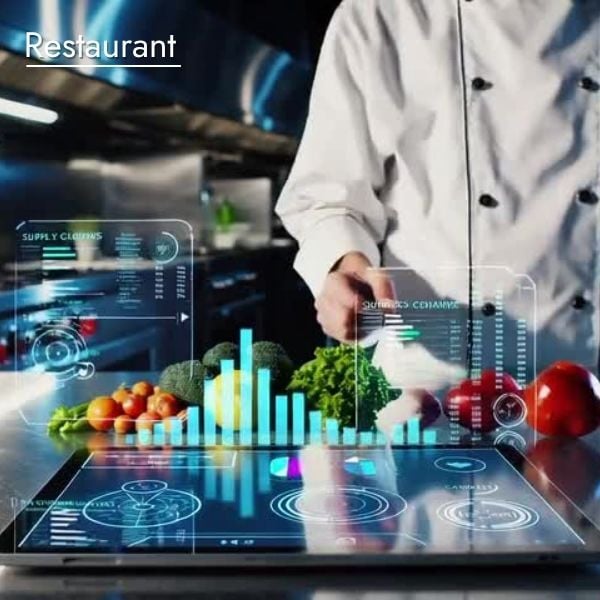
CAKE is the kitchen door into a larger business
CAKE is an all-in-one restaurant system: cloud POS and hardware, online ordering, loyalty, guest management, tableside tools, payments and reporting. It serves independent restaurants, franchises and multi-location operators. Sysco provides an unusually relevant distribution relationship. Best Buy Business Solutions handles nationwide installation. A 2025 partnership with Popmenu added interactive menus, websites and automated marketing, followed by plans for integrated online ordering and payments.
Mad Mobile does not publish one universal cost. Current CAKE packages are quote-based and the enterprise retail products are sales-led. That matters. Payment-processing rates, hardware, implementation, contract length, support and integrations can outweigh a tidy monthly software figure. The CAKE acquisition price is also private. Any precise claim about what the transformation cost Mad Mobile would be theater.
What is public is the financing. Eastward Capital Partners provided $20 million in 2023 to develop the platform and grow commercially. In June 2024, Morgan Stanley Expansion Capital and Bridge Bank arranged another $50 million. Mad Mobile said that money would expand SaaS and payment technology, refinance existing debt and propel sales. This was growth capital with chores attached.
The Mad Mobile value ladder
Wrap the legacy core. Add a useful mobile workflow without forcing a dangerous replacement.
Own the daily interface. Put checkout, clienteling, ordering and fulfillment in staff hands.
Collect recurring economics. Sell SaaS, hardware, implementation, support and integrations.
Move into the money flow. Add payment processing and acquiring-level control.
Turn operations into intelligence. Use the connected data for forecasts, answers and agents.
The AI pitch is really a systems pitch
Neo, introduced in 2025, is Mad Mobile's answer to the current AI moment. The company says the platform can harvest data from legacy and modern systems, generate code and visualizations, orchestrate journeys, integrate applications, automate processes and deploy agents. In retail, Concierge AI uses Amazon Bedrock to segment customers, suggest outreach and help associates personalize service. In restaurants, Neo is pitched for ingredient-demand forecasts, menu insights and a conversational view of sales, staffing and operations.
The distinction from a generic AI assistant is proximity to the transaction. Mad Mobile already touches orders, customer records, inventory workflows and payments. That context can make an answer useful instead of merely fluent. It also raises the standard. A restaurant operator cannot tolerate an inventive answer about payroll. A retailer cannot let an agent improvise a return policy. The product has to master permissions, identity, audit trails, latency and failure recovery - the boring parts that decide whether enterprise AI graduates from demo to shift work.
Mad Mobile tested AI internally with an “AI Alpha” program. It selected one individual contributor from departments including product, marketing, HR, sales and support, gave them advanced tools and asked for workflow proofs of concept. Executives and managers were deliberately left out. The company says the experiments produced campaign builders, pitch generators, support automation and summarization tools. The copyable observation is sharp: the person closest to repetitive work usually knows where automation is helpful and where it is obnoxious.
“AI doesn't just scale systems. It can scale people.”Jack Kennedy, EVP of AI at Mad Mobile
Payments make the ambition legible
In November 2025, Mad Mobile launched Premier Acquirer Services with Cybersource, SouthState Bank and RS2. The move gave it more end-to-end control over processing, tokenization, fraud tools and merchant funding. For customers, the pitch is simpler pricing, less complexity and faster access to funds. For Mad Mobile, the attraction is deeper payment economics and less dependence on outside processors.
This is where the product portfolio resolves into a business model. The company sells recurring software and custom enterprise deployments. It can provide hardware, implementation and support. Then it participates in payment processing. AI is the layer that may increase the value of all the operational data underneath. A provided company record estimates annual revenue around $120 million and headcount around 340, but neither figure appears in audited public reporting and public employee directories vary.
What a founder can steal
Choose a painful workflow attached to a system customers cannot safely replace. Build the bridge first. Partner for distribution. Once trusted, expand toward the data and transaction flows that make the bridge indispensable.
Where the playbook breaks
It fails when the old core has no usable interfaces, when data is too dirty for automation, when a buyer wants cheap self-service, or when the vendor cannot support uptime, payments compliance and change across thousands of locations.
What survives the clever diagram
Mad Mobile's public customer roster includes Ralph Lauren, Tractor Supply, Talbots, Urban Outfitters, Signet Jewelers, PF Chang's, Aramark and Texas Roadhouse. Its site says the platform supports more than 21,000 locations. The company's own examples show why the two verticals belong together: both need employees to act on fragmented information while a customer waits.
Still, restaurant and retail software is a knife fight. Toast, Square, Lightspeed, TouchBistro and SpotOn compete for restaurants. Oracle, Aptos, Salesforce, NewStore, Manhattan Associates, Shopify and others chase retail modernization budgets. Some customers will prefer a clean replacement from one large vendor. Smaller merchants may want transparent pricing and an instant signup. Mad Mobile's integration-heavy approach makes most sense when a business has meaningful legacy investment, many locations, complicated workflows and enough transaction volume to reward deep payments integration.
That condition is also its defense. A competitor can copy a chatbot. It is harder to copy 15 years of integration scars, enterprise relationships, restaurant installations and knowledge of what happens when the receipt printer stops at noon. Mad Mobile's bet is that AI will not erase those scars. It will make them more useful.
The company began by freeing the cash register from the counter. Its next act is more audacious: turn the systems around that register into a coordinated set of workers, some human and some software. Whether that works will not be decided by how agentic the brochure sounds. It will be decided in the aisle, at the drive-through and behind the bar - exactly where Mad Mobile has spent years learning to stand.