The valet wore blue and often arrived on a scooter. You handed over the keys at a curb of your choosing. When you wanted the car back, you tapped a phone and asked for it somewhere else. For a driver circling a city block, this looked like a small miracle. For Luxe, the San Francisco company staging it, the miracle had to be repeated by a paid person on real streets, with a real garage waiting at the other end.
Curtis Lee and Craig Martin founded Luxe in 2013. They had worked together at Zynga, where Lee was a product manager and Martin an engineer. Lee's own difficulty parking near his Pacific Heights home helped supply the idea: take the valet stand out of the restaurant driveway and let the phone place it wherever the driver stopped. The public service launched in October 2014. A customer entered a destination, saw the assigned valet's name and photo, and passed over the car. Luxe parked it in a partner lot or garage, then brought it back on demand.
- Luxe sold time back to city drivers by handling parking and car care.
- Commuters became the valuable repeat customers; garages and valets made the service possible.
- Parking rates, add-ons and subscriptions paid the bills, but the labor and space costs proved stubborn.
- The original curbside service ended in 2017. Volvo Cars bought the platform and team, then used Luxe intellectual property in Volvo Valet.
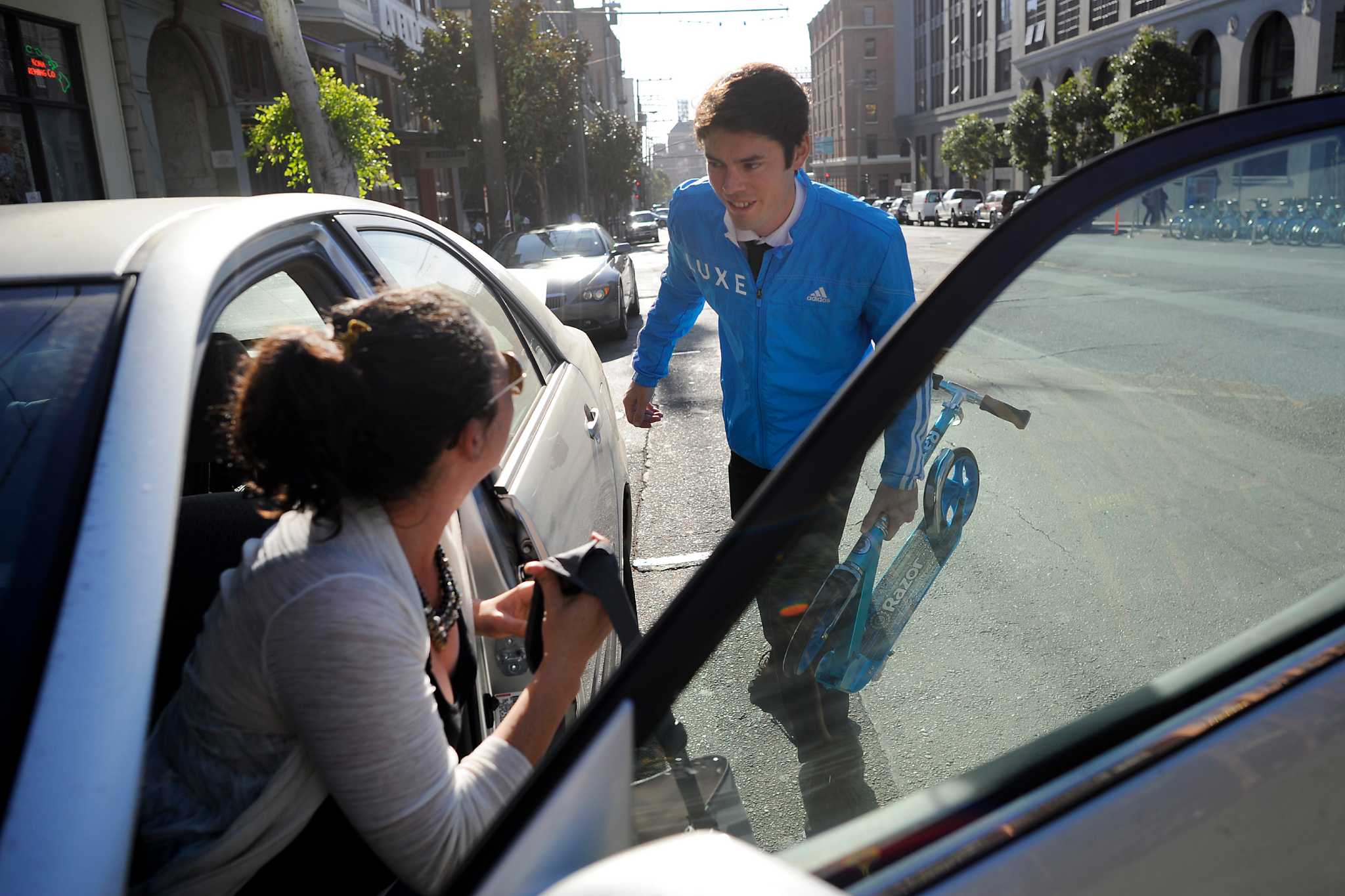
A valet stand with no stand
The app's neat trick was to make the destination the pickup point, then separate it from the parking spot. The driver could go to a meeting, a restaurant or work while Luxe absorbed the hunt for space. It could also wash the car, fill the tank or arrange an oil change. By 2016 the menu included overnight parking, a designated driver option called Drive Home, and services for events, merchants and employers. A Tesla pilot added charging to the hours when an electric car was already out of its owner's hands.
This was different from a garage finder or a reservation app such as SpotHero. Those products helped a driver identify or book a place to park. Luxe moved the car for the driver. Its expertise sat in dispatch, route planning, estimated arrival times and the less photogenic work of coordinating garage inventory. Volvo would later call out those algorithms when it bought the company's assets.
Luxe initially pitched restaurants because guests hated parking before dinner. Lee later said that group was too occasional to build a habit. A person who visits the same restaurant every six months has to rediscover the app each time. Commuters, by contrast, had the problem every weekday. Luxe changed its focus toward business drivers and people arriving at work, and referrals helped it spread. In early 2015, its press materials said the average customer used the service twice a week. By April 2016 the company reported hundreds of thousands of downloads and thousands of consumers using it at about that frequency.
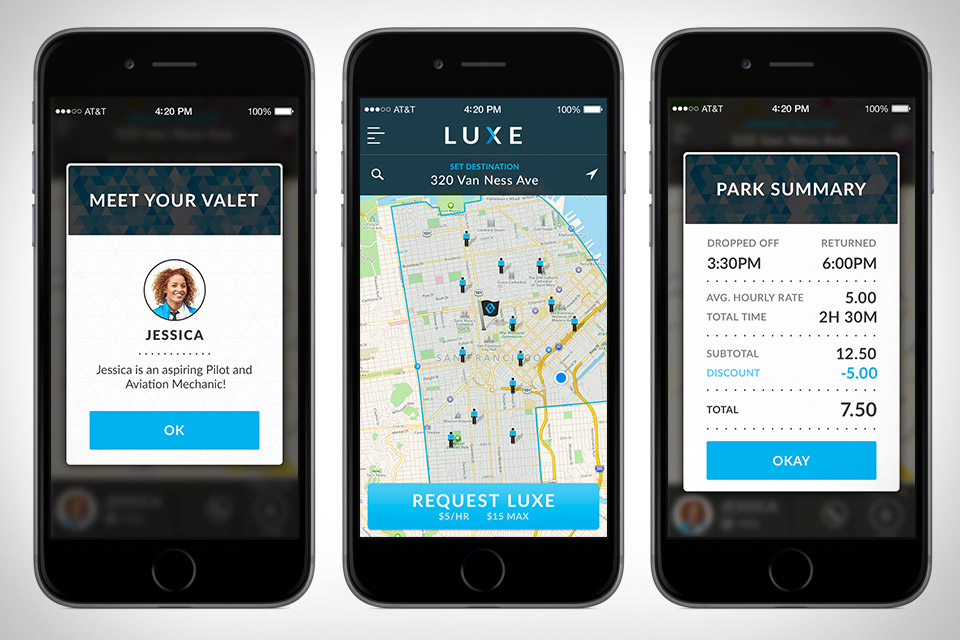
The button had a wage
In Luxe's July 2015 New York launch, a Manhattan customer paid $7 an hour, capped at $30 a day. Brooklyn began at $5 an hour, capped at $15. Long-term New York parking started at an advertised $199 a month. Prices varied across cities and dates, and add-ons cost extra. To a driver comparing garage signs, the offer could seem quite reasonable. A reporter for Time described a $15 San Francisco visit that cost less than the street parking he might have found.
Luxe had to pay for a different set of minutes. Its valets traveled to the first curb, drove the car to a garage, then made a return trip when requested. A valet waiting for the next job still drew a wage. The company also needed garage spaces, insurance and people to sort out exceptions. Lee told Forbes in 2015 that valets earned $12 an hour. At two cars handled in an hour, he put that wage at $6 per car before the garage and the other costs. Three or four cars improved the arithmetic, but busy streets and scattered requests did not take instructions from a spreadsheet.
Luxe raised $5.5 million in seed funding, a $20 million Series A in 2015, and a $50 million Series B led by Hertz in April 2016. Hertz hoped the two companies could make rented cars easier to use in cities. The money supported national expansion and a wider menu of services. Growth was real: Luxe said in April 2016 that it was operating in San Francisco, Los Angeles, Seattle, Austin, Chicago and New York. But a new city required more than a new map tile. It required garages, valets, training, coverage hours and enough repeat customers to keep people busy.
The staff model made that point unusually clear. In 2015 Luxe began converting valets from contractors to employees. Lee said the change allowed better scheduling, training and control of the customer experience, along with benefits and career opportunities for workers. It was a service-quality decision with a cost attached. A jacket and a scooter can make a handoff look effortless; neither can make an idle shift free.
“Our mission has always been to make car ownership as painless and easy as possible.”Curtis Lee, announcing the Hertz-led funding round in 201603 / The retreat
A fixed point on a moving map
The first visible retreat came city by city. Luxe stopped serving Seattle, then paused Los Angeles and Austin. By January 2017 it was concentrating on San Francisco, New York and Chicago. It began offering three parking routes in its app: the classic curbside handoff, a designated valet stand, or direct parking at a partner garage. A fixed stand could gather more cars in one place; a driver who went straight to the garage needed no pickup valet at all. The move gave customers less theatrical convenience, and gave operations a better chance of matching labor to demand.
Meet the driver wherever the driver happens to stop. Return the car to a chosen address.
Offer a fixed valet stand or let the customer drive directly to a partner garage.
By spring 2017, Luxe had ended the door-to-door valet operation. The precise profitability of Luxe's own jobs was not publicly disclosed, and Lee had argued earlier that individual transactions were profitable. Yet the broader on-demand valet category was wrestling with costly labor and expensive garage inventory. Reuters reported thin margins across the category, before vehicle damage and insurance. Lee said another funding round would have been difficult. Consumer demand had proved a need; it had not settled the economics of serving that need at scale.
The distinction matters. If you want to copy something from Luxe, start with the commuter discovery: find the person whose problem recurs every week. Then measure the complete job, including travel to the customer, parking inventory, waiting, and return. Concentrating handoffs at a stand can change the math because one worker can serve more cars. A city with cheap garage capacity and dense, predictable demand is friendlier to this model than a spread-out market with expensive spots and sporadic trips. The app can coordinate the work; it cannot turn travel time into zero.
04 / The second lifeVolvo bought the route
In September 2017, Volvo Cars acquired Luxe's platform, technology, key staff and other assets. The price was not disclosed. Volvo singled out routing, logistics planning and arrival-time prediction. Lee became a Volvo digital executive, while Martin continued to lead engineering. The original standalone valet app did not survive, but the software and people had another customer: an automaker trying to take chores out of ownership.
In 2020, Volvo Cars said its Volvo Valet pickup and delivery program grew from the Luxe intellectual property it had bought. The dealer-managed service carried cars to and from maintenance appointments. That is a narrower promise than a valet at any street corner: known retailers, an expected service visit and a controlled handoff. It was also a fitting answer to the problem Luxe had exposed. The valuable part of the company was not only the blue jacket in the photograph. It was the system that told the jacket where to go next.