The question is the product. Not the pastel interface, not the streak counter, not even the period calendar. luna becomes interesting at the moment a teenager types something they would rather not ask across the dinner table: Is this normal? Why does my skin do that? What does this feeling mean? The London company has built an answer desk for adolescence, then wrapped tracking, lessons and games around it so asking for help feels less like visiting a clinic and more like opening an app.
Its users are mainly teen girls and non-binary young people. They log periods, moods, sleep, skin and symptoms; read short articles; watch videos; take quizzes; and submit questions anonymously. General practitioners, dermatologists, safeguarding specialists and other medical contributors review the material. Other members can read published questions, which supplies the comforting recognition of a community, but they cannot message one another. It is a social product with the sharpest social edge filed off.

A classroom idea that teenagers promptly rewrote
Jas Schembri-Stothart and Jo Goodall were friends and MBA students at Oxford’s Saïd Business School when a course assignment asked them to invent and pitch a company. Conversations among their all-women project group kept returning to health information they wished they had received as teenagers. Schembri-Stothart remembered body hair and body image; Goodall remembered painful periods colliding with exercise. Their first answer was modest: a period app designed for teens.
That first proposition did not survive contact with its audience. The pair returned to their old schools and ran focus groups. Students described health education as patchy and social feeds as immediate but unreliable. They wanted help with periods, certainly, but also stress, relationships, sexuality, spots, sleep, confidence and the rest of the unruly bundle called growing up. Some pupils emailed afterward asking where they could download the app. There was no app yet.
“We left these sessions and people were emailing us, like ‘Hey, where can we download the app?’”Jas Schembri-Stothart, recalling the school focus groups
That changed the founders’ minds in two ways. The narrow period tool became a broader wellbeing companion. And a university exercise became an actual company. Luna Life Limited was incorporated in September 2021. A reported £600,000 to £660,000 pre-seed round, involving SyndicateRoom and investors linked to Octopus Ventures, paid for development. A simple version reached Apple and Google’s stores in November 2022.
The useful space between TikTok and a waiting room
luna is not trying to out-entertain TikTok, out-diagnose a doctor or out-track every adult fertility app. Its market position sits between those things. Social media answers quickly but rewards certainty and spectacle. A school lesson may be accurate but arrives according to a timetable, not on the night before a first period. Parents can be trusted but are not always the person a teenager wants to ask. General health chatbots are plentiful, yet their answers can be unvetted, poorly calibrated for age or delivered with alarming confidence.
The company’s difference is less a single clever feature than the way the pieces connect. Daily check-ins generate a personal record. Monthly summaries turn that record into patterns. The Learn area explains the topics those patterns raise. Ask catches the questions that remain. When a question resembles one already answered, luna can use AI to retrieve and adapt material from its reviewed answer library, leaving clinicians to focus on novel queries. The machine helps with repetition; the human review supplies the authority.
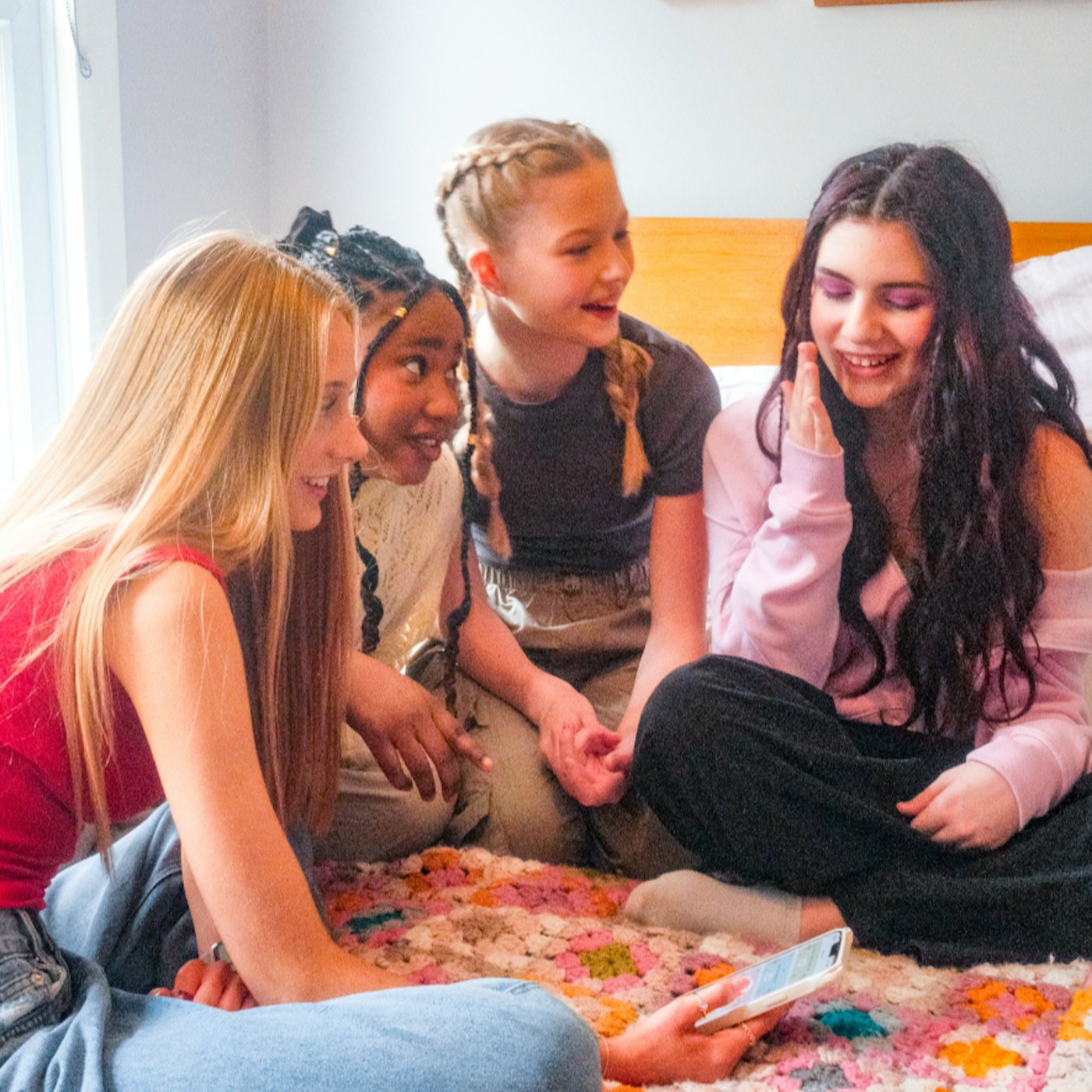
The closed design matters. Teens can recognise themselves in another person’s question, but there are no private messages, follower counts or popularity contests. Sensitive questions are concealed until tapped so users can avoid triggers. The service can suggest speaking with a doctor when logs show a concerning pattern, such as consistently heavy periods. It does not claim to diagnose or provide crisis care. Its useful job comes earlier: supply language, context and a nudge toward an appropriate adult.
Free to enter, metered once curiosity takes over
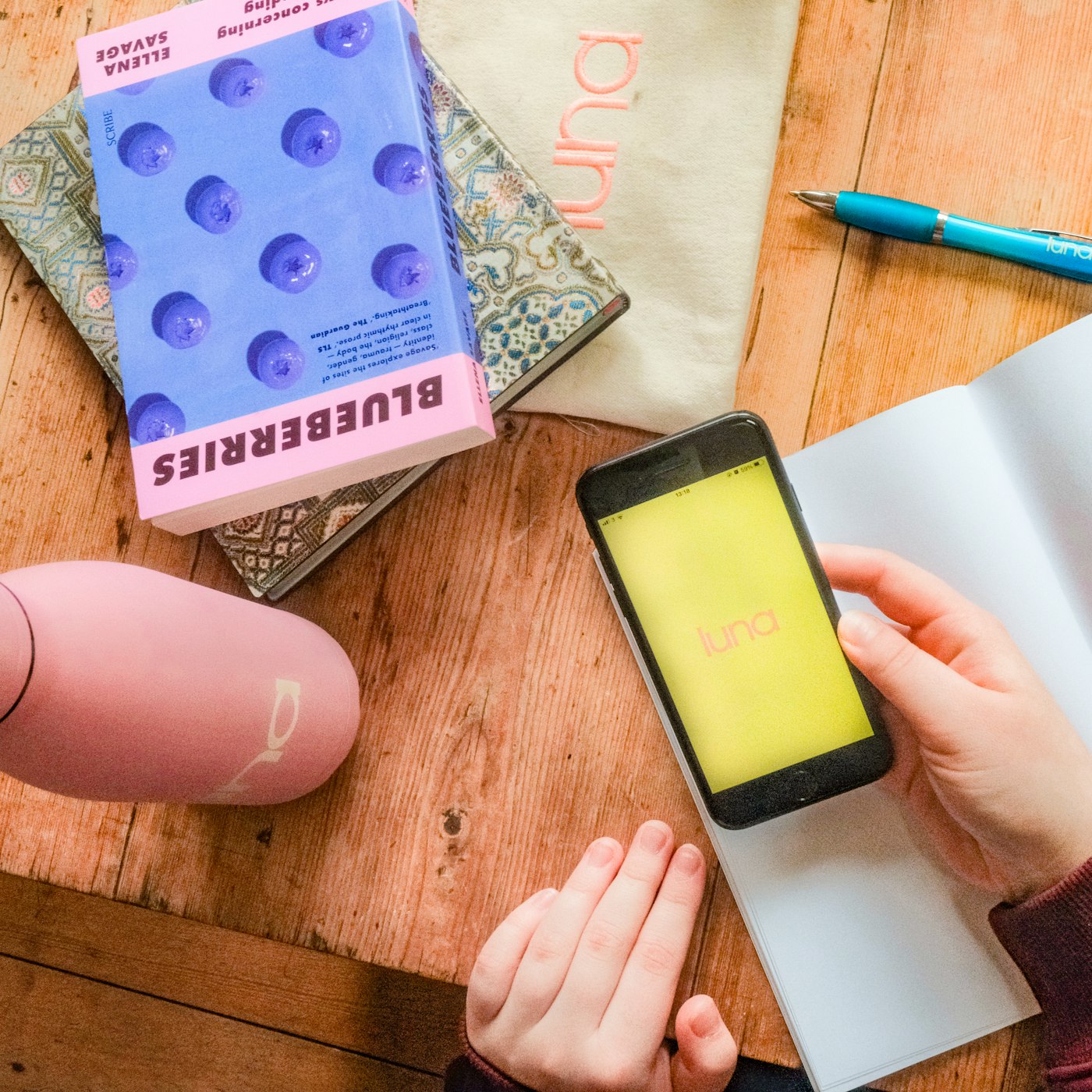
The app is free to download. Tracking remains available without payment, while the educational and question features are rationed: the current comparison offers one anonymous question, six community answers a month, six expert articles or videos a month and two quizzes. Premium removes those limits and adds richer trend tracking. The UK App Store lists common plans at £4.99 a month or £39.99 a year, alongside promotional and parent options whose prices vary. In other words, the period calendar gets a teenager through the door; depth pays the bill.
That paywall is also the company’s hardest bargain. Expert work costs money, but the teenagers who most need a reliable answer may be least able to subscribe. luna’s response is to add buyers around the user. Parents can purchase access and send a code. Schools can provide PSHE-aligned material. Brands and foundations can fund memberships. Partners can sponsor educational campaigns, placements and giveaways. The company also offers discount codes and affiliate arrangements with teen-facing brands.
The partner list shows how that second engine works. London Lions basketball club supplied visibility in 2024. Lil-Lets built a free four-week period-confidence challenge in 2025, with 16 tasks and rewards. In 2026 the beauty brand essence paid for 100 annual premium memberships, half distributed through a charity partner and half through an in-app giveaway. luna says commercial partners must share its values and pass review by its chief medical adviser or consultant dermatologist.
Trust is not a brand value here. It is the operating system.
Any company serving minors on health topics inherits a narrow margin for error. luna handles special-category health data, asks for parental consent where required and promises anonymity around questions. Yet an app can be private without being invisible: Apple’s disclosure says identifiers, user content, usage information and sensitive data may be linked to a user for functionality or analytics. Parents can opt into a dashboard showing simple usage statistics, but the usefulness of Ask depends on keeping the substance of a teen’s questions private.
This model works only while those boundaries remain legible. If sponsored content blurs into medical guidance, if a parent dashboard feels like surveillance or if automation outruns expert review, the central promise collapses. It also travels poorly without localisation: rules for consent, adolescent care and sexual-health education change across countries. A library built in English cannot simply be translated and declared culturally ready. The 2026 US launch, restricted to ages 13 to 18, illustrates the deliberate pace required.
The cleverest safety feature may be the missing one: there is no button for one teenager to privately message another.
Nor should a warm interface be mistaken for treatment. A mood tracker can help someone notice a pattern; it cannot manage a mental-health crisis. An expert explainer can make a first period less frightening; it cannot examine severe pain. luna is strongest when it helps a young person move from vague worry to a better question, and then toward a parent, teacher, GP or emergency service when the situation demands it.
The parts worth copying
Founders in other sensitive categories can borrow luna’s method without copying its colour palette. Begin with a recurring, concrete job such as tracking a period. Put intended users in front of the idea before polishing it. Treat the questions they ask as a live product roadmap. Use expert judgment where mistakes carry weight, and automation where repetition wastes that judgment. Finally, design the community by subtracting risky mechanics, not merely by adding moderation after the fact.
A useful tracker created a reason to return before the content library was enormous.
“Periods are not enough” was not failed research. It was the better specification.
Automation retrieves established answers so scarce experts can handle the unfamiliar.
Shared questions create recognition; no direct messages means fewer routes for harm.
The conditions are demanding. There must be a need people revisit, an audience willing to trust the service with sensitive information, and enough qualified reviewers to keep pace. The advice must have a clear boundary with diagnosis. A freemium version also needs to be useful before payment, or the first worried question becomes an advertisement for the subscription. Those constraints rule out the easy growth tricks. For luna, that restraint is part of the product.
From 100,000 members to a broader family product
By October 2024, luna said it had reached 100,000 members and nearly 45,000 questions. It was selected for Google for Startups, made the final five at TechCrunch Disrupt’s Startup Battlefield and won Start-up of the Year at the British Business Awards. Its present website counters have moved higher: more than 250,000 teens and parents in the broader community, over 130,000 active teens, about 30,000 weekly teen users and 99,102 questions asked. Those are company-reported figures, but the direction is plain.
The founders incorporate after school research turns an assignment into a plan.
A simple product reaches the teenagers who had asked to download it.
Google, TechCrunch and the British Business Awards put the young company on bigger stages.
Magic-link invitations and optional high-level insights turn carers into a clearer customer.
The service opens to American teens aged 13 to 18 and adds interest-based personalisation.
The next company is visible inside the latest product changes. Personalised topic feeds make the learning library easier to navigate. Parent invitations and account tools reduce friction for the person paying. School access takes luna closer to the curriculum it once found wanting. Brand-funded memberships turn marketing budgets into distribution. The app remains the centre, but the customer is becoming a small constellation around the teenager.
luna’s original period tracker was not wrong. It was simply one door into a building with many rooms. The company’s best decision was to notice what crowded around that door: embarrassment, curiosity, misinformation and the ordinary wish to know whether you are the only person going through something. A hundred thousand questions suggest the answer is usually no.