Corporate security has no shortage of places to look. There are public records and internal reports, travel alerts and social feeds, HR notes and IT warnings, a dark web somewhere offstage, plus the stubborn spreadsheet that everyone privately regards as infrastructure. The difficulty is not finding a signal. It is deciding which signal matters, who needs it and how soon they can act. Lukas Quanstrom has built a company around that interval.
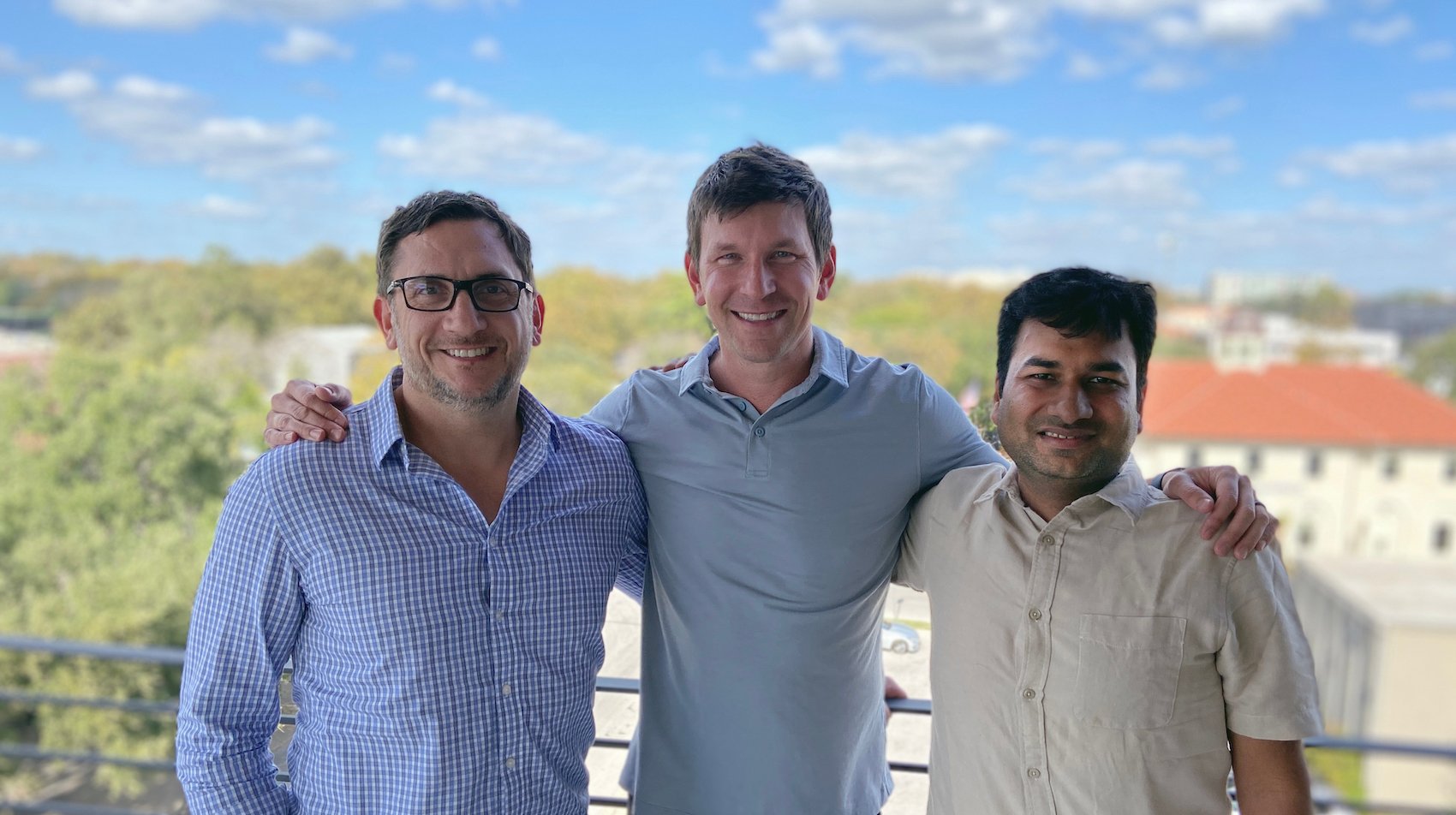
Quanstrom is the CEO and co-founder of Ontic, the Austin software business launched in 2017 with Thomas Kopecky and Gagan Jain. Its product connects information and workflows used by corporate and government security teams. The promise is plain: fewer islands of data, more context, and a shorter trip from warning to judgment. This is specialist software, but the problem should feel familiar to anyone whose work has ever crossed three systems, two inboxes and a spreadsheet last updated on Tuesday.
What gives Quanstrom's story its shape is the job he held before Ontic. At Sprinklr, he was Global VP of Client Success and built the customer-facing organization. Client success is a useful apprenticeship for a founder. It puts you at the exact seam where an elegant product meets a complicated company. You learn which buttons are admired in a demo and which workarounds quietly run the week.
01 / The apprenticeshipListen where the work gets awkward
Before Sprinklr, Quanstrom worked in digital and social marketing, including at Wirestone. He studied marketing at Olivet Nazarene University and later earned an MBA from DePaul. None of that reads like the conventional origin story of a threat-intelligence technologist. It reads like the formation of an operator: understand the audience, understand the organization, and notice what happens after the software is sold.
At Ontic, that instinct became a product thesis. Physical security had often operated as its own organizational province. Relevant information lived across legal, HR, IT, executive protection and external data services. A team could be rich in tools and poor in a shared picture. In a 2020 interview, Quanstrom described Ontic as horizontal where other providers went deep in a single vertical. The distinction was not cosmetic. The company's value depended on collaboration among groups that had rarely shared one working surface.
The Quanstrom operating thesis
HR · OSINT · IT · travel
one working picture
assess · assign · act
The diagram is tidy; the world is not. Connecting data creates its own responsibilities. Teams need trustworthy inputs, permissions, governance and human judgment. Quanstrom's recent writing on AI makes that sequence explicit. A capable model attached to fragmented or stale information cannot be expected to produce dependable decisions. His order of operations begins with connected, governed data and keeps people at the center.
02 / A wider apertureMaking protection visible to the business
Quanstrom has a useful metaphor for this work: the camera aperture. In a 2022 keynote, he compared a security program's field of intelligence to the opening that lets light into a lens. Widen the aperture and more of the picture becomes visible. For a security team, that means seeing beyond a single person or event toward the physical and digital conditions around it.
The metaphor also explains his larger ambition. Quanstrom is trying to move security from a reactive service to a strategic participant in the business. The old caricature is a cost center waiting for an alarm. His preferred version brings connected evidence into leadership decisions: how operations continue, how employees and executives travel, how a company responds to an incident, and where scarce attention should go next.
The faster teams have usually made one deliberate choice: reduce the steps between a signal and the person who needs to act on it.Lukas Quanstrom, on security operations in 2026
That sentence contains a product strategy and a management strategy. Speed is not merely headcount or urgency. It is architecture. Every unnecessary handoff taxes the decision. Every disconnected system invites another search. The best operational improvement may be modest: put the right context near the person who has authority to use it.
03 / Scale arrivesA quiet category gets a loud balance sheet
Ontic's commercial arc gave the thesis weight. A $12 million Series A arrived in 2020. The company raised a $40 million Series B in 2021, when it reported a 257 percent compound annual growth rate over the prior two years. That same period included the acquisition of SIGMA Threat Management Associates, bringing structured threat-assessment expertise into Ontic's orbit.
Then came the larger number. In August 2025, Ontic announced a $230 million Series C led by KKR, with participation from JMI Equity, Silverton Partners, Ridge Ventures and Ten Eleven Ventures. Quanstrom said the company had grown up serving large enterprises and was moving into federal and government work. The capital was intended for global expansion, the U.S. public sector, AI development and the platform itself.
Funding is useful evidence, but it is not a personality. Quanstrom's public voice is more revealing when he writes about the machinery beneath growth. He has argued that a scale-up needs a secondary leadership team with real autonomy. Founders often say they want leverage, then preserve themselves as the switchboard through which every consequential decision must travel. His prescription is harder: transfer judgment, not just tasks.
04 / The faint pencilPlanning without worshipping the plan
His best image for leadership is almost comically low-tech. Quanstrom writes plans in faint pencil. The phrase captures the balance he wants between startup agility and the discipline of a maturing business. A plan coordinates effort, but certainty can become expensive when circumstances change. Data helps. Debate helps. So does admitting that a founder can be seduced by an earlier decision simply because it is already theirs.
In his account, flexibility is not improvisation without a net. He pairs it with contingency planning and a support system capable of exposing blind spots. He also admits to making leaps of faith in Ontic's early days. That small confession matters. Founder essays often turn hindsight into a clean highway. Quanstrom leaves the pencil marks visible.
The portable lesson
Put conviction in the mission and revision in the map. A faint-pencil plan can still carry a firm deadline, a clear owner and a measurable result.
There is a family life beyond the corporate vocabulary. Ontic's biography says Quanstrom lives in Austin with his wife and four sons. It is not difficult to imagine that a household of six offers regular peer review for any theory of perfect control. More safely, it places his company in a city and his ambition in a life. The work is about keeping people safe; the person doing it goes home to people of his own.
05 / What comes nextAI after the housekeeping
By 2026, Quanstrom's focus had widened again. Ontic was talking about government readiness, global reach and AI. Yet his AI position begins with housekeeping. Before a security team asks what a model can do, it should ask whether its information is connected, accessible, current and governed. This is less glamorous than an autonomous agent. It is also closer to the original Ontic problem.
At Ontic Summit 2026, he led a conversation with business leaders about security's role in strategy, employee and client experience, and AI adoption. The opportunity he describes is not for security to borrow fashionable language. It is to make its own intelligence useful across the organization. Influence follows when a team can show how its work shapes a decision the business already needs to make.
Quanstrom's career has moved through marketing, client success, company building and a security category full of acronyms. The through-line is surprisingly human: information matters only when people can use it together. Ontic may process signals, cases and workflows, but its CEO keeps returning to listening, context, judgment and trust. Software can shorten the path. It cannot decide why the journey matters.
The next test is scale. A company built to connect scattered enterprise information now has to connect its own expanding teams, markets and layers of leadership. Global and government customers bring different rules and expectations. AI adds speed along with new questions about reliability. The faint pencil will get a workout.
Still, the original idea remains legible. Find the gaps where consequential work gets lost. Bring the context together. Give capable people fewer steps between noticing and acting. In a noisy business culture, Quanstrom has made a career from the value of a shorter sentence: here is what matters, and here is who needs to know.